


Additional data from Search Console is now available through the Google Data Studio connector, allowing users to visualize traffic from more Google sources.
The update was announced by Google Search Advocate Daniel Waisberg in the second post of his Data Studio and Search Console-related blog series.
In case you missed it, his first article starts by highlighting the benefits of connecting Search Console to Data Studio.
In a second installment published today, Waisberg announced the addition of more data:
“…we have some good news for Data Studio users: as of today, the Search Console connector includes data for Discover and Google News traffic, similar to the data that was recently added to the API.”
This means you can now not only import search data into Google Data Studio.
Along with this update, Waisberg has shared a dashboard template that you can use in Data Studio to switch between different Search Console properties, data types, devices, and more.
Google Data Studio Search Traffic Monitoring Dashboard
Created and shared by Google a template Used in data studio to monitor Google search performance.
Dashboards can help you spot problems with simple visualizations, such as line or bar charts, that can be quickly explained.
If you find a problem, then you can dig deeper to find the cause of the problem.
Start with the following steps:
- Log in to Data Studio
- Create a Search Console data source
- Select URL Impression Form
choose URL display Tables provide access to web, image, video, news, and discovery data at the URL level.
As shown in the example below, you can set up a template to monitor Search data by attribute parameter part.
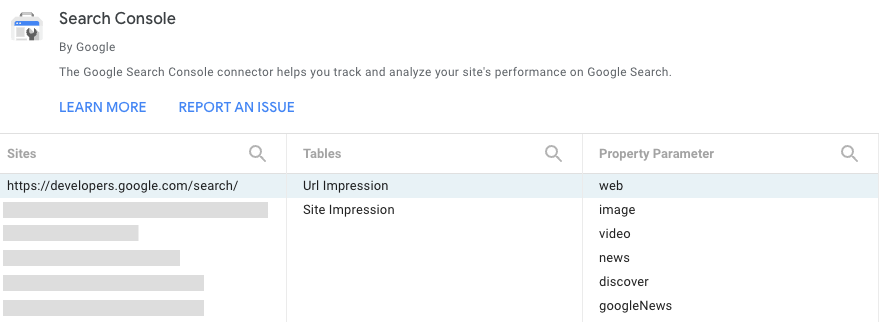
The parameters you choose will be the default parameters in your reports, but you can access other parameters through filters.
What can I do with the Google Data Studio Dashboard?
Now that your dashboard is set up, here’s a detailed look at what you can do with it.
- Specify the data to monitor by selecting the desired Search Console property.
- Select the date range you want to analyze
- Select filters such as country, device and search type
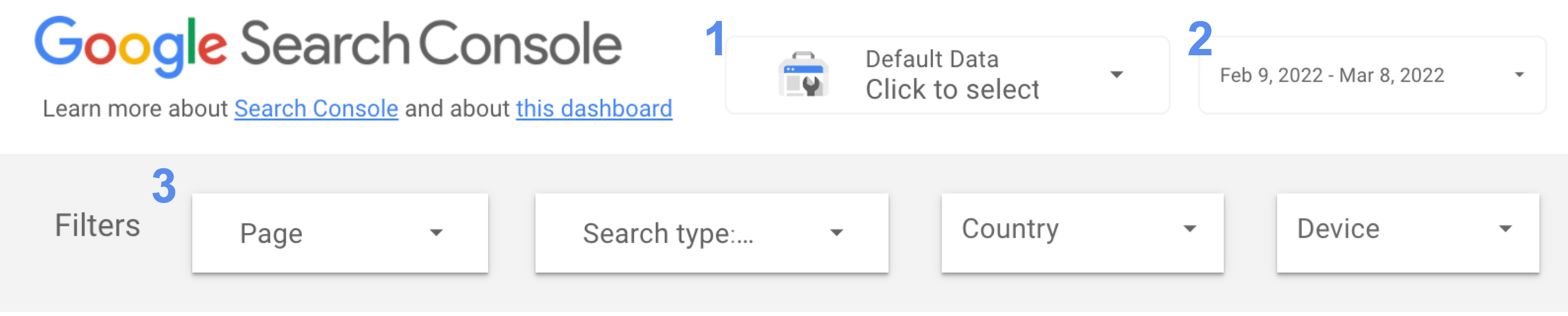 Screenshot from: developers.google.com/search/blog, March 2022.
With these selected, Data Studio will render a line chart like the one below.
Google says line charts are the most effective visualization for showing how metrics change over time.
The graph below shows the number of clicks and CTR.
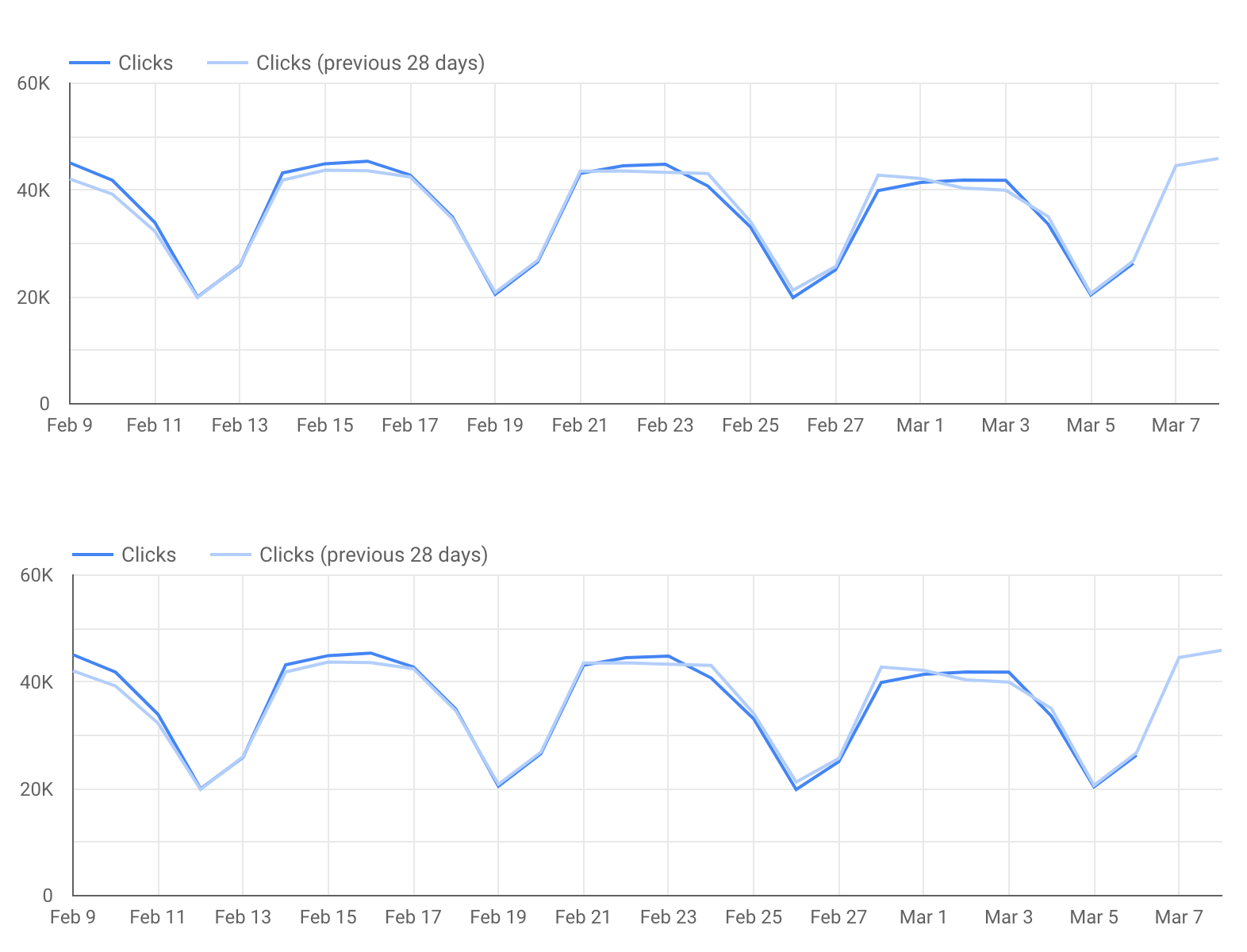 Screenshot from: developers.google.com/search/blog, March 2022.
Another way to analyze data in Google Data Studio is to use tables.
Using tables, you can drill down to specific sections of your website or individual URLs.
See an example of a table below showing clicks and CTR for a single page:
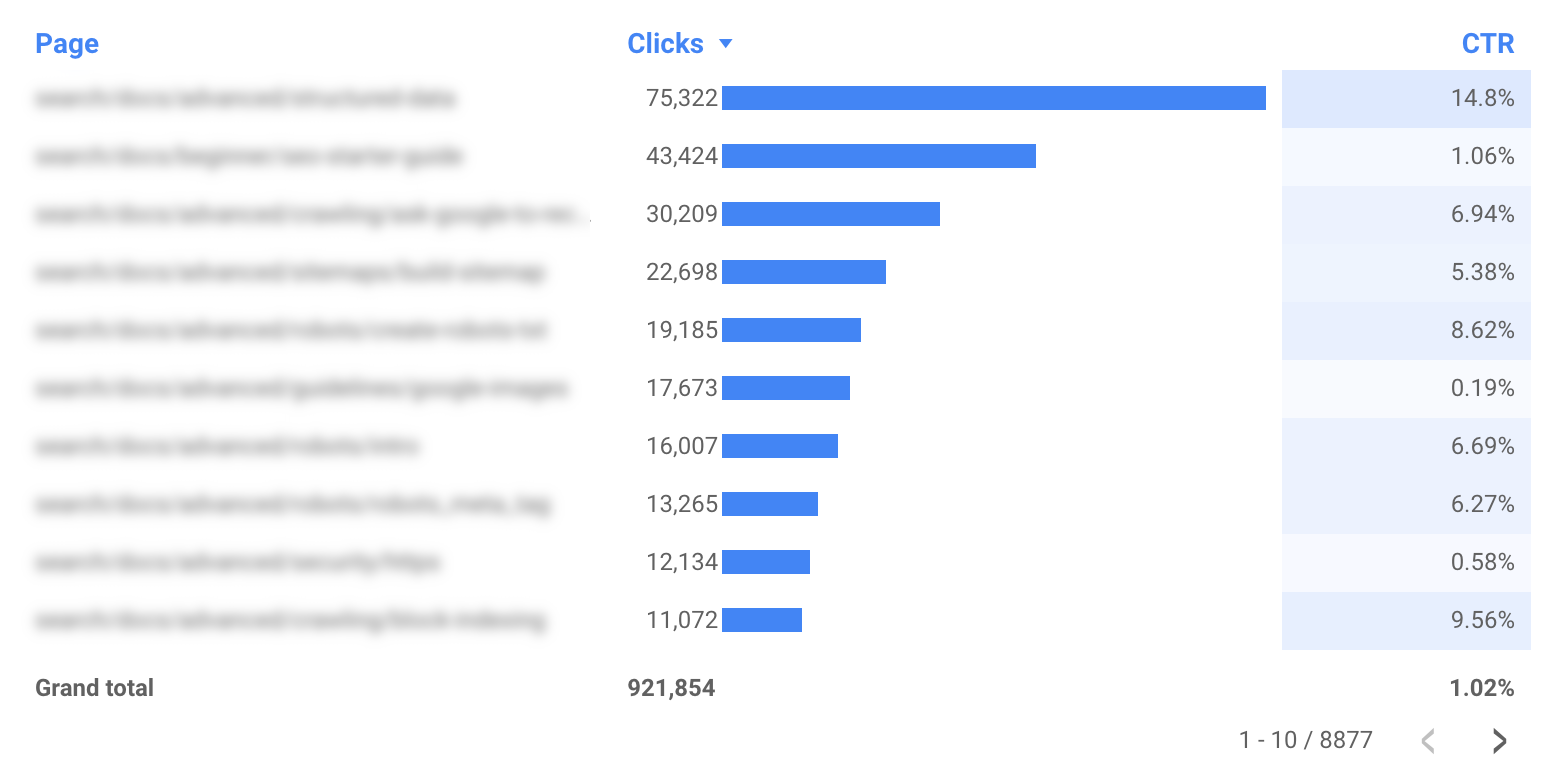 Screenshot from: developers.google.com/search/blog, March 2022.
You can create a table similar to the above in Data Studio using the following filters:
- use Page Filter to include only specific parts of your site.
- use nation Filters to check how different pages are performing in the countries you care about.
- use Types of Filters to analyze URL-level performance for each data type.
resource: Google Search Center
Featured image: Aleksey Novikov/Shutterstock


