


Headless commerce is when you will introduce your store (frontend) from its Feature (Backend) – For example, keep colors, text styles, images, and forms independent of pricing, security, or checkout schema. Headless commerce has grown in popularity, especially over the past decade, as more and more entrepreneurs opt for a more flexible approach.
One of the main advantages of this technology is that it enables brands Enrich customer experience easier. Another is backend flexibility. Developers can focus on high-quality content and e-commerce solutions that manage all commerce functions behind the scenes.
Because the two ends of a headless commerce solution are decoupled, you can use different APIs and integrate technologies such as custom React.js, DXP, or Internet of Things (IoT) devices to create powerful experiences. The result is beautiful websites with agile, flexible e-commerce capabilities that allow for more freedom to innovate.
But let’s first look at headless commerce technology and how it works.
Common Components of Headless Commerce Systems
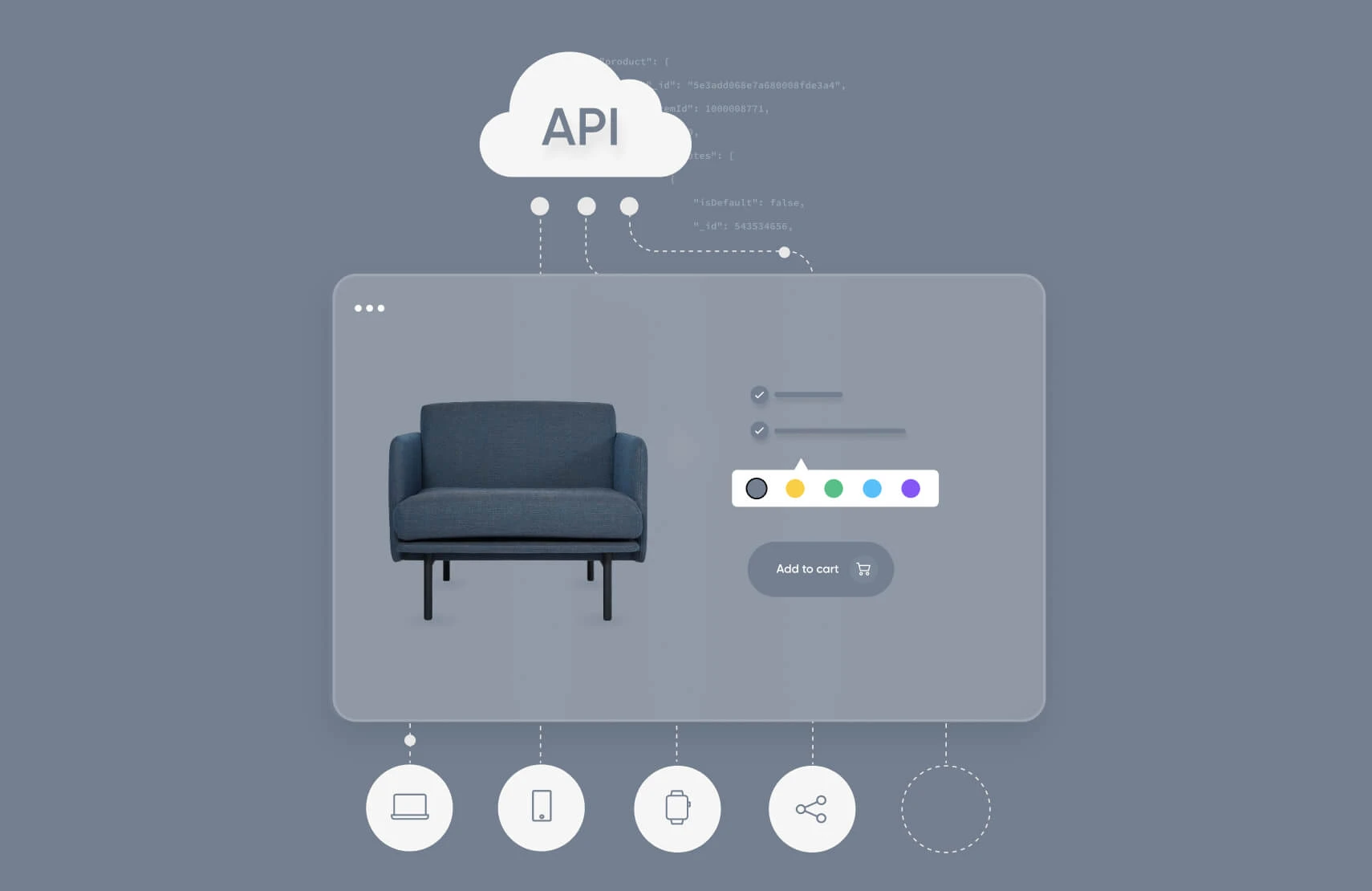
Headless commerce uses the presentation and application layers and passes requests between them using Web services or API calls. For example, when the user clicks the “Buy Now” button, the system sends a call to the application layer to process the order. The application layer then replies to the presentation layer to show the customer that the site has received their order.
By definition, a headless commerce solution has an API (such as GraphQL) that makes it easier to communicate and work with other platforms. APIs are the bridge for transferring data between frontend, backend, and any third-party services. The system’s architecture incorporates loosely coupled elements such as headless payments, search, checkout, and loyalty programs, which merchants can freely add, remove, or change.These components can then communicate with each other while remaining distinct entities, making such platforms ideal for Omnichannel Enterprise.
Many well-known companies use headless commerce solutions. For example, Netflix was one of the first companies to use the technology as the platform needed to avoid costly downtime. Due to the large scale of operations and long deployment times, Amazon also needed to add new features without slowing growth, so it also opted for headless commerce. Fashion brand Zalando moves from holistic to accelerated innovation and A/B testing.
What are the benefits of headless commerce?
There are several benefits to using a headless commerce platform, which is why many large enterprises choose this solution for their business. For example, development teams can work more flexibly and fully own the site architecture, while clients can use sites that have been tested and optimized for usability. But there is more.
Quickly test and deploy new ideas
Having separate front-end and back-end reliability helps teams test new tools, interfaces, and content more easily. For example, backend teams can experiment with different APIs and frameworks as they see fit, working on each feature individually and integrating new features as the site grows. Front-end teams, on the other hand, can make design changes and deploy new features through continuous testing — and quickly roll back anything that doesn’t work. This means that both teams are able to respond to the market more efficiently, saving the company time and expense.
Increase employee adoption
When you don’t need advanced skills to access and update the front end of your e-commerce website, everyone on your team can make changes to your e-commerce store without having to learn new techniques with steep curves. Instead, all they need to do is log in, and they can start editing products using a friendly and simple interface. On the back end, developers can test new technologies without being constrained by traditional CMS functionality. As a decentralized solution, headless commerce can help the entire development team participate in modern frameworks.
Consistency across channels
Since the backend is a separate component, having standard coordination services (such as inventory, promotions, and product information) ensures a consistent brand experience across different channels and markets, such as in new regions, IoT environments, or through the launch of micro service brand. You only need to set up your system once, and you can fully replicate the experience. Headless commerce can also improve the customer experience. If a customer buys something, the system can use this data to understand their needs and deliver powerful personalization across CMS, mobile apps, and social channels.
speed
Headless commerce allows developers to replace the front end without affecting the back end. This helps front-end specialists focus on things like improving website loading speed and SEO. Unlike traditional e-commerce platforms, this approach also facilitates the delivery of relevant changes and updates. You just keep the functions that work and remove the ones that don’t work quickly.
Marketing effect
Ecommerce sites built on headless commerce tech can help marketing teams adapt trend when they appear. For example, marketers can innovate and build multiple experiences across different devices and channels without impacting back-end processes for social media, email marketing, customer loyalty programs, and more. This puts the marketing team in the lead, helping them launch multiple websites across platforms, with different departments, brands, and product mixes in just a few days.
Headless Commerce and Traditional E-commerce
There are some key differences between headless commerce and traditional e-commerce, the main difference being that most trading companies will likely employ decoupled commerce systems. Let’s detail the rest.
flexibility and adaptability
Traditional commerce systems require a lot of effort to change code, databases, and front ends. In many cases, what developers can update or edit is limited, and there are many risks associated with cascading and unintended consequences. For example, changes to the backend could take the entire site offline. This leaves little room for modification, as developers may need to make edits to multiple layers of coding between the front-end and back-end.
Headless commerce systems, on the other hand, allow developers to test changes on the front end without having to worry about modifying the database; all they need is a simple API call. So, for example, developers can implement a checkout process or add new fields to a form without worrying about a separate backend.
custom made
Legacy systems offer little room for personalization as they provide administrators and customers with a predefined experience. If you are familiar and used to using traditional platforms, this is not a problem. However, if you need more customization to your platform, traditional headless might be a better idea.
Headless systems allow developers to create user experiences from scratch and easily test them. They have complete control over the look and feel so that the entire user journey can adapt to different needs and discoveries.
judgment
For those planning to build an advanced e-commerce platform, a headless commerce structure can be a good option. As mentioned above, this structure provides more flexibility when making changes to the storefront. Not only that, but you also need a development team to build your front end from scratch.
However, if you need an online store to sell regular goods and services and don’t have the time, resources (or even the desire) to invest in an entire development team, traditional e-commerce is your best option. Instead of building your store from scratch, opting for a website builder like Ucraft can significantly speed up store creation and launch. It also makes it easier to start and manage your store from the start – no development team required!
start using Uket Try it for free or upgrade to our Professional Website Plan (Including Unlimited Pages and all its eCommerce integrations) for just $10 per month.


