


Are you wondering if your dog can enjoy these delicious fruits just like you? Think no more – the answer is in this article!
For many of us, summer equals delicious fruit. Peaches and nectarines included!
Naturally, your dog would like to have what you’re having.
So, is it safe to share some peaches and nectarines or should you keep them to yourself?
Newsflash – dogs love to eat and most of them will try anything they come across! However, it’s not uncommon to discover the hard way that your dog ate something it shouldn’t have and that’s bad for dogs.
In order to avoid that, it’s your responsibility as a dog owner to know what your dog can and can’t eat.
So, today we’re taking a look at two juicy fruits – peaches and nectarines. Let’s start with peaches!
Can Dogs Eat Peaches?
Can dogs eat peaches is a common question between new and even experienced dog owners.
With so many foods around, people can get easily confused which is why knowing which human foods are safe for dogs is a must. So… Can dogs enjoy this delicious summer fruit? Simply said, yes.
However, since fruit and vegetable should make only around 10% of a dog’s total meal, you should be careful when it comes to the serving.
Pieces are safe for dogs as long as they are served in small, best cut-up pieces without the skin.
Does this mean that the skin isn’t safe for dogs? Dogs can eat pieces with skin on but may find it harder to eat if the pieces are bigger.
It is not unusual for skin to get a bit stuck in the dog’s throat. To prevent any choking and coughing always cut the peach into small pieces, including the skin.
Why Are Peaches Beneficial For Dogs?
- Peaches are packed with minerals
- Rich in vitamins
- Great source of vitamins A and C
- Low in calories
- High in fiber
- Great source of antioxidants, which make them great to fight cancer
- Can boost the immune system
Can I Give My Dog Peaches?
Yes, as mentioned above peaches are in general safe for dogs to have. Furthermore, dogs tend to love peaches and they’re quite healthy as well!
So, they can be a great snack or treat and a great addition to your dog’s regular diet. Use them to make some fast and delicious summer treats.
However, there are some guidelines you have to follow if you want your dog to enjoy peaches without any problems.
Important: Always remove the pit before you serve peaches to your dog.
How Do I Serve Peaches To My Dog?
Peaches can be such a great treat for your dog IF you serve it the right way. So, how do you achieve that?
It’s actually pretty simple! All you have to do is to remove the pit and serve only the flesh of a ripe peach.
Peach pits, just like apple pits, contain cyanide, a compound toxic to dogs if they have it in big amounts.
Even though it usually takes more than one pit for the dog to become intoxicated, you should still remove the pit as a cyanide isn’t the only risk.
Namely, peach pits are really dangerous as dogs can choke on them.
This could lead to a blockage in the digestive tract and complicate things further. Besides, your dog can harm its teeth and jaw by chewing on the pit.
Also, remove all pits from the trash if you have a dog who’s raiding the bin.
If you have a peach tree in your garden don’t let your dog eat the leaves and stems as they’re toxic as well. Finally, clean the peach well before you give it to your dog as the skin is usually filled with pesticides and preservatives.
Since both peaches and nectarines are similar in shape, structure, and nutrients, it’s important to understand why pit is dangerous for your dog.
Check why when it comes to serving peaches and nectarines to your dog the pit is a big no-no.
What Do I Do If My Dog Swallows A Pit?
If your dog swallows a peach pit, look out for these signs of intoxication:
- Excessive drooling
- Dizziness
- Heavy breathing
- Dilated pupils
- Shock
Once again, the chances of this happening are very slim, but it’s not impossible, especially if you have a small dog.
If you suspect that your dog has swallowed a pit, take him or her to the vet as soon as possible.
Pits are not only bad but extremely dangerous for dogs. Pits are poisonous to dogs.
The main reason why pits are dangerous is that they contain cyanogenic glycosides (amygdalin), which is a form of cyanide.
As a toxin, cyanogenic glycosides slow down the enzymes in a dog’s body. These enzymes are responsible for transporting oxygen in the blood.
Now, let’s see what if nectarines are a great summer treat for your dog as well. But… Before we jump on this section, let’s see if canned peaches should be served to your Fido during the cooler months.
Can Dogs Eat Canned Peaches?
Contrary to fresh peaches, canned fruits shouldn’t be given to dogs.
Namely, canned peaches contain a lot of artificial sweeteners and preservatives which are really bad for dogs.
Besides, the syrup that the canned peaches come in is filled with sugar and is naturally very harmful to dogs and can lead to stomach problems. So, the answer is – no, dogs shouldn’t eat canned peaches or any.
Can Dogs Eat Dried Peaches?
Whenever you are in doubt if any food is safe for your dog or not, talk with your veterinarian. However, when it comes to dried fruit many will tell you to avoid feeding your dog with this type of food.
Dried fruit has no water inside, which is why it’s easy for sugars to build up. As you may know already, sugar is never a good option for dogs.
Not only sugar can lead to some stomach disturbances but it can also be highly toxic and put a dog’s life in danger. To avoid any possible disturbances, make sure that your dog doesn’t eat dried peaches.
In general, avoid any food that contains sugar, especially food that is rich in sugar.
Can Dogs Eat Nectarines?
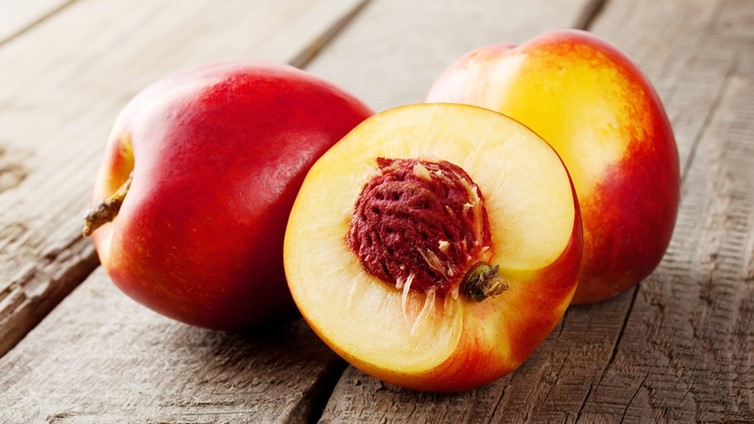
Yes! Just like peaches, dogs can safely consume nectarines and enjoy this fruit with you.
And just like peaches, nectarines can be quite beneficial to dogs and they can enjoy the many benefits. But, you have to be careful here too as nectarine pits also contain cyanide.
Nectarines and peaches are similar to the eye, the biggest difference being that nectarines have smooth skin while peaches have fuzzy skin.
Their benefits are also quite similar. Let’s take a look!
Why Are Nectarines Beneficial For Dogs?
- Rich in vitamin A
- Rich in vitamin C
- A great source of minerals and antioxidants
- Have properties that fight various types of cancer
- Rich in proteins, which is great for repairing tissue and healing of wounds
- Boost the overall immune system and fight against infections
- Keep the skin healthy and fight off skin infections
- Rich in vitamins and minerals
- High in fiber
- Can boost the immune system
- Improve liver and kidney functions by removing toxins from the body
- High in fiber
- Relatively low in calories which makes them a great treat for training your dog.
As you can see above, nectarines are packed with many vitamins and minerals that can serve overall health and the immune system. Nectarines contain vitamin A which is an essential vitamin for dogs.
In fact, vitamin A is so much needed in a dog’s regular diet. Why is vitamin A so important for dogs?
For a dog to maintain his optimal health vitamin A should be included in his daily diet to keep his skin, coat, muscles, and nerves in balance.
What about vitamin C? Nectarines are high in antioxidants, which means that they contain vitamin c. As such, they are great as an occasional vitamin C boost for your dog.
How Much ‘Vitamin A’ Can My Dog Have?
Nectarines contain a small amount of vitamin A, but that doesn’t mean that you should serve your dog nectarines every day to get enough vitamin A.
Dogs should get this vitamin from foods such as liver, fish liver oil, and egg yolks, or from vegetables such as carrots, kale, and sweet potato.
Dogs should have a limited amount of different vitamins. As for vitamin A, dogs should have 3,333 IU of vitamin per kilogram for dogs of all breeds and life stages.
Can I Give Nectarines To My Dog?
Nectarines aren’t toxic to dogs, but that isn’t the reason to serve this fruit in enormous amounts. If it were up to dogs they would eat until they puke. After that, they would eat again.
Nectarines are packed with sugar and high sugar content can lead to gut issues and lead to vomiting and diarrhea.
This won’t happen if your dog eats nectarines in small amounts and really tiny pieces. However, if he grabs much more nectarines than he should eat, you can expect some cleaning to do.
If your dog starts eating grass while outside (and he had nectarines that day or the day before) know that he ate too much.
If vomiting and diarrhea after eating nectaries become too excessive, make sure that you contact your veterinarian.
How Do I Serve Nectarines To My Dog
Just like peaches, nectarines are easy to serve to your dog. At least that is the case as long as you do it the right way.
Always first remove the pit. Although nectarines are safe for your dog, the pit isn’t and should never be a part of any snack.
Serve only the flesh, and peel the skin. You can serve them as a summer treat.
Your dog will love that fresh and raw nectarines taste. You can freeze nectarines and serve them as a delicious snack on really hot summer days.
Dogs cool off differently than humans do and a cool snack should help them cool down their body temperature and prevent heatstroke.
Do not force your dog to swallow a frozen nectarine – just place it in his bowl and he will lick and ingest it in his own rhythm.
Can Nectarines Be Dangerous For Dogs?
Even though the flesh of ripe nectarines is perfectly safe to give to your dog – and is even healthy – nectarines can be quite dangerous if you don’t remove the pit. Just like the peach pit, the pits in nectarines also contain the toxic ingredient cyanide.
Besides being an intoxication risk, the pits are especially dangerous as they can be a choking hazard. In order to avoid blockage, always slice up pieces and give them to your dog directly from your hand.
To avoid choking hazard situations, you should learn how to deal with choking hazards in your dog, if it ever occurs. Know that the best way to help your dog when choking is to prevent it.
If you need more input on how to avoid dangerous situations when it comes to food, make sure that you talk with your vet.
Finally, if you’re growing fruit at home, don’t let your dog be near the fallen fruits as they’re really dangerous to dogs. Namely, when fruit decomposes it produces ethanol.
Alcohol, as you probably know, is really toxic to dogs. And just like with peaches, avoid canned nectarines as they’re full of sugar and undesirable ingredients to dogs.
Can Dogs Have Nectarines With Skin?
If your Fido eats nectarines in small pieces with some skin on he should be fine.
In general avoid feeding your dog with any fruit skin, and always peal. It applies also to other fruit, such as apples.
How Much Nectarines Should Dogs Have?
Just like with any fruit or vegetable, moderation is the key. Don’t go overboard as you will do more harm than good for your dog.
Nectarines can be really healthy in moderate amounts and should be used as a treat or an occasional snack.
If you go overboard, chances are your dog will experience stomach problems and diarrhea. There’s no need to overdo it; your dog will benefit from the small amount, but only have problems if he or she eats too much fruit.
Can Dogs Eat Canned Nectarines
Fresh nectarines are fine to serve to your dog as an occasional treat. However, when it comes to canned nectarines (or any other fruit) you should never serve them to your dog.
Canned nectarines, peaches, beans, or any other fruit or vegetable should never be served to your dog.
Canned nectarines should be occasionally served to people, and never a meal option for dogs.
Canned products are packed with artificial sweeteners and preservatives which are really bad for dogs. Plus, canned nectarines are filled with sugar that is dangerous to dogs as it may lead to many stomach issues.
All in all, canned nectarines should not be served to dogs.
Canned nectarines are commonly packed with preservatives and added sugar that dogs do not need. Preservatives are not healthy for dogs and can lead to many health disturbances.
If your dog eats a small amount of canned fruit but you know for sure that it’s not high in bad ingredients he should be fine. If you notice anything unusual in his behavior, make sure that you contact your veterinarian.
Can Dogs Eat Dried Nectarines
This one works similarly to canned nectarines. Dried fruit has no water inside, which is why sugars get concentrated, making them harmful to the dog.
Plus, store-bought dried fruits are usually packed with chemical compounds that can be harmful or dangerous to dogs.
Can Nectarines Lead To Obesity In Dogs?
Nectarines shouldn’t lead to obesity in dogs, because dogs should only eat a small amount of this fruit.
Nectarines may come with many health benefits, but it doesn’t mean that they cannot create some disturbance in dogs’ bodies.
Dog’s digestive system is sensitive and too much food rich in fibers can lead only to diarrhea.
Plus, an upset stomach can lead to additional disturbances. Make nectarines a healthy snack that is served from time to time, and avoid offering pits and in general food that contains traces of cyanide.
What to do if your dog experiences some weight gain? If this happens, you should know that dogs’ bodies thrive on food that is specially designed for them.
Digestive health in dogs is something that you should really care about.
Weight gain can only be a current thing and extra exercise and diet reduction should lead to weight loss.
Which Is Healthier Peaches Or Nectarines?
Did you know that nectarines are actually a type of peach? The main difference is that nectarines are without fuzzy skin.
Nectarines have smooth skin which is why they are more appealing to some.
Nutrients-wise, they are both similar: they come with certain vitamins and minerals that a dog might benefit from, plus they have fiber and micronutrients.
In the human diet, peaches are more suitable for baking due to their soft texture, while nectarines stay firm for cooking making them great for winter treats.
Conclusion
Great news! Both nectarines and peaches are safe to give your dog and can be really healthy.
Both of these fruits are rich in vitamins, minerals, and fibers and have antioxidant properties. Besides, they’re relatively low in sugar which makes them great snacks and treats when training your dog.
Be careful when it comes to fiber and foods packed with fiber in general.
Too much fiber can make it difficult for the dog’s body to absorb minerals as it should.
Thanks to many minerals nectarines are beneficial to dogs when served only in moderation.
However, you ALWAYS have to remove the pit from these fruits for two reasons. One – the pits contain cyanide which is toxic to dogs and can cause intoxication.
Two – the pits represent choking hazards and can get stuck and cause an obstruction. Besides the pit, don’t let your dog have the green parts or the stem of these fruits as they’re toxic too.
Finally, serve only in moderation. You want those minerals to stay in the dog’s body and serve properly.
No matter how healthy fruit or a vegetable is, there’s no need to go overboard and give your dog big amounts. On the contrary; it will only cause problems. Treat (safe) fruits and vegetables as a supplement to your dog’s diet, not as a replacement.
Last, but not least… Know that once you get a dog you are directly responsible for his health.
To keep him healthy and strong, you should provide the right nutrition, learn diabetes basics, and keep Fido’s weight in balance.
To help your dog reach his senior years, without major issues, avoid feeding with any kind of sugar, food that contain high sugar levels, contains any added sugar, know the signs of cyanide poisoning, and know your dog’s normal behavior so you can know when to contact your vet.
When it comes to peaches and nectarines, serve your dog only fresh nectarines, and avoid nectarine pit.
Frequently Asked Questions On Peaches, Nectarines And Dogs
1. Are Nectarines Choking Hazard For Dogs?
No, nectarines aren’t the choking hazards for dogs. If your dog eats a bit of nectarine skin he should be fine. However, the choking hazard that nectarines contain are pits.
Pits are dangerous to dogs of all sizes and breeds.
Rotten nectarine is usually toxic for dogs as they are high in sugar. This is something to think about when it comes to serving nectarines to your Fido this summer. All in all, avoid pits as they are seen as bad for dogs.
Pro tip: Whenever you are in doubt if your dog should eat something or not, you should talk with your vet. This is especially important if you are making major food changes, like switching to raw food from a dry food diet.
2. Are Nectarine Pits Dangerous To Dogs?
No matter how big those puppy eyes might be, make sure that nectarine pits are kept far away from your dog. Pits are packed with cyanide which is poisonous.
Plus, pits – especially nectarine pits due to their size – are a real-life choking hazard and can put your dog into a life-threatening situation.
3. What Are Signs Of Cyanide Poisoning In Dogs?
Common symptoms of cyanide poisoning in dogs include drooling, watery eyes, vomiting, and voiding of urine and feces.
It is also common for dogs to experience muscle spasms. Whenever an animal consumes something toxic first symptoms will appear within the first 15 to 15 minutes.
If your dog starts to act unusual make sure that you monitor him closely and contact your veterinarian.
4. How To Make Nectarine Ice Cube Trays?
Take fresh nectarines and peel them. Make sure that there is not even the smallest part of the nectarine put. Cut them into really super small pieces or blend them.
Take the ice cube tray and fill it up halfway with water, place nectarine pieces or negative juice (that you just have blended) until the tray is full.
Place the ice cube tray in the fridge and freeze until solid. Serve to your dog.
If you want to step up your game of refreshing treats, you may think about adding yogurt.
You can use ice cube trays to place in plain yogurt and blended nectarines, or you can simply share a few spoons of yogurt with your dog on hot summer days.
5. Can Nectarines Lead To Diarrhea In Dogs?
As mentioned earlier, large amounts of nectarines can lead to stomach disturbance in dogs.
In other words, yes, nectarines may lead to diarrhea. This can also lead to other kinds of issues, such as dehydration. If your dog experiences diarrhea make sure that he can access fresh and clean water.
6. What Is The Most Toxic Fruit To Dogs?
Grapes and raisins, including dried grapes.
Keeping your dog healthy and strong means that you can provide the right nutrition. The right nutrition is also a safe one, without toxic materials.
No matter how large or strong your dog might be, he will be in big danger if he reaches toward grapes and raisins, as they can lead to acute sudden kidney failure.
7. Are Nectarines High In Potassium?
One of the nutritional features nectarines and peaches share is potassium.
Did you know that one large nectarine has 314 mg of potassium? Or that potassium is vital when it comes to a dog’s health?
Potassium is an electrolyte and helps the normal functioning of electrical charges in the heart, nerves, and muscles.
If your dog is constantly tired, has no energy, or even refuses food it may mean that his potassium levels aren’t in balance.
Some of the signs of low potassium in dogs include vomiting, lethargy, muscle pain, and overall muscular weakness.


