


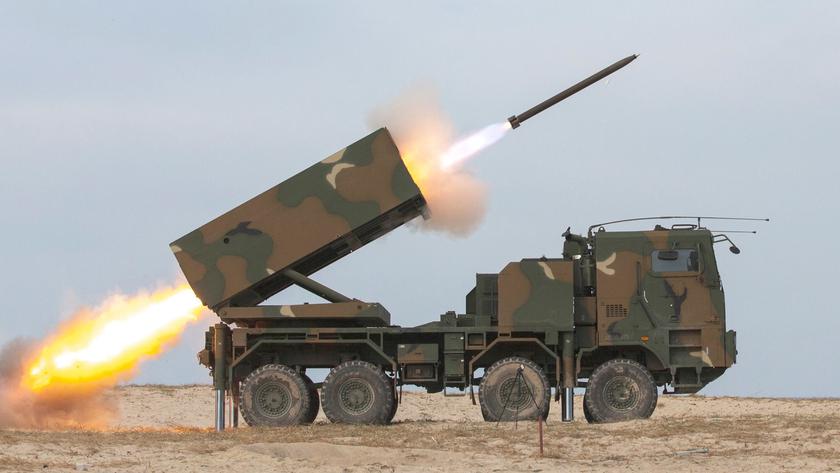
The effectiveness of the Multiple Rocket Launch System (MLRS) on the battlefield has been highlighted by the pivotal role played by the Ukrainian Army when it was introduced.
Even before this, many militaries had been considering the purchase and deployment of the MLRS and the US M142 HIMARS (High Mobility Artillery Rocket System) from Lockheed Martin, which is often the weapon system under consideration.
The Australian Army has incorporated HIMARS into its future force modernization efforts, requesting the purchase of twenty (20) HIMARS as well as various rockets and US government support. Although the contract has not yet been finalized, the request was approved in May 2022.
Now, however, Hanwha Defense in the Republic of Korea will not only offer its K-MLRS system as a replacement, but will also include technology transfer and local production of the system and its missile munitions.
The K-MLRS M239 Cheonmoo (Chunmoo) was developed by Hanwha in 2013 and is in service with the South Korean Army. It uses a heavy duty 8 X 8 tactical truck chassis and armored crew cab. It fires a range of projectiles, including the South Korean-developed 130mm and 230mm, with delayed detonation effects. The 130mm versions have ranges of 23 and 36 km, and an 80 km model is in development. The 239mm has a range of up to 80km (though some reports suggest 160km) and includes a GPS/precision warhead. The 227mm is compatible with the US GMLR used with its HIMARS. The projectiles are housed in two pods, each with 20 130mm rockets and 6 227/239mm rockets.
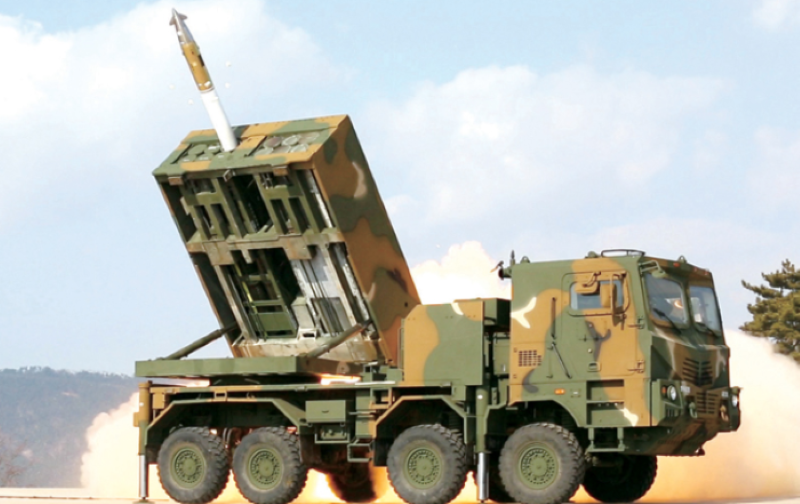
Cheonmoo has a crew of three and uses a digital fire control system with onboard position/navigation that can quickly move, stop, fire and move again. The M239 is equipped with an ammunition resupply/reload K239T vehicle, which uses the same chassis to carry two reloads. South Korea includes a command vehicle with each battery. The system can be transported on a C130 aircraft.
Poland is also confirmed to be interested in the M239 K-MLRS and is in parallel discussions with the US and Hanwha. The latter is reportedly expanding the same co-manufacturing to Poland as it has already expanded to Australia.
Stephen W. Miller


