


Faced with today’s climate change concerns, people are more concerned about their carbon footprint and, in general, doing their best to be more environmentally conscious. Therefore, eco-friendly houses are becoming more and more popular.
The eco-friendly home uses recycled materials, renewable energy, and sustainable landscaping. When built properly, it can help reduce pollution, allow you to enjoy water and energy savings, and also increase the value of your home.
To help you get started, here are some valuable tips for making your home green:
- use solar energy
One of the ways to build an eco-friendly home is to use solar energy. It is a renewable, clean energy source with positive long-term financial impact. In other words, it’s a smart investment. If you’re curious about how much you’ll spend or save, here’s an example: Oregon Solar Cost Breakdown.
To harvest and store solar energy, you need to install solar panels that convert sunlight into energy that produces electricity. Currently, there are different types of solar panels. If you don’t know which type is right for your property, working with a professional solar panel installer can help you make the right choice.
- Choose Sustainable Building Materials and Home Decor
To build an eco-friendly property, you should choose sustainable materials wherever possible, such as recycled plastic, recycled wood, natural products and recycled glass.then dotted with space Eco-friendly decoration.
The advantages of using sustainable materials and finishes go beyond preserving nature. First, using them reduces your exposure to harmful toxins.
Most traditional building materials contain harmful toxins. For example, polyvinyl chloride (PVC) is used to make sewer and water pipes, window frames, gutters, and insulation for electrical cables. Formaldehyde is another chemical commonly found in most building materials. It is often found in adhesive paints and materials or pressed wood products. Both PVC and formaldehyde may cause respiratory and skin irritation.
Using green materials and finishes, you can improve the air quality, natural light and temperature in your home. In turn, these conditions can promote your health and well-being.
- buy energy efficient appliances
When it comes to appliances, consider purchasing energy-efficient appliances. As the name suggests, they use a small amount of energy to complete a task. Since they use less electricity, they reduce emissions and reduce energy waste. Most of these devices can even run on low energy and temperature settings, which helps maintain their functionality until the task is complete.
Some energy-efficient appliances you can consider are as follows:
- Dryer
- washing machine
- dishwasher
- lighter
- water heater
- Air conditioning units
- refrigerator
Here are some things to consider when shopping for energy-efficient appliances:
- Check the Energy Star label: Appliances with the ENERGY STAR label are considered energy efficient. The ENERGY STAR label is a government-backed trademark symbol created exclusively by the Environmental Protection Agency (EPA). It helps consumers learn more about the environmental impact of products and enables them to make informed decisions when purchasing appliances.
- Compare costs: While it’s tempting to choose the cheapest device, it’s crucial to compare costs. Energy-efficient appliances are often expensive, but they can save a lot of energy over time because they use less energy.
- Choose the right size: The size of your device matters. Appliances that are too large for your home may use more energy to run. On the contrary, appliances that are too small may need to be used for a long time, and the efficiency is low. So when shopping for energy-efficient appliances, choose the right size for your space so you don’t waste energy.
In addition to the above considerations, it may be convenient to check tax refunds and credits. Most states offer tax credits and incentives for people who buy certain energy-efficient appliances.
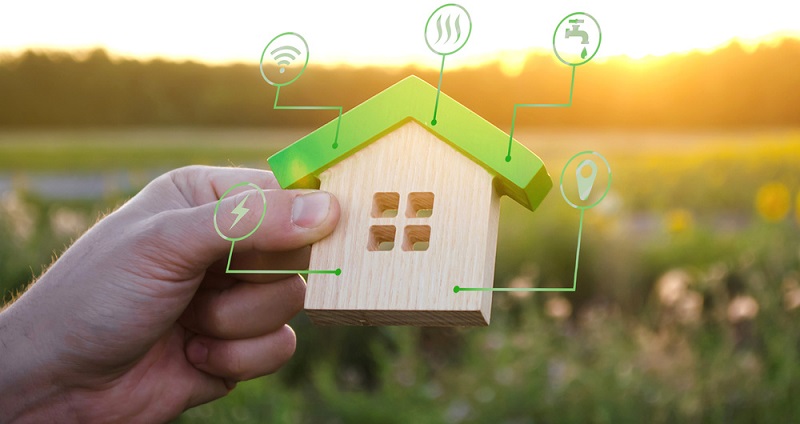
Symbol of tiny houses and utilities. Choose a home to buy, evaluate the cost and condition of the building. The location in the city. Repair, refurbishment and maintenance services.
- use energy saving light bulbs
Another way to build more sustainable home Is the use of environmentally friendly light bulbs. Unlike traditional light bulbs, they last longer and use less electricity to emit the same amount of light.
Common energy-saving light bulbs are compact fluorescent lamps (CFLs) and light-emitting diodes (LEDs). While these bulbs are often expensive, it’s worth switching from traditional bulbs to them.
There are several factors to consider when choosing an energy-efficient light bulb, such as:
- Lumen value: Back then, people usually knew how much power a bulb needed and how much brightness it produced by looking at the wattage. In the past, wattage was directly proportional to brightness. With the invention of energy-saving light bulbs, people began to focus on lumens. CFLs use fewer wattages than regular lights for any given amount of illumination. So when buying, look at the lumen value, not the wattage, to know how much brightness the bulb can produce.
- Types of: There are many types of energy-saving light bulbs. Choose based on where and how you want to use them. For example, if you want a light bulb for outdoor lighting, you can use CFL lights. Chandeliers and spotlights use LEDs, while dimmable lights may use Class B or halogen (LED) bulbs.
- color: If you want natural light, choose warm or soft white bulbs. For areas that need more light than usual, try pure white or cool white energy-saving bulbs.
You can always seek the advice of a professional interior designer when choosing a light bulb design. In addition, when installing, it is best to contact a professional installer. As experts, it is easy for them to give excellent advice on eco-friendly lighting.
- Invest in landscaping
Landscaping is essential to making your home green.
When properly designed, landscaping can help minimize energy consumption。 A healthy lawn can help block direct sunlight from hitting the walls or windows of your home. The shade of plants and trees around the house can significantly reduce the temperature of the house. You will need a good and proper landscaping to lower your energy bills and reduce your reliance on cooling and heating systems.
A well-designed lawn also prevents soil erosion and water loss. Plus, considering water use and maintenance during the design phase won’t impact your bill much.
Here are some landscaping ideas you can consider when building an eco-friendly home:
- Utilize Organic Mulch
Bark, pine needles, wood chips, leaves, and other organic mulches offer a variety of benefits. Mulch retains moisture and regulates soil temperature. These conditions help keep plants healthy and vigorous. Mulching also discourages weed growth and makes weeding easier.
As the organic mulch breaks down, it adds more nutrients to the soil. So, mulching drip lines under trees not only helps retain water, but also reduces your lawn’s carbon footprint.
- Choose Low Water Native Plants
When it comes to trees and plants for your home, choose plants that are native to your area. Native plants and trees attract butterflies, birds and other native wildlife.
The benefit of native plants is that they require little maintenance because they are naturally resistant to local pests and diseases. Since they don’t require pesticides, supplemental watering, or fertilizers, they’re inexpensive, easy to maintain, and environmentally friendly.
Also, check for low-water plants such as stone lotus, thyme, and California wild lilac. Not only are they low maintenance, but they are also visually striking.
Instead of growing grass, consider laying a ground cover for your lawn. Ground covers are advantageous because they cling to the ground and require little mowing. You don’t even need to use herbicides or extra watering.
Clover is the best ground cover for lawns. It stays green and smells sweet, feels soft and supple underfoot and helps avoid soil compaction. In addition, creeping perennials can be used for ground cover lawns. They smell great, feel soft and require little maintenance.
You can also implement other landscaping ideas. However, for best results, it is wise to work with the best landscaping experts in your area to learn which plants, trees and designs will best suit your needs.
- install a cool roof
Unlike typical roofs, cool roofs reflect sunlight while absorbing less heat. It has high solar reflectivity, which means it can reflect sunlight and save more energy.
Originally, cool roofs were available in white and other lighter shades of color. But today, homeowners can choose from a variety of dark color options. Cool roofs also increase roof durability and reduce thermal effects.
Cool roofs also improve comfort and health by minimizing indoor air temperatures with or without air conditioning.Therefore, it can help prevent heat related death and disease.
Since cool roofs reduce energy use, they can help reduce air pollution and greenhouse gas emissions, which harm the environment. Therefore, green roofs are an excellent option for building eco-friendly homes.
in conclusion
Building an eco-friendly home may seem complicated and expensive, but it’s not. Today, it’s easy to build a sustainable home with a low carbon footprint, and without breaking the bank. All you need is to explore the options and work with the professionals without hesitation to create the green home of your dreams.

