

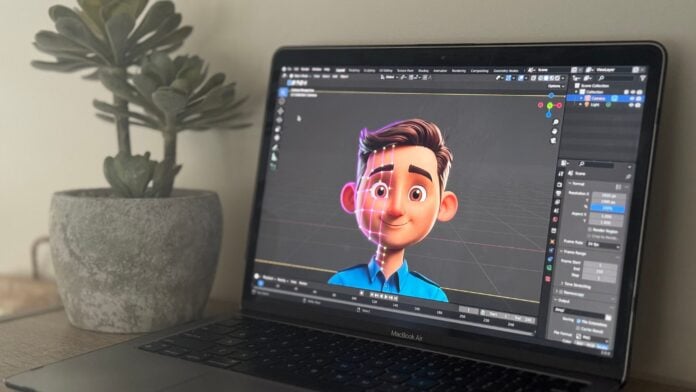

Product animation is a short digital video, built from a 3D computer model, that shows an invention moving, assembling, or being used, without anyone filming a physical unit. A pitch needs one when the product’s value lives in motion or mechanism that a still picture cannot carry. If an invention folds, locks, snaps together, dispenses, or changes shape, a company reviewing it has to see that behavior to understand the idea. Animation shows it in twenty to forty seconds.
How animation differs from a still rendering
A photorealistic rendering is a single frame. It answers one question: what does the product look like. That is enough for a simple object whose function is obvious from its shape. Animation answers a different question: how does it work. For a multi-step gadget or a moving assembly, the still image leaves the viewer guessing, and a guessing reviewer is a reviewer who says no.
Both deliverables come from the same source, a CAD model. Once a product exists as accurate 3D geometry, a designer can light it for a still rendering or set it in motion for an animation. The model is the asset. The rendering and the animation are two views of it.
When a pitch actually needs animation
Not every invention does. A reusable lid, a grip, a flat organizer: a clean set of renderings tells the whole story. Animation earns its cost in a narrower set of cases.
Hidden or internal mechanism
If the clever part happens inside the product, a cutaway animation that reveals the internal action communicates in seconds what a paragraph of description cannot.
A sequence of steps
Products that transform, such as something that collapses for storage or converts between two modes, need to be shown in sequence. A viewer who watches the steps understands the claim immediately.
A use case that depends on context
When the value is in how a person interacts with the product, an animation that places it in a realistic scene answers the company’s first question, which is whether anyone will actually use this.
What product animation costs
Pricing varies by complexity and length, but published figures give a useful anchor. Enhance Innovations, a product development firm in Champlin, Minnesota, lists product animation as a roughly $2,500 add-on and bundles it into its top virtual prototype package at about $9,500, according to the firm’s published pricing. A short animation of a simple mechanism sits at the low end; a longer piece with several scenes and internal cutaways runs higher.
That spend is worth weighing against what it replaces. Filming a physical prototype means building one first, which often costs more than the animation and locks the design before a company has weighed in.
The virtual-first context
Companies now license inventions off renderings, CAD, and animation, without ever holding a physical sample. Enhance Innovations, which has worked in virtual-first product development since 2010, builds its core deliverable as a digital package: renderings, a CAD model, and optional animation, with physical models scoped only when a specific project calls for one. The shift matters for budgeting, because it means an inventor can present a polished, moving demonstration of an idea long before committing to tooling.
The United States Patent and Trademark Office still requires formal patent drawings, which are static line illustrations, as part of a utility application. Those drawings serve the legal record, not the sales pitch. An animation is a separate, commercial tool. The two coexist. You can read the agency’s guidance on application requirements at the USPTO patents basics page.
How to decide
Ask one question: can a still image, plus a sentence, make a stranger understand how this works. If yes, renderings are enough and animation is an optional upgrade. If the honest answer is no, that the product only makes sense in motion, then animation is not a luxury, it is the difference between a pitch that lands and one that confuses. University commercialization offices, which review inventor disclosures constantly, make the same call when they prepare materials for industry partners; the University of Minnesota Technology Commercialization office is one example of a group that translates raw inventions into materials companies can evaluate. Independent inventors weighing the same choice can also review the small-business resources at the U.S. Small Business Administration.
This article is educational and is not legal or financial advice. Inventors should confirm current filing requirements and do their own research before committing to a path.


