

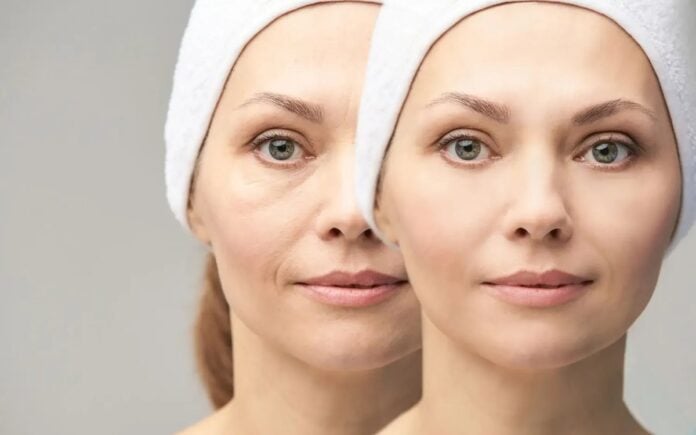

Faces age in two directions at once. Tissue descends, which shows up as jowls and loose skin along the jaw, and the face also deflates, which hollows the cheeks, deepens the area under the eyes and thins the lips.
The two changes call for different tools. Lifting surgery repositions what has dropped, and it cannot restore fullness that has gone. For lost volume, a Houston practice’s guide to facial fat transfer describes a procedure that uses the patient’s own fat in place of synthetic material.
Deflation and descent
Leo Lapuerta, MD, FACS, a triple board-certified plastic surgeon, has offered fat transfer and facelift surgery for more than 30 years, and his practice describes facial aging as a combination of volume loss and sagging. A face can show one more than the other, and the balance between them shapes the plan.
His practice lists the volume-related concerns that bring patients in for fat transfer: hollow cheeks from aging or weight loss, deep under-eye circles or sunken tear troughs, thinning lips or lost lip definition, creases around the mouth such as smile lines or marionette lines, and a general loss of fullness that reads as tired.
The practice notes that fat transfer often accompanies an eye lift or a facelift. In that pairing, the lift addresses descent and the fat addresses deflation, and many patients combine the two for more complete facial rejuvenation.
Three steps, two sites
A facial fat transfer moves fat from one part of the body to the face. Dr. Lapuerta’s practice completes it in three steps:
- Harvest. Using liposuction, the surgeon removes a small amount of fat from an area such as the abdomen, flanks or thighs.
- Processing. The surgeon cleans and purifies the fat so that whole, healthy fat cells remain.
- Injection. Dr. Lapuerta places the graft into the target areas, such as the cheeks, under-eye hollows or lips.
The harvest can also slim and contour the donor area, which the practice counts as a second benefit. The liposuction and grafting incisions are very small.
The procedure takes place in Dr. Lapuerta’s on-site accredited surgical facility under local or general anesthesia, depending on comfort and the treatment plan. He owns and operates the facility, which holds QuadA (AAAASF) accreditation, and he works only with physician anesthesiologists. Most procedures take between one and two hours, and patients go home the same day in most cases.
Recovering in two places
Because the procedure involves a donor area and a treatment area, swelling, bruising and tenderness can appear in both. The practice says the swelling should start improving within a few days and should be gone by four weeks after the procedure. Most patients return to daily activities within 7 to 10 days, and the first follow-up comes about a week after surgery.
Discomfort during recovery tends to be mild, and the doctor may prescribe pain medication. The final result appears over the next few months as the transferred fat integrates. Every surgical procedure carries risks, and fat transfer is no exception; the consultation should cover them.
Durability and weight
The practice describes facial fat transfer as a long-term treatment, explaining that the body does not break down transferred fat the way it breaks down certain fillers. Not every grafted cell survives, and how much fat takes hold varies from patient to patient, a point worth raising with the surgeon. Durability also depends on weight. Significant gain or loss can make the facial fat shrink or expand, which is why the practice looks for candidates who are in good health and at their ideal weight before surgery.
The ideal candidate, as the practice describes it, wants more volume in the cheeks and other areas while keeping a natural look, and wants a longer-term result than injectables such as Juvederm provide. Because the material comes from the patient’s own body, the practice notes that it avoids the risk of an allergic reaction or rejection.
A patient whose main problem is loose skin and jowling will not get there with fat alone. For a face that has mostly lost fullness, though, a small amount of fat from the abdomen or thighs can help restore the cheeks and under-eye area that a lift would leave flat.
This article is for general information only and is not medical advice. Results vary from patient to patient. Consult a board-certified plastic surgeon or your physician about your own situation. Written in partnership with Joseph Lambert, a publicist working with Leo Lapuerta, MD Plastic Surgery.


