


You’ve heard of its magical powers. Digital marketers swear by it, saying it can uncover some of the highest-intent, most-searched keywords in your industry.
Competitor keyword analysis.
But there are tons of competitors to sift through, hundreds of different tools at your disposal, and even more keywords to consider. How can you harness this magic without spending hundreds of hours?
Screen all noise by following a proven process. In this post, I’ll walk you through the process I use at my agency, Rank Tree, to usurp competitors, game of Thrones-style, on behalf of my client.
What is competitor keyword analysis?
Competitor keyword analysis is the process of finding out which queries your competitors are ranking for in search results and reverse engineering what they are doing to outperform them.
it can be used for Do keyword research for SEO and PPCand is one of the quickest and easiest ways to find the highest-intent keywords for your business—those that lead to conversions and sales on your website.
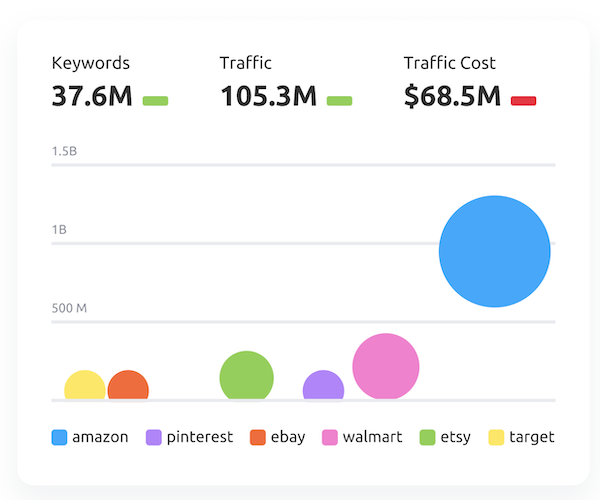
I can verify this. In almost every campaign we do, competitor keywords are one of the biggest factors in our SEO decisions.
But despite its amazing power, a lot of people get it wrong. Making the same common mistakes that other people make can completely ruin you. This is what we will avoid in the process below.
How to conduct a quick and effective competitor keyword analysis
Use this process to find what I’m talking about golden keywords: high-intent, high-volume keywords, Your website can rank Rapidly.
Step 1: Understand what customers are searching for
One of the most common mistakes people make when using SEO and PPC is chasing high traffic keywords. This is fatal because ranking for high-volume keywords doesn’t always (and usually doesn’t) translate into leads and conversions.
For example, the keyword “content marketing” has 14,000 monthly searches. I can rank my site for this keyword and get thousands of visitors, but none of them will turn into customers. People searching for that phrase in Google are just trying to figure out what content marketing is. Most of them probably don’t plan to buy content marketing services.
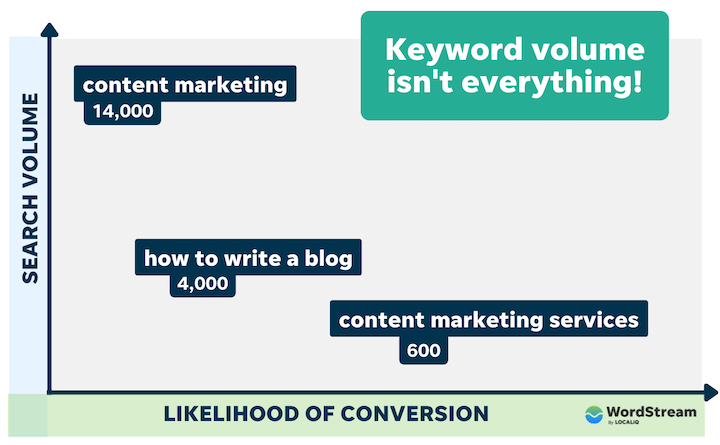
That’s why it’s so important to figure out what your customers are actually searching for in Google before starting the process.To do this, you need to know more than just your target audience Demographics. You have to know:
- questions they ask
- the problem they struggle with
- their goals
- things they talk about
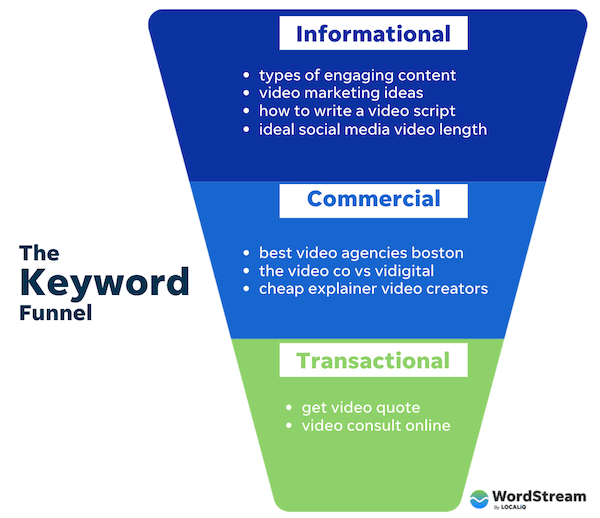
This can help you formulate keywords based on your customers’ thoughts and difficulties at the top, middle, and bottom of the funnel.It’s this context that separates high-traffic, non-converting sites from high-traffic sites and Lots of conversions. If you need help with this, I created this A step-by-step process for mapping keywords to your funnel.
Not sure what your audience is searching for? Find out with our free keyword tool!
Step 2: Identify Your Top 3 Competitors
It’s time to gain insight into what your potential customers are searching for in Google Identify your main competitors.
There may be hundreds of different companies offering products or services somewhat similar to yours, but for this exercise we need to identify your main three competitor.
There are two main reasons why I recommend only looking for the top three competitors:
- No one has time to do competitor keyword research on 100 competitors.
- Your closest competitor is your best bet for finding the highest intent keywords in your market.
It’s 80/20 of competitor keyword research, and I’ve found tons of amazing keywords countless times by just researching three competitors.
We’re looking for those competitors that stand in the way of your survival. Those ones:
- for the same customer base.
- Most similar to you (in terms of products or services).
- Most stay in your mind.
Step 3: Choose Your Tools Carefully
This A tool for finding competitor keywords Can make or break you. Why? Because the metrics provided by these tools determine which keywords you decide to use, and some tools have more accurate metrics than others.
I recommend using more well-known tools to access large amounts of data, as they will have more accurate metrics to measure a term’s search volume and competitiveness. I usually use a combination of:
- SEO tools like Ahrefs and Semrush are used to identify keywords.
- Reporting tools such as Google Search Console and Google Analytics 4 Compare between your competitive analysis and the existing traffic to your website. You may find that you’ve already found some bubbling keywords in your research, and your content just needs improvement (can we get you interested in some? SEO Optimized Blog Post Templates? ).
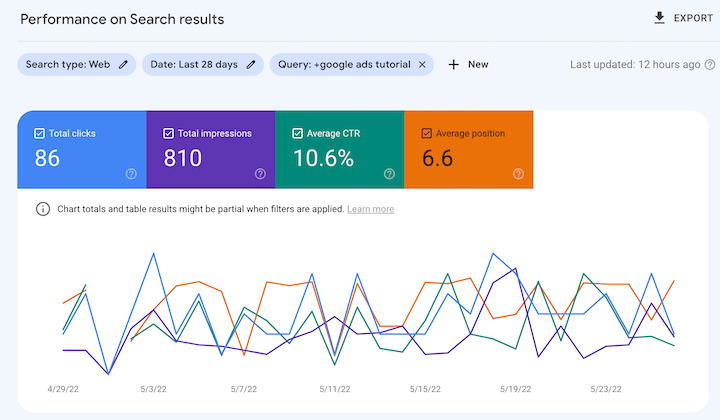
I’m not saying these are if only Tools you should use – just make sure you understand (at a high level) how a tool calculates its metrics. Pass any tool without accurate data and calculation records. Too many people ignore this entirely at their own peril.
Step 4: Analyze competitor URLs
Now let’s look at the good stuff. Get the URLs of the top three competitors you selected in step 2 and use the tool of your choice to analyze the keywords they rank for.
Most tools will have some version of a “Site Explorer”, like Ahrefs, where you can view paid keywords, organic keywords, backlinks, rankings, etc. for any URL you enter.
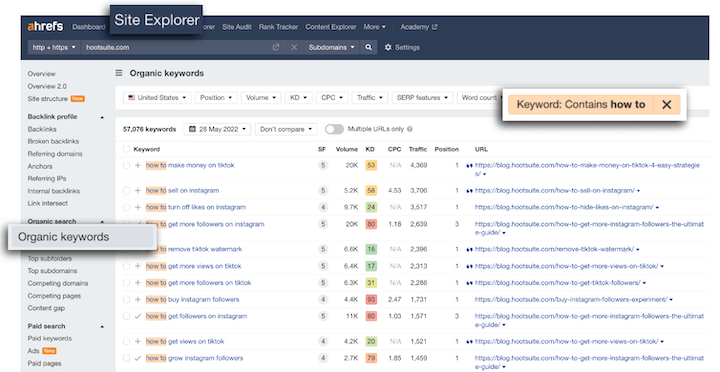
In this example, I filtered the keywords to include “how”
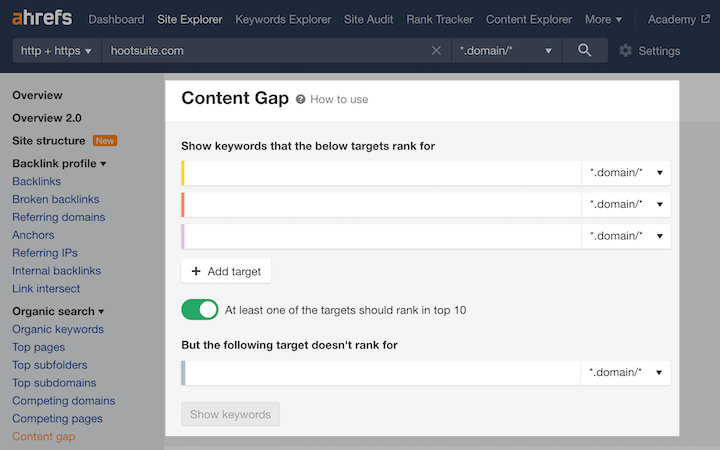
Some tools also have keyword or content gap reports where you can enter multiple competitors and compare their rankings to yours with the click of a button. Here’s ahrefs’ Content Gap tool:
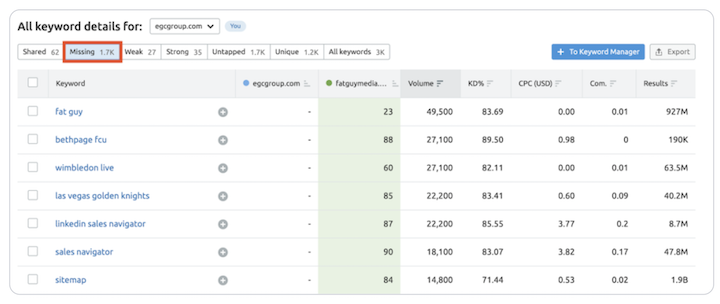
Here is Semrush’s gap analysis tool:
5. Identify your golden keywords
Regardless of which tool you use, the key here is to identify the keywords your competitors are ranking for:
- Attract the right visitors (i.e. they attract customers, not just visitors).
- you can Create content (or optimize existing content) because that’s better than your competition.
- There is enough search volume to be worth the investment.
These are the “golden keywords” we talked about in step 1 – you should try to steal these keywords from your competitors. This is largely subjective based on many factors, such as whether you are doing this analysis for SEO or PPC and what your goals are.
This Google Sheets template will allow you to organize your keywords by whatever criteria makes the most sense, whether it’s search volume, competition, funnel stage, or intent.
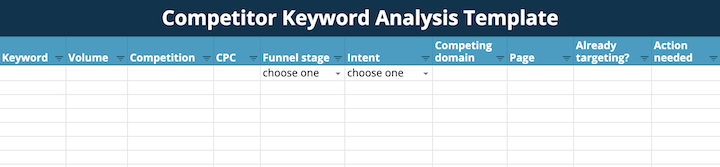
Click here to make a copy of this template.
always, always actually google keywords
This is the easiest way to determine what kind of visitors you can expect. Google wants to provide the best answers to people’s queries, so we can reasonably assume that, in most cases, the top results provide the best answers (in Google’s view).
Sometimes you find a keyword that you think is a home run, and the SERPs will show completely irrelevant results or brand terms for a product, service, or company that you never want to waste time on.
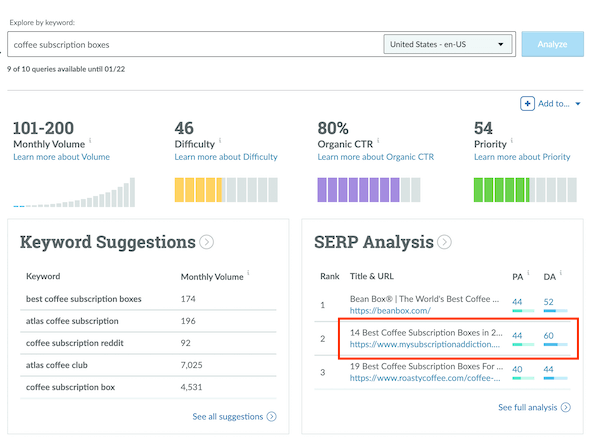
Don’t just look at the keyword difficulty indicator
In general, the Keyword Difficulty metric measures the number of links to a particular keyword from a top-ranking URL. They are not a 100% accurate measure of ranking difficulty.
That’s why I recommend looking at both Domain Rating (DR) or Domain Authority (DA) Every top result for any keyword you’re considering. Sometimes you’ll see a tool say “very hard” keywords and DR sites in the top 10 are super low (eg 20) and vice versa. This is usually an indicator that it is actually easier or harder to rank than the difficulty indicator claims.
Make competitive keyword analysis a staple of your PPC and SEO strategy
Competitive keyword research helps you discover the best keywords in your niche quickly and easily. This is by far the most productive tactic I’ve used, and I know a lot of people who find their keywords almost exclusively this way.
Remember, this is a game of quality over quantity. The right amount of traffic is better than a lot of traffic. This process will help you define the “right” traffic for your website. Solve this problem with a “reverse engineering” mentality.
You have the best chance of getting their keywords when you beat your competitors at their own game and give Google the answers it’s looking for.
To recap, here’s how to conduct competitor keyword analysis:
- Understand the terms your audience is searching for
- Choose your tool
- Identify your top three competitors
- insert them into the tool
- Find your golden keywords
About the author
Hunter Branch is ranking tree– A content marketing agency that develops blogs that drive seven-figure online businesses.

