


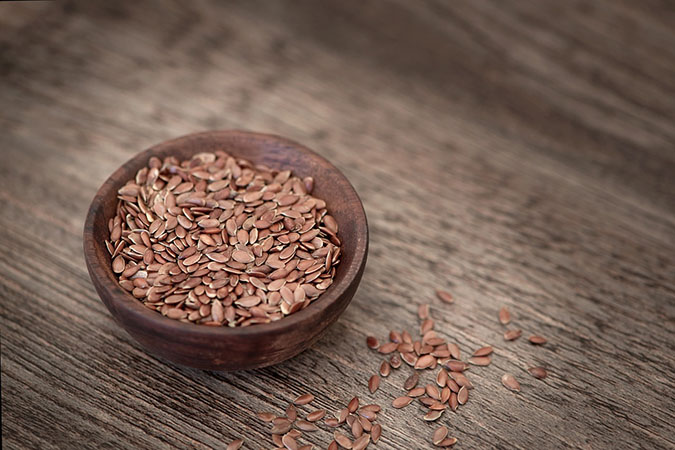
Flaxseed: An Overview
- Botanical Name: Linum usitatissimum
- Family: Linaceae
- Other Common Names: Flax, common flax, blue flax, alpine flax
- Parts Used: Seeds
- Energetics: Moist
- Thermal Properties: Cool
- Actions: Anti-inflammatory, antioxidant, antiproliferative, antithrombic, aperient, demulcent, depurative, emollient, nutritive
- Taste: Sweet
- Plant Uses: Nourishing food, hormonal balance, anti-cancer, digestive system support, hair, skin and nails, heart health, weight loss, bone support, inflammation.
- Plant Preparations: Food, oil, egg substitute, livestock feed, poultice
- Toxicities/Warnings: Flax is generally a very safe plant. It can sometimes can cause gas and bloating. Excessive consumption can have a stronger laxative effect than desired. Flaxseed contains small amounts of cyanogenic compounds which can cause stomach upset in sensitive individuals. Flax may exaggerate the effects of blood sugar lowering medicines. Flax also has a blood thinning effect and should not be taken with NSAIDs.
Flaxseed Through the Ages

Image by Susanne Jutzeler, Schweiz, from Pixabay
Flax is a multi-use plant and longtime companion to humans. We may have been cultivating it since 10,000 B.C. Stone-age dwelling in Switzerland, dated to 8,000 BC, contain flaxseed remains. The ancient Egyptians were believed to have used it to create linen, and the Babylonians were using it as early as 3,000 BC. Between 4,000 and 2,000 BC, flax cultivation started in the Middle East and around the Mediterranean sea.
Flax has been used for various medical, nutritional, and utility purposes. The fibers have been used for making paper, rope, linen, muslin, parachute harnesses, and bandages. The word “linen” is derived from one of flax’s alternate names, “linseed”, and is itself a cognate for the ancient name (and genus) for flax, “Linum“. The other half of the scientific name, “usitatissimum” means “most useful.” Thus, it’s scientific name means, “most useful species of flax.”
You May Also Enjoy:
“15+ Ways to Use Cleavers—From Dinner to Detox”
“19 Benefits of Hibiscus: Blood Pressure Regulator, Cancer Fighter, Liver Protector, and Much More!”
“12 Uses for Rose Petals — From the Kitchen to the Boudoir (With Recipes)”
But flax’s uses go beyond textiles and other utilities. It’s long been used as food for both people and livestock. In the 8th century, Charlemagne even required his subjects to consume flaxseed. Flax has also been a traditional medical plant in Ayurveda, Traditional Chinese Medicine, and other systems.
Flaxseed, also called linseed, is the source of linseed oil. In its pure form, this oil can be consumed as a healthy source of omega-3 fatty acid. In its refined forms, boiled linseed oil and polymerized linseed oil, it cannot be consumed. These oils are used in paints, and to protect wood and metal.
While native the Europe and Asia, linseed can now be found in temperate zones worldwide. In addition to being grown commercially for its oil and fibers, flax can often be found in commercial birdseed mixes and growing wild.
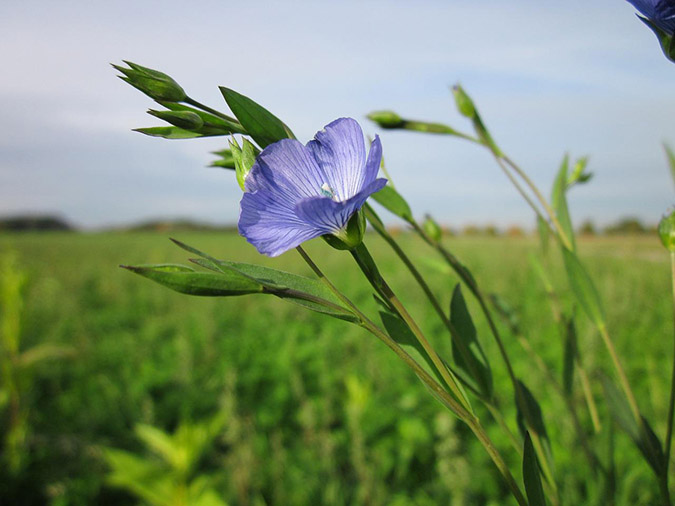
Image by WikimediaImages from Pixabay
9 Benefits of Flaxseed
- Omega 3 Powerhouse: Flax is a rich source of omega-3 fatty acids, supporting a healthy body and immune system. Flaxseed oil has more omega-3s than most fish oils.
- Cancer Fighter: Flax helps to reduce your likelihood of several hormone-based cancers, such as breast, ovarian, uterine, endometrial, cervical, and prostate.
- Bulk Laxative: Flax is a gentle laxative. It supports colon detoxification and is helpful for diverticular disease.
- Digestive Calmer: Flax’s mucilage content is anti-inflammatory and calms digestive irritation. It can even help to relieve symptoms of IBS and colitis.
- Chest Soother: Use a flaxseed and onion poultice to relieve lung conditions.
- Heart Health: Flaxseed can help to lower cholesterol and lower your risk of heart disease.
- Anti-Inflammatory: Eat flaxseed to lower inflammation and reduce your risk of chronic disease.
- Loaded with Lignans: Flax is the riches known plant source of lignans. Lignans help to balance hormones, protect bone density, protect against type 2 diabetes, and protect against harmful forms of estrogen.
- Friend to Gut Flora: Encourage a healthy gut microbiome with flaxseed.
Medicinal Properties of Flaxseeds
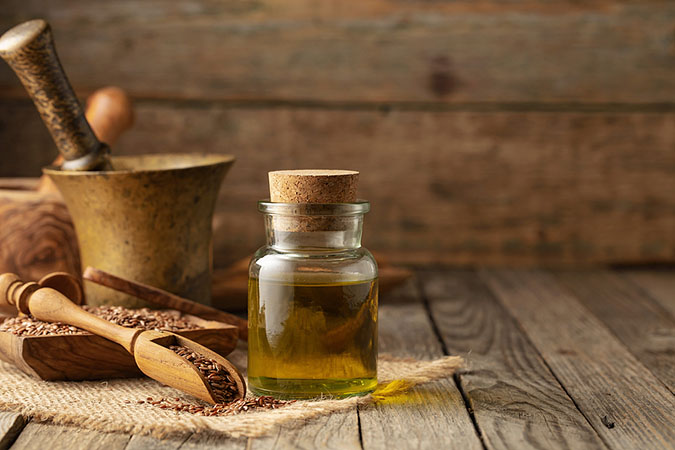
Many of the benefits of flaxseed are linked to its omega-3 content. Flaxseed is rich in omega-3 fatty acids. It’s so rich that flaxseed oil often has a higher concentration of omega-3s than fish oils. However, animals and plants tend to specialize in different forms of omega-3 fatty acids. Animal sources of omega-3s have a higher amount of EPA and DHA. Plant sources are riches in ALA. All of these forms are healthy, but they may not have the exact same benefits as one another.
Our bodies can convert the plant-associated form of omega-3s into the animal-associated forms, but they do so inefficiently. The easiest way to make up for this is by consuming omega-3s from both plant and animal sources. For maximum benefit, flaxseed should be consumed with a sulfur-rich protein source, such as cottage cheese.
You May Also Enjoy:
“How to Make a Poultice … Even for Hard-to-Treat Areas!”
Omega-3 fatty acids are most often used to help lower cholesterol levels and to keep platelets in the bloodstream from clumping together. But they can also help to reduce PMS, auto-immune disorders, arthritis trouble, and chronic inflammation of the colon. Deficiencies in omega-3s are linked to depression, heart disease, arthritis, cancer, and lower intelligence.
Omega-3s aren’t the only things flax has to offer. Flax is also the riches known plant source of lignans. Lignans are a type of polyphenol used to help protect against type 2 diabetes, maintain bone density, and support heathy gut bacteria. Lignans also promote hormonal balance within the body and can help to prevent hormone-related cancers, such as breast, ovarian, uterine, endometrial, cervical, and prostate cancers.note]Deshpande, Rashmi, Prerna Raina, Kavita Shinde, Prakash Mansara, Manjiri Karandikar, and Ruchika Kaul-Ghanekar. “Flax Seed Oil Reduced Tumor Growth, Modulated Immune Responses and Decreased HPV E6 and E7 Oncoprotein Expression in a Murine Model of Ectopic Cervical Cancer.” Prostaglandins & Other Lipid Mediators. Elsevier, April 6, 2019. https://www.sciencedirect.com/science/article/abs/pii/S1098882318301096.[/note]
Lignans may also be responsible for some of flax’s cholesterol lowering effects. Three to four tablespoons of ground flaxseed per day may be required to see favorable effects.
Flax has a high fiber content. This helps support digestion, colon detoxification, management of diverticular disease, and healthy gut bacteria. Flax may also help discourage and eliminate candida overgrowth. Its fiber and mucilage also help to prevent the reabsorption of harmful forms of estrogen.
Flaxseed acts as a bulk laxative, absorbing water and helping to move food through the gut. Be sure to drink plenty of water when using flax, to facilitate this process. Flaxseed is a good alternative to psyllium fiber in cases where psyllium causes excess gas and abdominal pain. Note that flaxseed oil does not contain fiber.
You May Also Enjoy:
“How to Make Hard Apple Cider in 5 Easy Steps”
The mucilage content of flax has a soothing and anti-inflammatory effect on the digestive system, helping to east discomfort from colitis, IBS, ulcerative colitis, and hemorrhoids.[noteMorshedzadeh, Nava, Shabnam Shahrokh, Hamid Asadzadeh Aghdaei, Mohamad Amin Pourhoseingholi, Vahid Chaleshi, Azita Hekmatdoost, Soheila Karimi, Mohammad Reza Zali, and Parvin Mirmiran. “Effects of Flaxseed and Flaxseed Oil Supplement on Serum Levels of Inflammatory Markers, Metabolic Parameters and Severity of Disease in Patients with Ulcerative Colitis.” Complementary Therapies in Medicine. Churchill Livingstone, July 19, 2019. https://www.sciencedirect.com/science/article/abs/pii/S0965229919306922.]/note]
Consuming flaxseed can give you an overall healthier appearance. Flaxseed can help to reduce acne, eczema, and rosacea, and can also improve the appearance and strength of hair. It can even moisturize dry eyes, reducing redness and irritation.
Flaxseed is heart healthy, assisting in controlling blood pressure and cholesterol levels. It also helps with achieving, and maintaining, a healthy weight. Flax helps with the management of diabetes by lowering blood sugar, and can even reduce cravings for sugar.
Flax has a protective effect on the liver and may help to prevent diet-induced nonalcoholic fatty liver disease. It reduces c-reactive protein production in the liver, which indicates reduced inflammation and is sometimes associated with heart health.
Finally, flax supports a healthy body by supplying a rich diversity of vitamins and minerals. The specifics nutrients are discussed in the next section. But obviously, a properly nourished body is healthier than a malnourished one. When people clean up their diets, eating whole, natural foods, their bodies can do some surprising things. Food is medicine.
Nutrition Properties
Flax is a highly nutritious food, packed with an assortment of vitamins and minerals. Flax contains calcium, iron, magnesium, and phosphate, as well as vitamins E, K, C, B1, B2, B3, B5, and B6. Plus, it’s high in fiber and has almost no carbs.
Flax is most famous for its omega-3 fatty acid content. Not many plants are a significant source of omega-3s. Flax is one of the exceptions, having more omega-3 fatty acid per tbsp than most fish oils. Best of all, it doesn’t taste fishy.
Avoid using high heat to cook flax (oil or seeds). Temperature above 225 °F (107.22 °C) will break down its omega-3 acids, reducing its health benefits, as well as its flavor. When using the seeds, you should powder them, or at least crack them, before eating. If you leave them whole, you will likely not be able to extract nutrients from them. A few, quick pulses in the blender or food processor should do it.
Preparation and Usage
Flaxseeds and flax oil can be used in a number of recipes. Despite its high omega-3 level, flax doesn’t have a fishy taste. Flax has a mild, pleasant taste that blends well with other ingredients. But don’t heat it past 225 °F (107.22 °C). This breaks down the omega-3 fatty acid, reducing its health benefits and diminishing its flavor.
Seeds
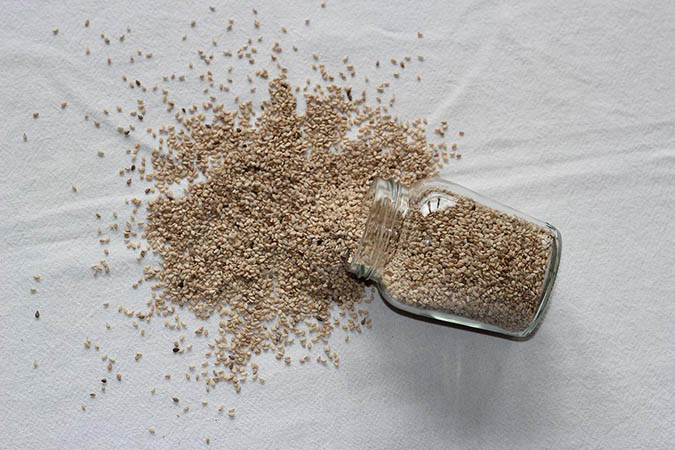
Image by Veganamente Rakel S.I. from Pixabay
Grind flaxseeds into a meal or powder before using them. You can use a blender, food processor, or coffee grinder. But only grind as much as you need. Ground flaxseed will go rancid much faster than whole flaxseed.
Add ground flaxseeds to smoothies, yogurt, and bread recipes. Use it as a soup thickener. Mix it into your homemade granola bars. Sprinkle it on salads or peanut butter sandwiches. You’ll be surprised at how many places it can go.
How much should you add? That depends on how much you want to eat. Many people find 1-4 tablespoons to be a sufficient amount, without causing unpleasant frequency of bowel movements.
Here are a few more ideas:
- Egg Substitute: Mix 1 tablespoon of flaxseed meal with 3 tablespoons of warm water. Let this thicken for 5 to 10 minutes. Then use it in recipes as normal.
- Pudding: Combine 3 tbsp of flax meal with 1/2 cup of milk. Add 1/2 tsp vanilla extra, a pinch of salt, and honey (to taste). Let this mixture sit in your refrigerator for at least 15 minutes, or overnight. Stir and enjoy.
- Bread Crumb Substitute: In recipes that only call for a small amount of breadcrumbs, you can switch them out for ground flaxseed. For larger amounts, try replacing 1/4 of the breadcrumbs with flaxseed.
The ground seeds can also be used topically as a poultice. A flax poultice is especially useful for painful boils and other tender skin conditions. It’s soothing for the pain, and drawing to help pull out inflammation and purulent matter. A flaxseed and onion poultice is commonly used for lung conditions, and is especially effective when applied warm.[note[Green, James. The Herbal Medicine-Makers Handbook: a Home Manual. Berkeley: Crossing Press, 2002.[/note] This can be applied to the chest and back for maximum benefit.
Oil
Flaxseed oil can be taken directly, as a nutritional supplement. Taking 1,000 milligrams 1-3 times a day is common.
Flaxseed oil can also be used in recipes, but remember to avoid overheating it. Add flaxseed oil into cold recipes or after heating, if possible. Try flaxseed oil in salad dressing recipes, protein shakes, or garlic bread dips.
Pets
Flax has been used as a livestock feed since our ancient past. With its use as a food, flax is considered to be generally very safe for pets and livestock. With high fatty acid supplementation, some pets may develop seborrhea oleosa, large dandruff flakes and an oily coat. If this occurs, flax should be reduced or removed.
Birds enjoy whole seeds. Other pets will probably benefit more from ground flaxseed meal or flax oil.
Fibers
The fibers of the flax plant are an excellent material for crafts and for practicing primitive skills. Fibers can be obtained easily by running the stem of a dried flax plant back and forth over a curved object, such as a smooth tree branch or broom handle. The inner pith of the stem will break and fall away, while the outer fibers will bend and remain intact. After doing this a few times, you should be able to separate the fibers and use them as you wish.
[Flax as chicken food – https://thegrownetwork.com/how-to-grow-happier-chickens-and-healthier-eggs-from-seed/ ]
[Includes recipe using flax – https://thegrownetwork.com/reusing-food-waste-perks-tips-tricks/ ]
[more recipes (many of which include flax) – https://thegrownetwork.com/5-dehydrator-recipes-home-growers/ ]
[more recipes (some of which include flax) – https://thegrownetwork.com/5-dehydrator-recipes-for-home-grown-fruits-and-vegetables/ ]
[more recipes (some of which include flax) – https://thegrownetwork.com/8-ways-to-replace-carbs-with-home-grown-veggies/ ]
[more recipes (some of which include flax) – https://thegrownetwork.com/for-pasta-lovers-everywhere-8-ways-to-enjoy-wholesome-noodles/ ]
[more recipes (one of which includes flax) – https://thegrownetwork.com/9-ways-to-eat-commonly-wasted-seeds-stems-peels-and-more/ ]
[more recipes (one of which includes flax) – https://thegrownetwork.com/12-ways-to-make-a-zucchini-surplus-disappear-with-recipes/ ]
Precautions and Contraindications
Flaxseeds are generally safe, barring the occasional food allergy or intolerance. They can sometimes cause gas, bloating, or frequent bowel movements, especially if you suddenly increase your daily intake. If this occurs, just eat less. You can gradually increase your intake as your body adjusts, or until you hit your personal limit.
Those with hypoglycemia should use caution with flax, due to its blood sugar lowering effect. This can be especially dramatic when mixed with blood sugar medication. Flaxseed also acts as a blood thinner and should be avoided when taking NSAIDs.
Flaxseeds do contain a small amount of cyanogenic compounds. When digested, these compounds break down into cyanide. Naturally, this is concerning to creatures such as ourselves, who are susceptible to cyanide poisoning. Thankfully, the flaxseed-cyanide connection has largely been over-hyped.
The cyanide content of flaxseeds is low. An average adult would have to consume around a cup of raw, ground flaxseeds on an empty stomach before he or she might start to experience any symptoms. You are much more likely to have issues with flaxseed’s laxative properties before its cyanide content.
Children and people with sensitivities to cyanide forming foods should consume proportionally smaller portions of raw flax. Or you could just cook them. Heat neutralizes flax’s cyanogenic compounds, rendering them harmless. Note that this requires a moist environment, such as in baking muffins, bread, or hot cereal. Dry roasting flaxseeds is not as effective at neutralizing the cyanogenic compounds.
Plant ID
Common flax closely resembles other varieties of flax. Several relatives produce edible seeds, but the edibility of all Linum species has not been confirmed. Always make sure of your identification before harvesting wild plants.
Flax might be described as “dainty, but with a vibrant spirit”. Its stems are thin, and its leaves are small. The blooms are also petite, reaching up to 1 inch (2.54 cm) across. Flax bursts with a new set of flower each morning, and it fruits so heavily that it often droops under its own weight.
Flowers are found in loose clusters at the ends of branching stems. They are pale blue to blue-violet, or occasionally white, with wedge-shaped or oval petals. The petal color becomes darker blue toward the center. The very center of the bloom is white, or just off-white. The petals fall off each day by noon and are replaced by new blooms each morning. The flowers are bisexual, having both male and female reproductive parts. They have 5 sepals, 5 petals, and 5 stamens. The sepals (behind the petals) are lance-shaped and alternate with the petals.
Blooms give rise to seed capsules, not unlike orange sections.
Stems tend not to branch, except at flowering clusters. Leaves are alternate, thin, and lance-shaped, growing half an inch (1.27 cm) to 1.5 inches (3.81 cm) long. Leaves attach directly to the stem, without a leaf stalk.
Where It Grows and Where to Find It
Flax is a native of Eurasia, but is highly adaptable to a variety of conditions and can now be found growing in temperate and subtropical areas around the world. It is commercially grown, but can be found wild in fields, by roadsides, and in disturbed soil, such as in gardens. Gardeners sometimes intentionally plant flax to attract pollinators. Flax is often included in birdseed mixes and can sometimes be found growing beneath bird feeders.
How and When to Harvest
Flax is grown from seed each spring. Harvest it in late summer or early autumn, when the seed ripens. Most of the seeds will have turned golden and will rattle in their pods. A few blooms, green leaves, and green pods may still be present. You can pull plants up by the stalks, or cut them with a hand scythe.
Bundle the stalks together and hang them in a well-ventilated room for a few weeks, until the stems are completely dry. Take down one bundle at a time and place a pillow case or towel over it. Use a rolling pin to break the seeds free.
Pour the resulting mess from one bowl into another, leaving some space between them for a light breeze or fan to blow away the chaff.
Store seeds in a cool, dry location to prevent their oils from going rancid. Store seeds out of sunlight to protect their nutrient content and protect them from rancidity. Seeds can be stored in this way for up to a year.
Grinding the seeds accelerates their breakdown. Either grind seeds in small batches as needed, or store ground flax in a freezer. Ground seeds may go rancid in 6-16 weeks, outside a freezer.
Flax should have a clean, nutty smell. If it has a strong, unpleasant smell, it has likely gone rancid. Flax oil may also become hazy or dark yellow as it turns rancid.
Conclusion
Flax is great in your garden, in your flower bed, and in you. Try growing, or eating, some flax today. Do you have any favorite recipes or uses for flax? Let us know in the comments.
You May Also Be Interested In:
(Visited 1 times, 2 visits today)

