


The Vienna Museum of Natural History discovered 33 new snails unpacked from a 150-year-old storage room. These snails lived millions of years ago.
The museum named one of the newly discovered species after the Austrian capital, and named the small snail Mitrella viennensis.
Snails live in the seagrass meadows of Vienna and Baden, which were covered by the Palatis Sea millions of years ago.
New names must be created for all 33 species and 9 genera, one third of which have not yet been studied.
These snails, about 15 million years old, have been preserved in the museum for 150 years, and researchers have only now identified them as undiscovered species.
Vienna Museum of Natural History, Alice Schumacher/Zeng
As a result of a new project, they were discovered to learn more about the snails that were living in the waters covering eastern Austria at the time. The tropical Palatitis Sea extends from Vienna to the Caucasus, and the eastern part of Burgenland has coral reefs. Hundreds of different shells, corals and fishes live in this area, most of which have disappeared forever in modern towns.
Starting from the Pliocene era about 5 million to 2.5 million years ago, the Palatis Sea gradually became shallower. Today, the remaining oceans include the Black Sea, Aral Sea, Caspian Sea, Lake Urmia and other bodies of water.
Most snails were collected in the 19th century, when the Habsburg dynasty operated hundreds of quarries and sand pits in the area, which ruled certain areas of Europe from the 13th century to 1918. From 1438 to 1806, the member monarchy of the Habsburg dynasty also served as the emperor of the Holy Roman Empire. The empire is not considered to be part of the so-called Habsburg monarchy or the Habsburg Empire today.
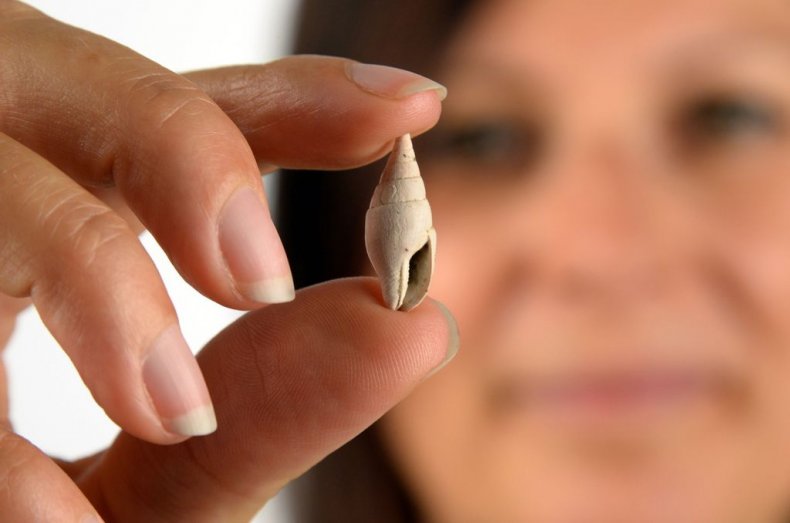
Vienna Museum of Natural History, Alice Schumacher/Zeng
New research shows that many snails were found on the coast of West Africa. Due to the increase in water temperature, they are believed to have migrated and replaced the native fauna. Therefore, they are an example of the possible consequences of climate change today.
“Our research clearly shows the importance of scientific collections for documenting past and modern biodiversity. By no means all museum treasures have been discovered, but it takes experts to fully identify them,” Matthias Harzhauser ( Mathias Harzhauser) said the head of the research and museum geology and paleontology department.
Emperor Franz Joseph I commissioned the Natural History Museum and the Fine Arts Museum in Vienna to face each other and have the same appearance. Both were designed by architects Carl Hasenauer and Gottfried Semper.
In August 1889, the Emperor opened the Natural History Museum.
This story is provided by Newsweek Zenger News.


