


As a self-proclaimed language geek, I am always looking for new and innovative ways to improve my language skills, especially those that save me a lot of time and simplify the learning process.
I discovered for the first time Ling Q (Pronounced “link”) Watch at the same time An episode of the Italian podcast Among them, the host Davide interviewed Steve Kaufmann, the founder of the project, and introduced his experience as a multilingual and entrepreneur. Eager to give it a try, I downloaded the app and within a few minutes, I was fascinated!
The concept behind LingQ is simple:
- Use your favorite media in the app (articles, e-books, YouTube videos with subtitles, Netflix shows, podcasts, etc.)
- Click on unfamiliar words and phrases when reading, or read with subtitles
- Save them as lists and flashcards for easy access later.
Ethics statement: In this article, there are affiliate links. If you subscribe to LingQ after clicking one of these links, we will receive a small commission.To learn more about our code of ethics, you can visit our Full disclosure page. thanks!
How to use LingQ
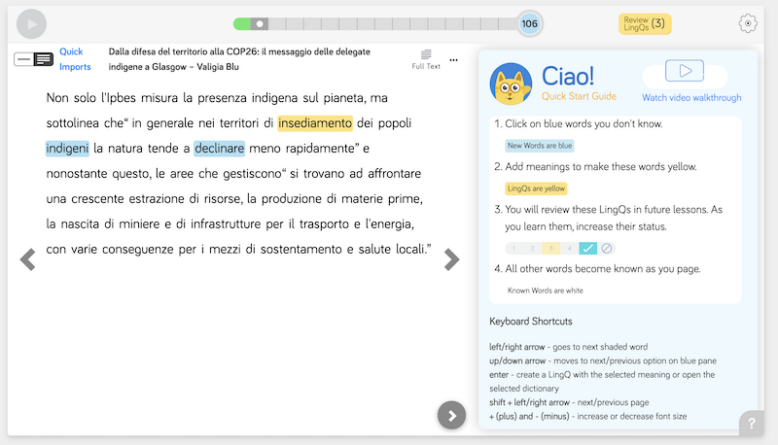
When you open an article or any other form of media in the app for the first time, you will notice that each word is highlighted in blue. All of this means that you have not encountered a word in the app before.

When you use the arrows to scroll through the virtual page, these words will automatically change from blue to white, thus entering your “known words” list. However, if you click on a word and save it to your vocabulary list, it will turn yellow.
In addition to single words, you can also save phrases by dragging your finger or cursor over multiple words. These phrases turn orange, as shown below.
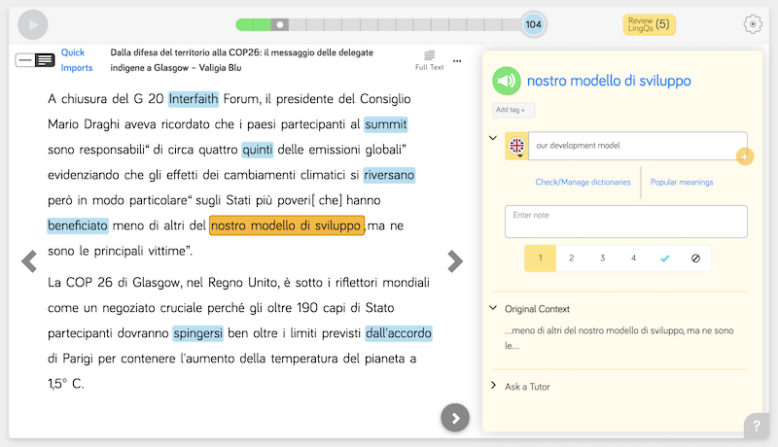
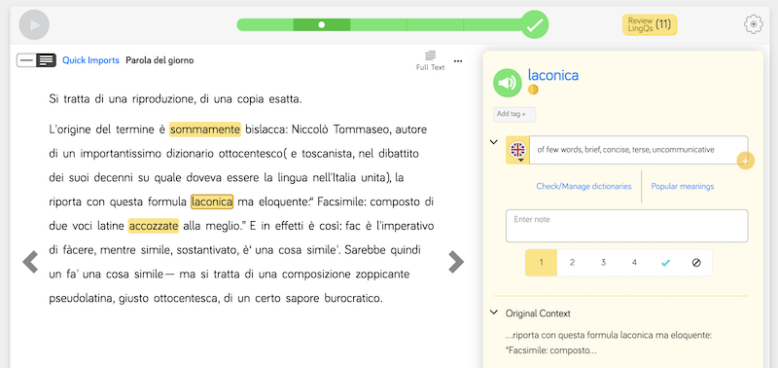
Note that if you don’t like the definition provided by LingQ (usually but not always accurate), you can add your own modified definition. Many popular dictionaries such as Word Reference and Context Reverso can be accessed directly from the application.
In addition to countless ready-made materials, there is also a very cool option to import your own media. This is something I tend to do most of the time, so I always consume media related to my needs and interests, rather than random articles suggested by the app or uploaded by other users. (The only exception is the first five chapters of Harry Potter. It took me a few days to eat it! 😁)
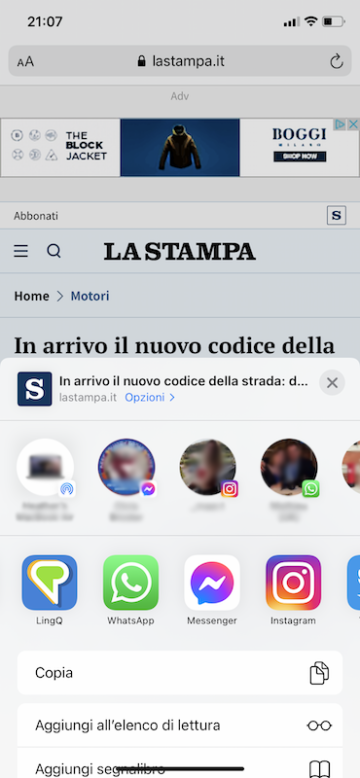
The easiest way to upload your own media from your phone is to visit an article in your browser, press the share button, and select LingQ from the list. Alternatively, you can cut and paste the URL of the article you are interested in and add it directly to the app.
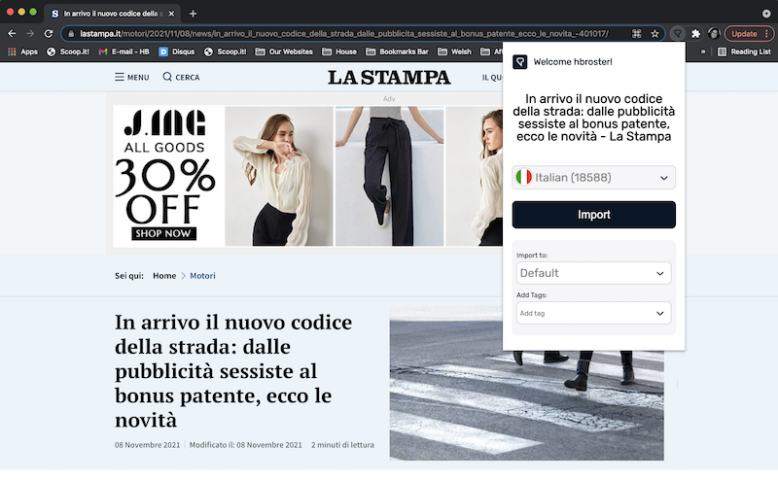
On the desktop, the most direct way is to download LingQ importer extension Applies to Chrome, Safari or Firefox.
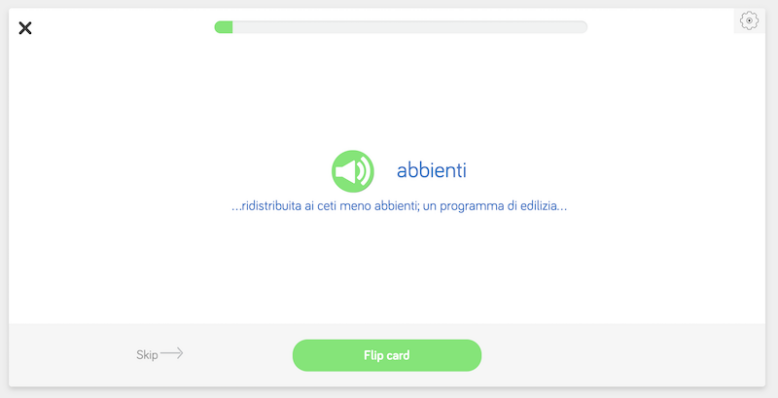
As I mentioned in the introduction, LingQ also includes a built-in flashcard program so you can learn words you don’t know. Each word is assigned a level from 1 to 4, depending on how well you know it. Once you have memorized the words, they will be marked with a check mark.
To be honest, I rarely use LingQ flashcards, the reason is simple, I have always been happy to use Anki flashcard app In the past four years, I think it doesn’t make much sense to allocate time between two flashcard procedures.
Instead, I browse the list of words I save in LingQ once a week, pick out some words I want to learn, and then add them to Anki. Useful is that LingQ allows you to download words as Anki files, but I prefer to add them manually so that I can include my own example phrases and definitions.
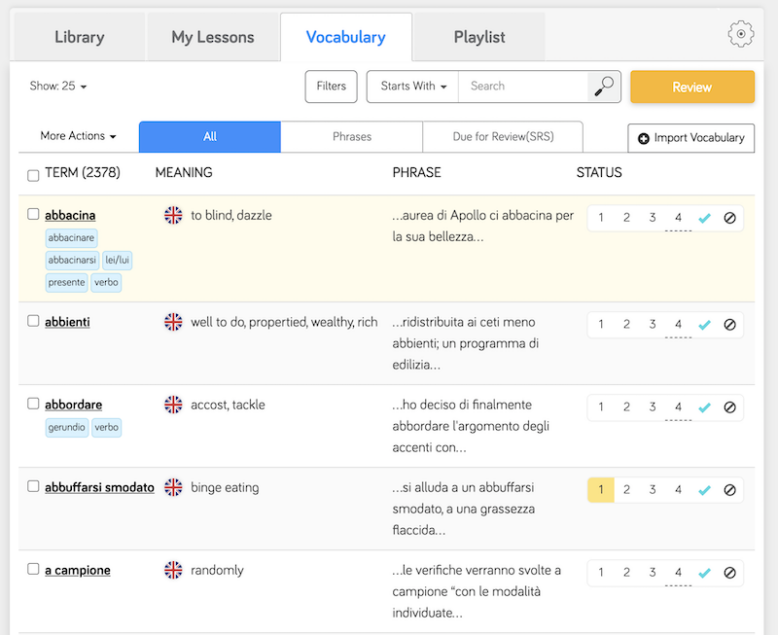
Among the various settings, you can choose to set your daily LingQ goal, or in other words, the number of new words you want to save each day. This can be as low as 13 or as high as 100. (I set mine to 25.) I find it very motivated to see my learning continuity gradually increase, so much so that I haven’t skipped a day since I registered!
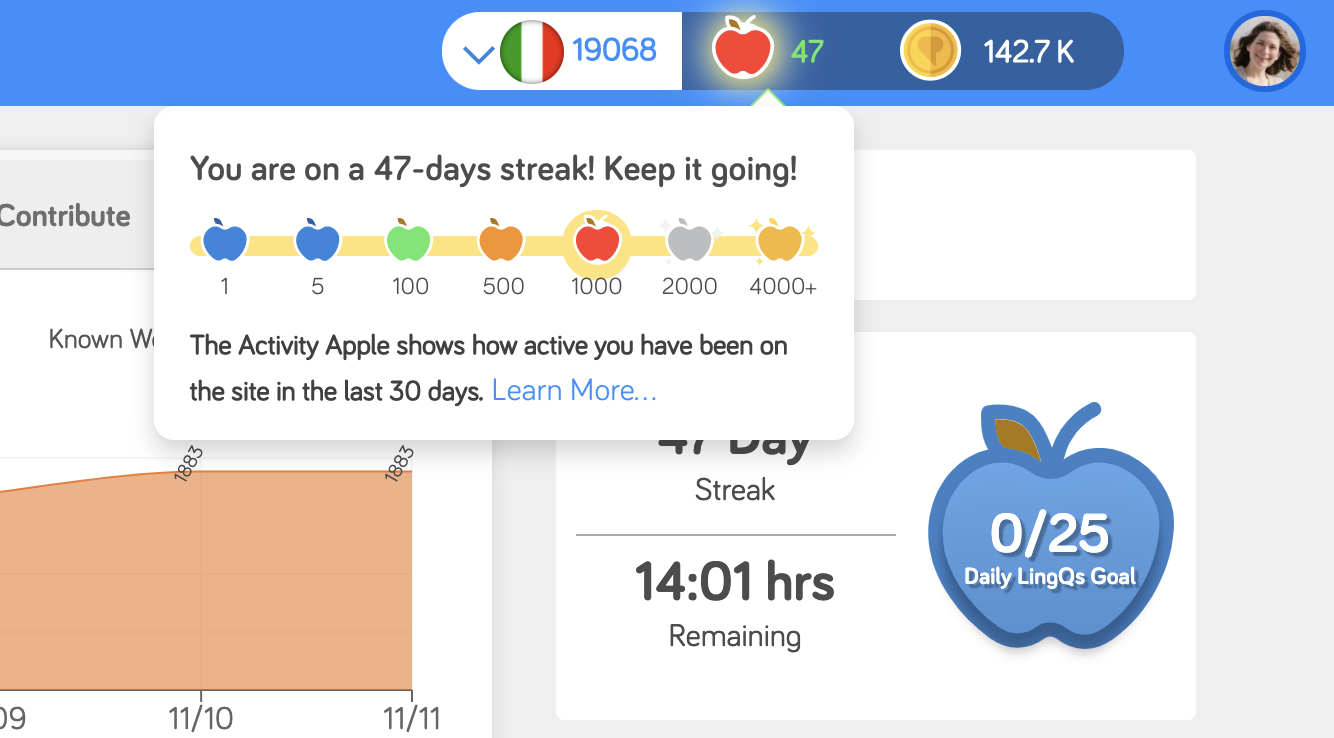
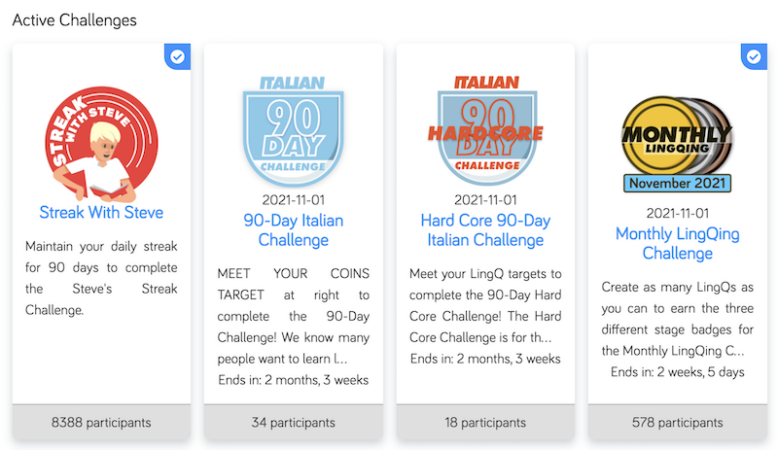
If you are looking for more motivation, it is best to take part in at least one monthly or 90-day challenge so that you can see how your progress compares to the progress of other LingQ users.
Who is LingQ for?
Since LingQ is mainly an application based on reading and listening, my personal recommendation is to try it immediately once you reach at least A2/B1 Italian level-otherwise you may be overwhelmed by a lot of new words and phrases .
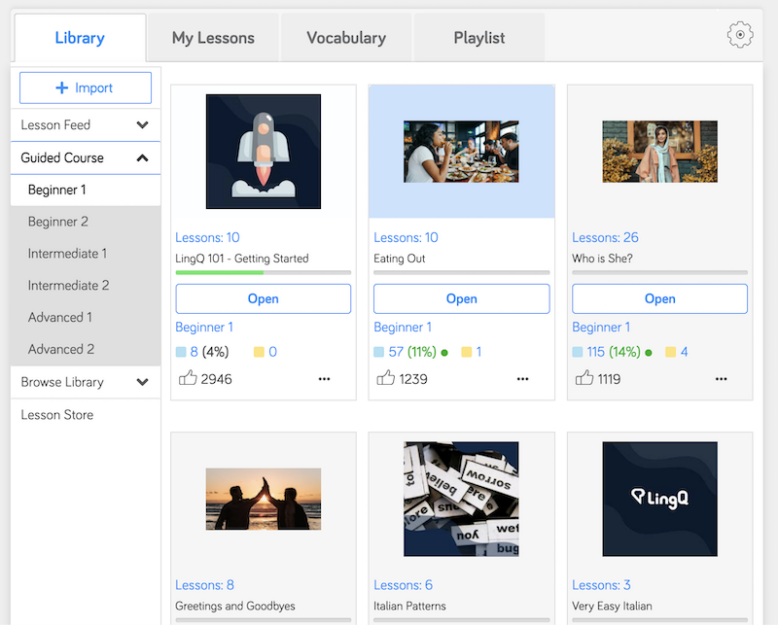
In other words, LingQ does provide what they call a guided course, which contains content suitable for all levels, including absolute beginners. They are not traditional courses because they do not include grammar lessons or exercises-instead they provide you with reading and listening materials that have been carefully pre-selected to suit your level.
I want to see improvements
Of course, not everything is perfect with LingQ, as most language learning apps can say.
Perhaps the most annoying aspect is that LingQ treats all forms of verbs or adjectives as a new word.So, for example, if you save the adjective Bello (A masculine singular adjective meaning “beautiful”), which later appeared in the form Bella (Bello’s feminine singular), LingQ will treat them as two separate words.
Similarly, if there is a preposition before a word, for example At the beginning (A sort of + Start = Beginning), the entire prepositional phrase will also be treated as one word.
I also found that the desktop interface is a bit outdated and difficult to navigate, while the application is more elegant and intuitive.
Finally, when you click on a word, the definition that appears is not always accurate and sometimes even the wrong language. This happens because, as I mentioned above, users are free to add their own definitions, and LingQ cannot review all the various definitions added by its users. In other words, this is more common in English learning platforms than in Italian learning platforms. (Yes, I also use LingQ when reading English articles!)
Why I like LingQ
Before LingQ, I used to underline words I don’t know when reading, write them on a separate piece of paper, look up them in the dictionary, and if I have time, add them to my Anki flashcard program .As you can imagine, this process consumes a lot of precious time and is so boring and frustrating that I rarely choose to read instead of other more interesting activities, such as listening to music or Watch Italian TV.
The most important thing is that LingQ gives me the motivation to read every day and the confidence to deal with challenging reading materials, otherwise I might avoid it. I used to be lucky to read only Italian articles once a week, but now I read at least half an hour of material every day, from news articles to novels. It has only been 47 days since I started, and I can already see a significant improvement in my vocabulary and understanding of difficult topics.
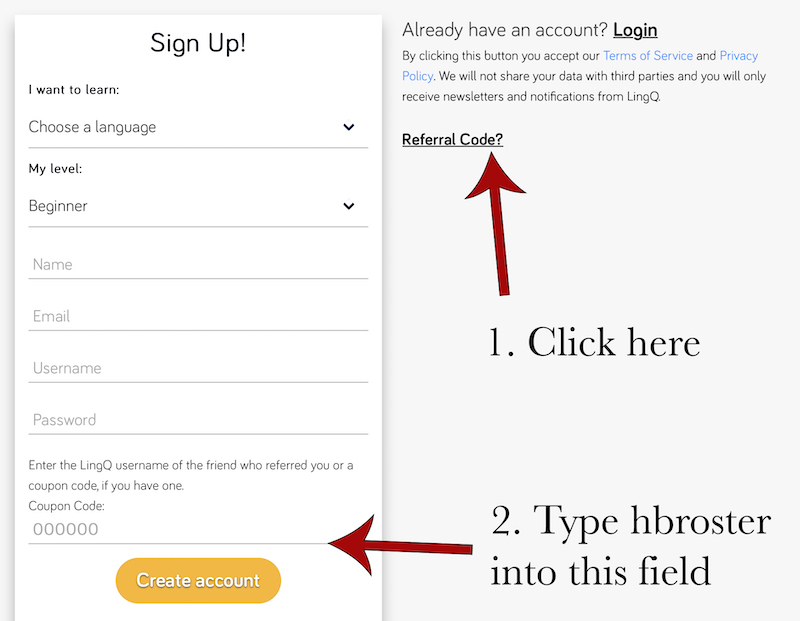
If you want to try LingQ yourself, you can register Free trial (Affiliate link) This gives you access to 20 free LingQs!
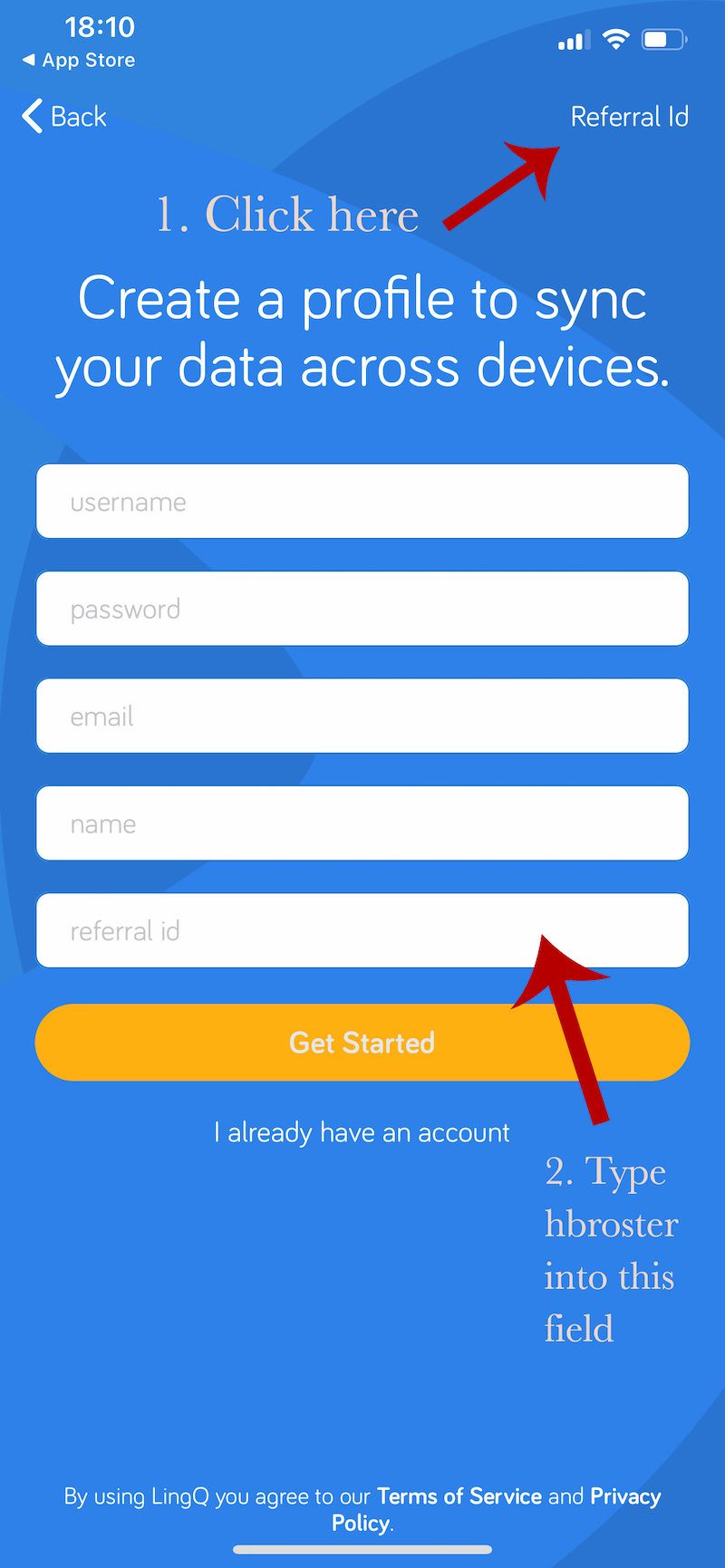
By using my referral code [ hbroster ], You will be rewarded with 100 additional LingQs (such as words you can save), which can be used before you need to level up.
On the move
On the desktop
If you decide to buy premiums, the monthly plan will cost £11.99, while the annual plan will cost £95.88 (equivalent to £7.99 per month).

Have you used LingQ? If so, what is your experience? Please let us know in the comments below! 😀


