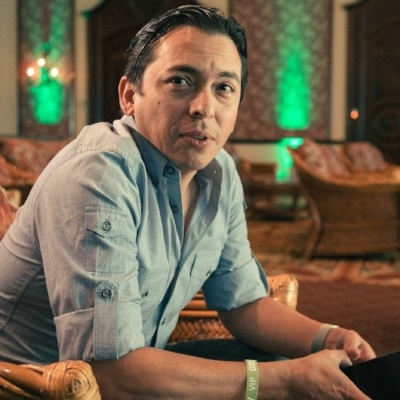
David Wong, Proof of concept
In addition to hype, Web 3.0 is creating opportunities for existing and emerging companies to reimagine open, collaborative, and collective operating models and products/assets. The difference from the previous version of Web3 and the Internet Protocol Model is that the platform is decentralized, open and ubiquitous, connected by a trustless network, and supported by an encrypted, responsible distributed ledger. Think of Facebook or Google owning content and data and monetizing it, not users. In these applications, user engagement and attention span are products.
In some cases, NFT allows the community to purchase digital assets with real-world value, not just hype. NFTs, tokens and other crypto-based assets can also be distributed as part of innovative loyalty programs, allowing customers to become stakeholders.
Or imagine that physical and digital products are provided as NFTs, and identity verification and minting are performed on the blockchain during each sale or resale. Houses, cars, and luxury goods can now be associated with distributed record systems that guarantee authenticity, associated with historical value chains, and provide individual ownership without the need for any centralized group to facilitate each transaction.
The value proposition changes from a consumption to a possession. For customers, this is not only a question of consumption, but also a question of brand investment.
With web3, everything-art, banking, insurance, healthcare, government services, etc.-can be reimagined as value-added goods and services owned by shared groups rather than traditional corporate structures. This is the promise of the Decentralized Autonomous Organization (DAO). DAO provides an opportunity to create companies where customers and employees are stakeholders. Imagine that in an employee-owned company, customers also become stakeholders in the organization. By exercising their rights on the blockchain, they have a say in the formulation of rules and policies, prices and even dividends.
In a recent example, the DAO was formed to get a share the U.S. constitutionEveryone who buys a DAO has acquired ownership, and if the asset is acquired, the ownership will guide the organization’s ownership of the asset.
Network 3
We are in the early days of the current version of Web 3.0, although Sir Tim Berners-Lee was the first introduce The term referred to the “semantic web” in 2006. His vision is to build a network based on general data, machine learning, and ultimately artificial intelligence. Maybe this is Web 4.0. The popular definition of Web3 is suitable for cryptocurrency crowds with laser eyes in their avatars. 😉 At this stage, the network is based on encryption and blockchain.
Gavin Wood is one of the co-creators of Ethereum, he envisioned a more decentralized network, definition Simply put, Web3 is “less trust, more real”.
In a world full of walled gardens, bad actors, and centralized platforms, the favor of trust lies in big technology, and the more truth sounds unbelievable.
More importantly, Web3 represents the promise of a new, more transparent, verified and responsible digital economy. I am cautiously optimistic.
As explained above Ethereum website:
Web2 refers to the version of the Internet that most of us know today. The Internet is dominated by companies that provide services in exchange for your personal data. In the context of Ethereum, Web3 refers to decentralized applications running on the blockchain. These applications allow anyone to participate without the need to monetize their personal data.
The encryption mechanism ensures that once transactions are verified as valid and added to the blockchain, they cannot be tampered with in the future.The same mechanism also ensures that all transactions are signed and executed under the appropriate “authority”
I’m reading what my old friend Tim O’Reilly thinks about Web3. His definition of Web 2.0 is almost standard. So his impression is worth noting. The title of a recent article he wrote sums it up, for now, “Why it’s too early to be excited about Web3. “
As O’Reilly Observed:
Remember, it is too early for the dot-com bubble to burst. Google Maps hasn’t been invented yet, and neither iPhone nor Android. Online payment is still in its infancy. No Twitter or Facebook. There is no AWS and cloud computing. Most of the content we rely on today does not exist. I suspect the same is true for cryptocurrencies. There are many things to be created. Let’s focus on the parts of the Web3 vision that have nothing to do with getting rich easily, and focus on solving the problems of trust, identity, and decentralized finance. Most importantly, let us focus on the interface between cryptocurrency and the real world people live in…
Although getting rich quick people are busy using cryptocurrencies and NFTs to do this, let us fight a protracted battle for meaningful evolution. The path we are taking today can only be sustainable at the cost of greater inequality, the erosion of trust and truth, the compromise of self-identity and values, and the further division of society. On the contrary, let us embrace the spirit of “less trust, more real” and create a more meaningful, scalable and transformative new chapter for the network, our economy and the world.