


An interesting report by the Urban Institute titled America’s ObesityOverweight (BMS>25), obesity (BMI>30), or severe obesity (BMI>40) is very common in the United States, with three-quarters of people overweight and nearly half obese.
Obesity also varies by race and ethnicity.
Compared with adults of other racial and ethnic groups, black adults are more likely to develop obesity, and black women have the highest obesity rate (56.9%) … Asian adults are significantly less likely to be obese than black, Hispanic/Latino or White adults (17.4% vs. 49.6%, 44.8%, and 42.2%)…almost half (49.2%) of American Indian and Alaska Native adults reported that they had been told by a clinician that they had obesity.
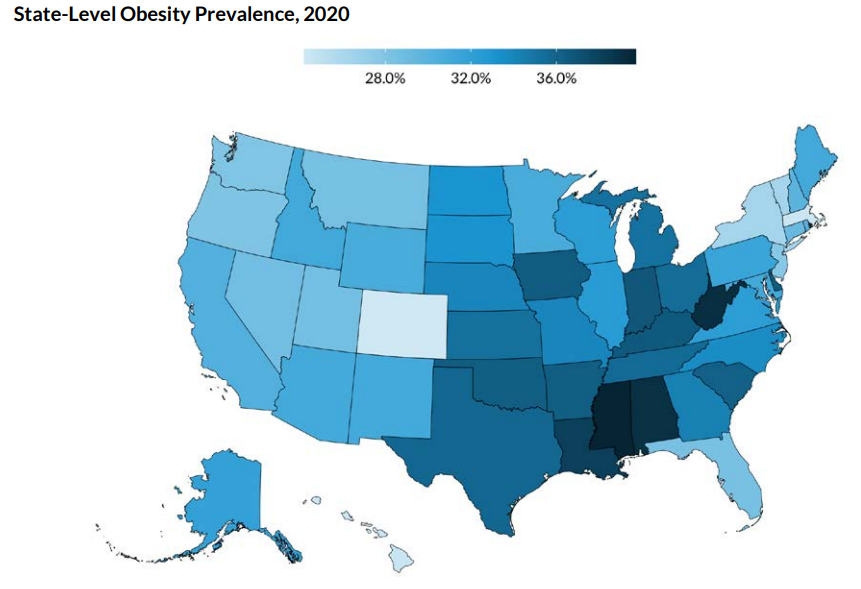
Obesity is more common in the South and Midwest and less common in the Pacific Northwest.
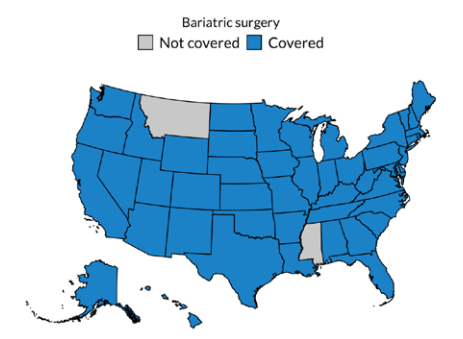
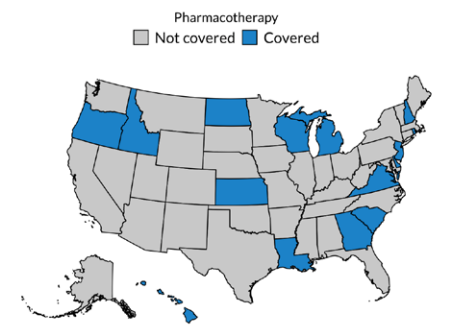
How are state Medicaid agencies trying to reduce obesity? Most states cover screening and counseling, as do bariatric surgery, but few states cover anti-obesity medication. Specifically:
…drug therapy is the treatment option with the lowest coverage.Only 15 Medicaid plans cover AOM for fee-for-service Medicaid, and only 4 other plans cover [anti-obesity medications] Have at least one AOM under a Medicaid managed care plan. Only two states have benchmark market programs that cover AOM. Finally, there are 16 state employee plans that offer this type of coverage.By contrast, all but two states cover some form of bariatric surgery under Medicaid, as do 23 state benchmark plans and 42 state employee plans
The Urban Institute report concludes as follows:
Expanding health insurance coverage through Medicaid and coverage of obesity treatment through Medicaid and Medicare will help states fight obesity. This is especially true for high-prevalence states, where both uninsured and Medicaid coverage rates are higher than those in low-prevalence states.
This report provides a good overview of our obesity situation in the US


