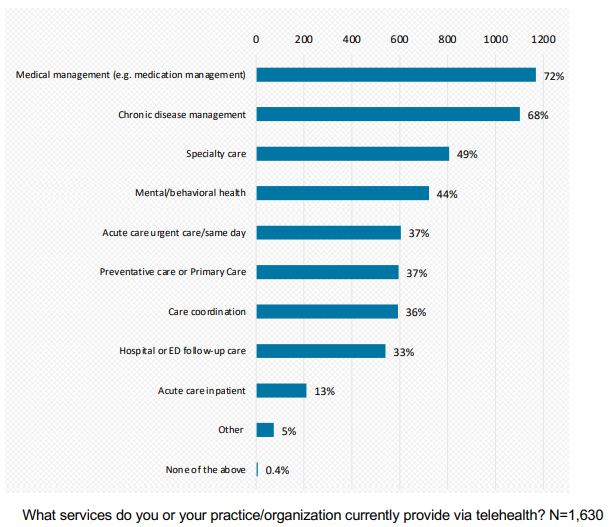
The American Medical Association surveyed its members between November and December 2021 to examine their current use of telehealth. As “2021 Telehealth Survey Report“, the main findings of the investigation are:
- ingest. 85% of doctors use telemedicine. 56% of respondents said they believed they would increase the use of telehealth in their practice.
- modelThe majority of physicians using telemedicine use live, interactive video visits (93%), but many still use audio-only visits (69%) to complement this. Zoom is the most common video platform, followed by Doximity video and native EHR telemedicine modules.
- quality. 60% of clinicians agree or strongly agree that telehealth enables them to provide high-quality care.
- Remote monitoring. Only 8% of respondents said they use remote patient monitoring technologies (such as smartphones (cameras), blood pressure cuffs, pulse oximeters and scales). With remote monitoring, information is mostly shared manually (by phone or email).
- patient visit. 80% of respondents said that patients have had better access to care since using telehealth, and 62% felt that patient satisfaction was higher when telehealth was provided.
- impact on cost. There is no consensus on the cost impact of telemedicine. Only 44% of respondents believe that telehealth reduces the cost of care.
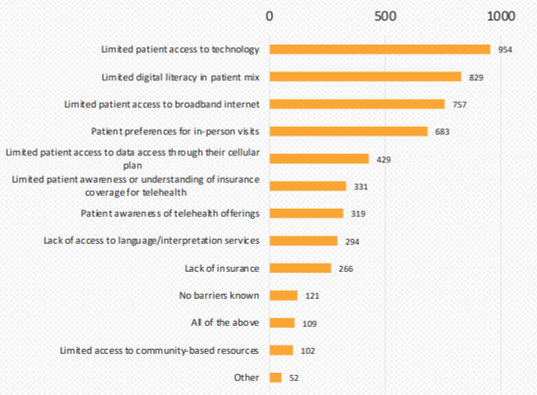
- obstacle. Key barriers include patient access to technology/broadband, patient digital literacy, and patient preference for in-person visits.
- How to value telehealth. Most physicians value telehealth based on its impact on patient satisfaction and access to care. Clinical outcomes, operational efficiency are less important, reimbursement and cost savings are less important.