


Standard Italian, or simpler Italian, is the official language of Italy. The language is spoken by approximately 70 million people, mainly in the Mediterranean peninsula or its islands, such as Sicily and Sardinia.
However, it is also used in the southern regions of Switzerland – in particular Ticino and Graubünden – the Vatican City, San Marino, the French Alps and the Cote d’Azur, and the westward borders of Slovenia and Croatia.
This linguistic entity spread across time and space, but to become the language we know today took a long and tortuous journey, going back to ancient times, or rather, before the rise of the Roman Empire.
History of Standard Italian
First of all, Italian is a Romance language and comes from the Indo-European family of languages. It is a relatively modern language that has largely evolved from previous dialects and Vulgar Latin.
There is no official spoken code for the entire peninsula until poets and writers elevate the style of a particular dialect by embellishing it with new dictionaries. Until this point, Italy was a complex mix of communities large and small, experiencing many invasions, internal rivalries, and wars.
Before the Romans conquered the entire territory, Italy was characterized by Etruscan, Ligurian, Celtic, Oscan and Umbrian languages. Greek was prominent in Calabria and Apulia, where it was spoken for two centuries until the fall of the Roman Empire.
Over the years, some of these language codes have survived the rise of Latin, which first appeared in the 8th century BC. But they slowly disappeared as Latin became the only language the Romans used in everyday life and official documents. Its influence was so great that it spread throughout the empire.
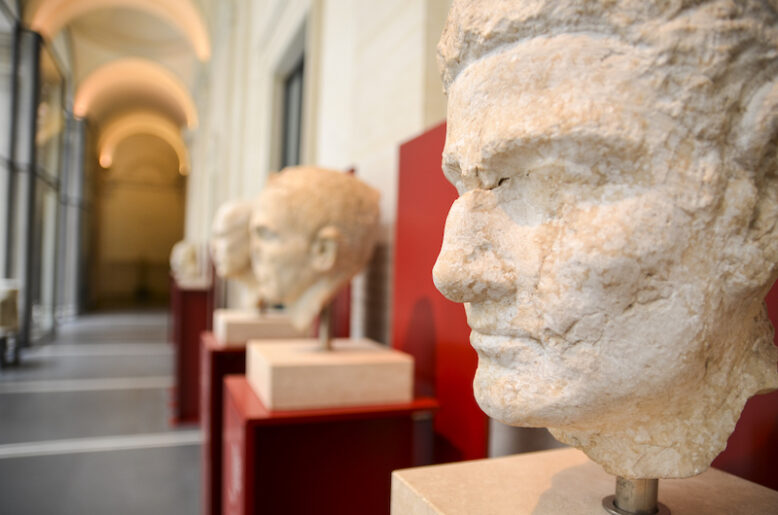
Language variants in Roman times
A few languages survived Roman times. However, all but the Celts and Greeks persisted until the fall of the empire and soon entered a process of annihilation, slowly disappearing. Unfortunately, after the 5th century AD, there are not many traces of these communities.
However, the Romans established their lands and adopted Classical Latin for literary and ecclesiastical purposes. Vulgar Latin became the spoken language of the poor, commoners and the less educated.
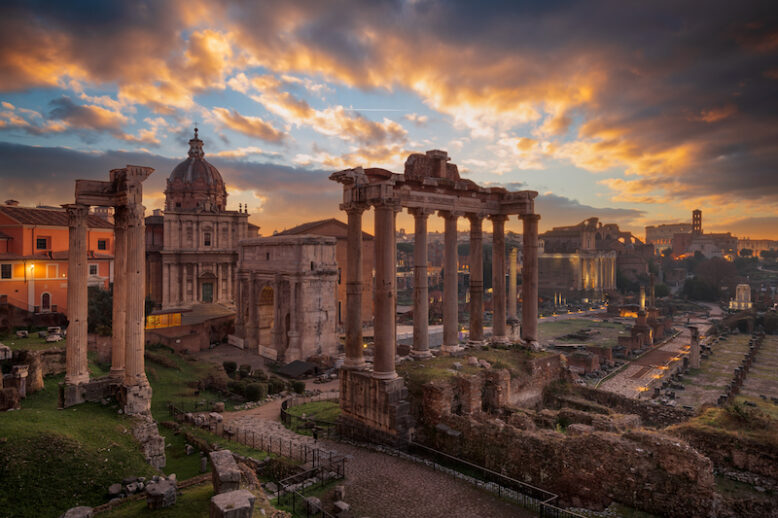
Latin is still spoken in Vatican City today, and it serves scientists to scientifically classify living things. Furthermore, it has been adopted by various technical fields, medical terminology and taxonomy.
For more than four centuries, Latin permeated every corner of the peninsula, allowing the Romans to impose linguistic hegemony. There was less space for linguistic minorities, most of whom were forced to accept Latin to survive in the new world.
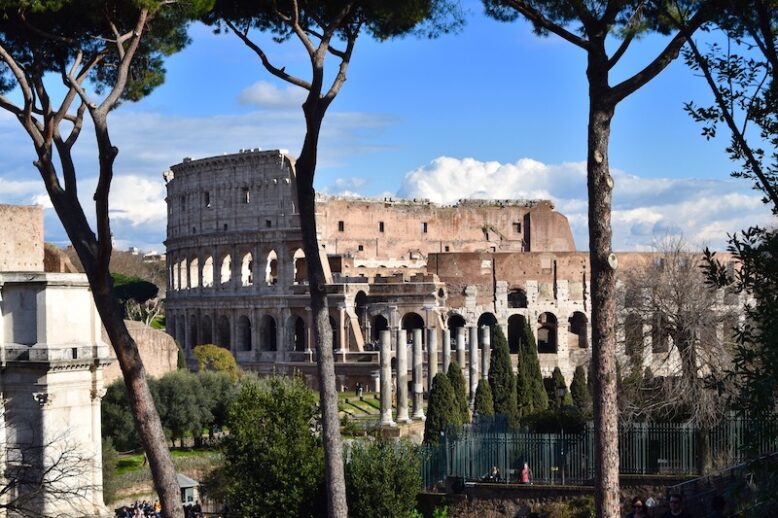
The Middle Ages and the Birth of Romantic Languages
The medieval period was the starting point for the rise of Italian as we know it today and all other Romance languages such as Portuguese, Spanish and French.
After the fall of the Roman Empire and the decline of Latin around the 9th century AD, Italy became a hodgepodge of scattered regions and interregional communities. But more importantly, each province turned to its preferred linguistic features, which led to the creation of numerous local dialects.
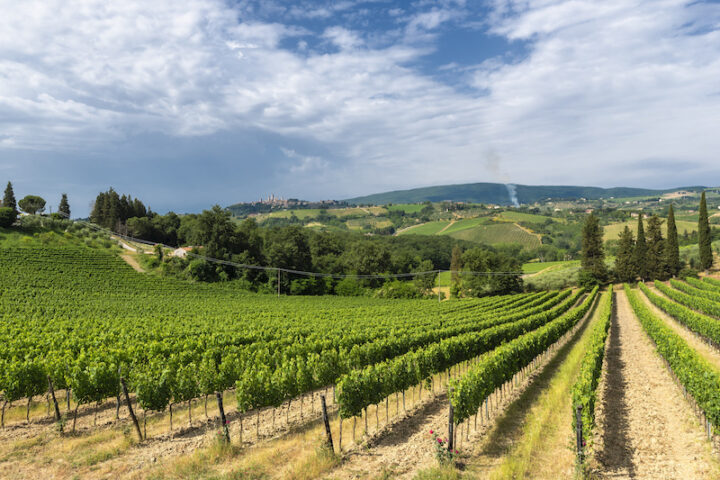
Of all these regional dialects, Tuscan was the language variant that had the greatest impact on the birth of a common language.
The Father of Italian Literature and the Rise of the Italian Renaissance
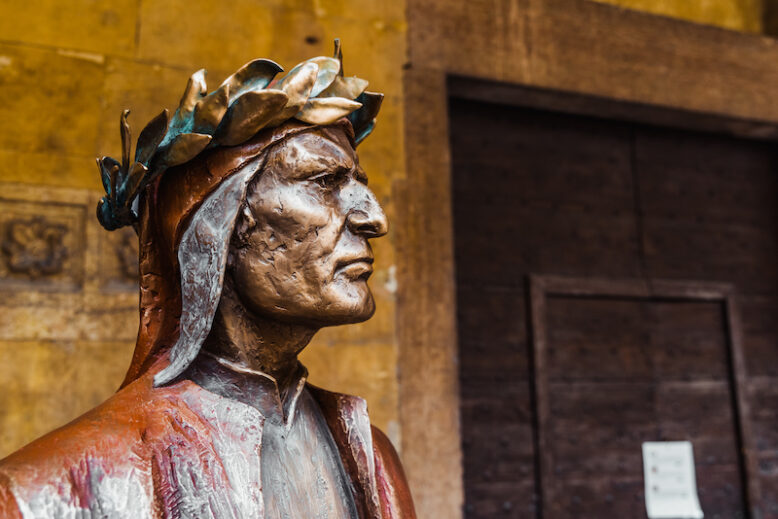
This is probably the most iconic era in the development of the Italian language.It began with lyric poetry written in the Sicilian dialect in the 13th century and later influenced the birth of the Italian literary movement Dolce Stil Novoknown for the rise of what is today defined as the founder of Italian literature.
Dante Alighieri wrote this Divine Comedy sometime between 1306 and 1321 AD, and this masterpiece is still studied, read and cherished around the world even today.And Dante’s Hellfire Undoubtedly the most famous work of the great Italian poet. Together with Francesco Petrarch and Giovanni Boccaccio he worked to enhance and shape the Tuscan dialect.
Since then, Italy has become a central hub for artists, writers and patrons throughout Europe. The vast majority of artistic and cultural movements emerged here before spreading to other countries. The true character of Italy this time was Italian literature, outstanding art, and learned scholars, who all enriched the courts and peninsular cities and, later, European entities.
At the same time, the Tuscan dialect slowly became the national language, thanks to the publication of numerous masterpieces, as well as the birth of new writers, poets and brilliant minds, who celebrated this in a way that no one on the whole peninsula had ever done before. dialect. Did it before.
Other regional dialects (listed below) spread from north to south in different groups:
- northern italy or gallo italy
- Venice, for northeastern Italy, from Serenissima of the First Republic of Venice
- Dialects of Marche, Umbria and Rome
- Dialects of Abruzzi, Puglia, Naples, Campania and Lucania
- Language variants of Calabria, Otranto and Sicily
Despite the strong influence of the Italian language, these dialects have managed to survive to this day. However, their use is declining and there is a real risk of extinction.
modern Italian
It would be impossible to discuss the consolidation of modern Italian without the intervention of two other literary protagonists: Pietro Bembo and Alessandro Manzoni. The Florentine language variant was preferred over other languages, with Venetian Bembo and Milanese Manzoni both devoted to their main features, laying the foundation for a new and evolving language.
Pietro Bembo, especially in his prose in vulgar languagelists all the features that can be entered into common usage to establish a single stylistic language.
Likewise, in the famous masterpiece fiancé (I Promessi Sposi Italian), Alessandro Manzoni offers his characters a language that completely ditches the old-fashioned 17th century language.

This was a turning point in the development of Italian. Not only did it undergo dramatic changes in ancient Latin and regional dialects, but also morpho-syntactic, phonological and semantic changes, and lexical changes (though parts of its original vocabulary remained almost unchanged).
One of the main features lost in Italian is the Latin case, replaced by the consistent use of articles and prepositions. Neutral styles have also disappeared, replaced by masculine styles. Both of these changes lead to a more fixed and less free order in the construction of propositions or clauses. The fact that Latin texts can have subjects at the end of the text, verbs in any position, changes that complicate a translator’s life even today.
Today’s Italian phrases are shorter and easier to understand. Furthermore, due to foreign influences and sociocultural factors during this long evolution, some Latin words adopted by Italian dictionaries have different meanings.
Global Italian
Italian today is going through a process of globalization, in which English vocabulary, especially work-related and technical terms, is expanding the Italian dictionary.
Likewise, Italian is one of the most studied languages in the world, and has gained a lot of attention for its literary and musical history, as well as its iconic sound. The Italian peninsula is fascinating for many reasons, but the language seems to be one of the languages of choice for foreigners.

Around the world, small communities of Italian immigrants carry Italian with them, although most of these Italian speakers are influenced by the local Italian dialect and currently speak a mix of that dialect and the local language.
Many Italian communities live in the United States, most of them in cities like Boston and New York. According to the latest census, there are more than 17 million Italians in the United States of America. Meanwhile, Venezuela, Argentina, Brazil, Canada and Australia all have communities that speak Italian dialects and standard Italian.
in conclusion
Italian is a language that has reinvented itself over the centuries, and today, although it is not one of the most spoken languages in the world, it holds a special place in the hearts of those who speak and learn it.The future looks bright for this linguistic entity, born out of more than 2,000 years of mutation, upheaval, regional conflicts, and most importantly, the will of poets and literary geniuses, the ability to create a language with a unique style “Glamour, charm and seduction”.


