


Is Hyperloop Making Progress? With new entrants to the high-speed underground travel race and a new joint venture between seven Hyperloop companies, it may be closer than ever.
Based in Toronto transport compartment It recently launched FluxJet, an all-electric “plane and train hybrid,” and announced the formation of the Hyperloop Association. Partners include Hardt, Hyperloop One, Hyperloop Transportation Technologies, Nevomo, Swisspod Technologies and Zeleros.
The Brussels-based association will work closely with the European Commission, European Parliament and Union Railways in Europe. The European Commission will “start work on a regulatory framework for Hyperloop, an important milestone for the industry, not only in Europe but globally,” said Ben Paczek, the first president of the Hyperloop Association. “In the coming months, we expect significant progress in the field of hyperloop.”
Last summer, TransPod launched a scaled-down version of the FluxJet in Toronto, complete with Live Demo of takeoff and landing. Ryan Janzen, TransPod’s co-founder and CTO, called it a “milestone” and a “significant leap forward,” noting, “FluxJet is at the nexus of scientific research, industrial development, and massive infrastructure to meet passenger demand and reduce Our dependence on fossil fuel heavy jets and highways.”
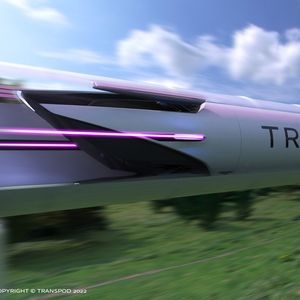
TransPod expects to eventually publish pods every two minutes. They have an initial capacity of 54 passengers or 10 tonnes of cargo and can be expanded through “virtual coupling”. This would allow “simultaneous dispatch of multiple vehicles in a train-like configuration, connected by a virtual system similar to adaptive autopilot,” they said.
FluxJet will rely on technological advances and innovations in propulsion, clean energy and “contactless power transfer”, so it can draw power from the existing grid via a magnetic field. That means being able to travel at speeds in excess of 620 miles per hour – faster than a jet plane and three times faster than a high-speed train – while producing zero emissions.

According to the feasibility study, TransPod’s superfast transit system would also create up to 140,000 jobs while adding $19.2B to GDP. Passengers are expected to pay up to 44 percent less to fly on the FluxJet than air tickets, and the system will also save 636,000 tonnes of CO2 emissions per year once completed.
Initial construction has begun on the TransPod line, which will initially connect the Canadian cities of Calgary and Edmonton. The 175-mile trip takes just 45 minutes. Broughton Capital Group is partnering with China-East Resources Import & Export Co. to inject $550 million into TransPod, which will help fund the test track and further research and development.
Elon Musk’s The Boring Company and Hyperloop One are two of the most famous names in the hyperloop world, but so far, the talk has outpaced the results. This only makes TransPod more exciting.

“All the hard work over the past few years has led to this milestone moment and the conversation is becoming a reality,” said TransPod co-founder and CEO Sebastien Gendron. “The technology is proven and investors, governments and partners Confidently move forward to effectively redefine transportation.”


