


Just like homes, businesses generate a lot of waste. In 2018, about 2.6 million tons of food waste and 22.3 million tons of yard clippings were generated, Five-fold increase since 1990.
Many business owners may not consider all of their recycling options, especially when they are most familiar with landfills. When making an informed decision about waste management for your business, you might consider commercial composting. use recycling bag Create a healthier environment by reducing the amount of waste going to landfill.
What is commercial composting?
Commercial composting involves commercial composting facilities that process large volumes of organic waste. It collects waste from grocery stores, restaurants and other commercial entities. Some commercial composting facilities work with municipal waste and recycling departments to collect compost, while others work as private entities.
At the facility, workers turn and rotate compost as needed and process it for sale or distribution. They may also add straw and chaff to the compost to break it down. Workers monitor the compost pile with temperature sensors and probes to ensure the natural growth of bacteria that help break down organic waste.
Commercial compost is of high quality, especially when workers care and handle the compost. These facilities sell compost to farms and nurseries that provide organic waste and receive processed compost. Compost can be used for municipal landscaping or provided free to citizens upon request.
How Commercial Composting Can Benefit Your Business
With commercial composting, you can participate in the next level of trash removal, which can help you save money and improve the environmental sustainability of your business.
1. Stay green
If food scraps end up in landfills or incinerators, decomposition or combustion produces more greenhouse gases and other dangerous emissions. Compost reduces emissions and adds nutrients to the soil, enabling farmers and individuals to grow more food. It helps create a circular economy from your business to municipalities and local citizens.
2. Save money
Many businesses may consider waste disposal after the fact; shipping can be expensive. Separating and composting food scraps from waste may help your business save time and money in waste collection. Depending on the compost facility you work with, compost collection may be cheaper than garbage collection.
Which wastes are suitable for composting?
Commercial composting facilities determine appropriate waste for composting. Since different facilities have different rules for composting certain wastes, check with them first to see if they accept waste from your business. Most commercial composting facilities accept the following materials:
1. Food scraps and waste are good nutritional supplements
Foods that can be composted include fruits, nuts, pits, and grains. You may want to check with your business establishment if they accept dairy and meat products. These wastes have odor problems and attract pests such as mice and flies, According to the Environmental Protection Agency (EPA).
2. Yard clippings add bulk
If your business produces yard waste like grass clippings and wood chips, these materials are great for composting. They break down easily in the facility’s compost pile.
3. Non-toxic can use paper materials
Natural unbleached paper towels are great for composting as long as they don’t absorb chemicals. Composting facilities may not always accept compostable paper products, cutlery, and containers.
If a facility produces organic compost, it will not accept bioplastic materials and processed paper products like newspapers.Some facilities accept paper goods because they Provides a large amount of carbon and nitrogen Decompose waste in compost.
How do I implement composting in my workplace?
Composting in the workplace increases the level of corporate social responsibility and reduces the overall amount of waste generated by the organization. This results in a smaller carbon footprint for the business.
You can implement composting at work with small actions that make an impact over time:
1. Add green trash can
Adding a green compost bin to the food prep area in the office kitchen area or counter allows employees to prepare or eat lunch at work, making eco-friendly choices about how they dispose of their organic waste, such as Throwing garbage in eco-friendly garbage bags.
Instead of storing heavy duty garbage bags that won’t decompose, your green garbage bags are packed in special biodegradable bags that decompose along with your compost.
2. Introduce indoor compost bins
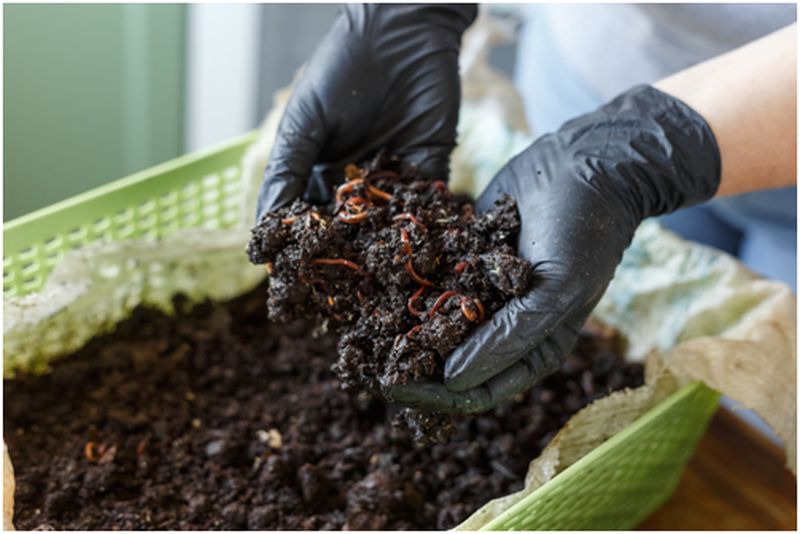
Rather than dumping green bins into an outdoor compost bin every day, it’s more practical to add an indoor compost bin to the kitchen space in small workplaces with fewer than 10 employees. These bins prevent the smell of green bins by adding green and brown substances to break down food waste. Because it’s a properly balanced compost and the bin has no odor; you can empty this container into a larger outdoor bin or a vermicomposting system about once a week.
3. Try a Vermicomposting System
Vermicomposting, also known as worm composting, uses earthworms to digest food waste and convert compost into fertile soil. Once you’ve set up a vermicomposting system, you can dump your indoor compost into it and feed the waste to the worms.
4. Educate employees
To let other employees know what can and cannot be composted or put in the green bin, it’s a good idea to post signs in the dining room or kitchen. These visual reminders help employees understand and remember what they can compost, rather than throwing everything in the trash.
5. Make sure maintenance personnel know how to dispose of food waste containers
Composting at work is more than just telling workers what items go into the green bin. For successful composting in the workplace, maintenance personnel responsible for handling and disposing of food waste need to know how to compost properly.
Depending on the system you have set up in your office or facility, this might mean collecting green bins and diverting food waste to an outdoor compost bin on a regular basis, or it might require them to empty their indoor bins into a vermicompost bin once a week.
make a change today
The move to implement composting practices and reduce waste starts with small changes that can have a big impact on your business. When you start thinking consciously about how your company can go green and reduce waste, you can save money and attract eco-conscious consumers.
Articles submitted by community writers


