


Two American scientists won a 1 million euro ($1.18 million) prize for creating a food generator concept that converts plastic into protein.
This 2021 Future Insight Award For their project, Ting Lu, professor of biological engineering at the University of Illinois at Urbana-Champaign, and Stephen Techtmann, associate professor of biological sciences at Michigan Technological University, went. It uses microorganisms to degrade plastic waste and convert it into food.
The award is sponsored by the German technology company Merck. In 2019, global plastic production totaled 368 million metric tons. The only decline in the past 60 years is due to the COVID-19 pandemic that has caused factory shutdowns and slowed transportation, which hindered global commodity production.
Cal Court/Getty Images
According to the International Union for Conservation of Nature, at least 8 million tons of plastic are dumped into the world’s oceans every year.
Belen Garijo, CEO of Merck, said: “The winners of this year’s Future Insights Award have created a breakthrough technology that has the potential to produce a safe and sustainable food source while reducing the environmental hazards associated with plastic waste and traditional agricultural methods. . And the Chairman of the Executive Committee.
“We congratulate Ting Lu and Stephen Techtmann for their promising research, and hope that the future Insight Award will help accelerate their efforts,” he said.
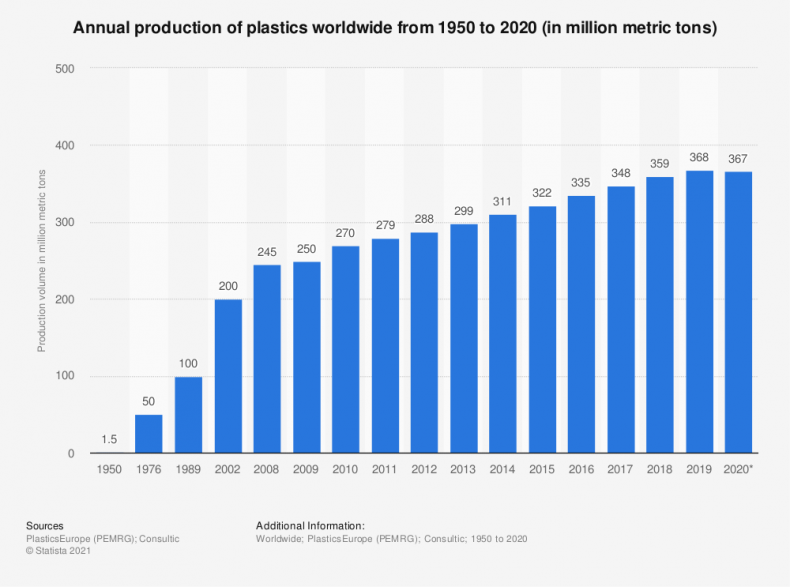
Statistician
The two scientists call their project a food “generator”. They are focused on finding an efficient, economical, and multifunctional technology that can be used for plastics whose service life is about to end, otherwise they will end up in landfills or Ocean.
Merck stated that the resulting food “contains all necessary nutrients, is non-toxic, provides health benefits, and additionally meets individual needs.”
Scientists have learned to use synthetically altered microorganisms and genetically program them to convert waste into food.
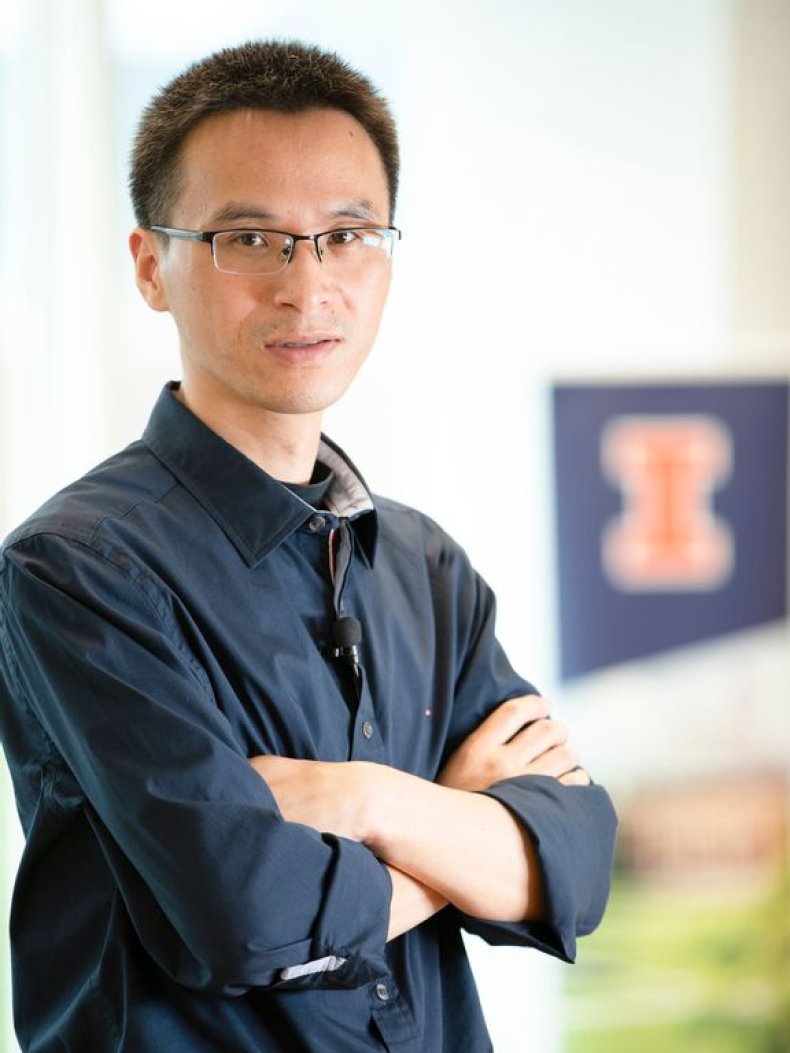
Merck/Zenger
Lu called it “Synthetic Microbial Biology. “He said, “engineered genetic circuits” can promote a wide range of biotechnology to solve future global problems.
“Environmental microorganisms can catalyze a wide range of chemical reactions, many of which may have industrial applications,” Techtmann said. “My laboratory studies how complex microbial communities cooperate to perform functions of industrial significance.”
The two scientists stated that their joint research will enable them “to convert the plastic waste produced in the world into valuable things: food and fuel.”
The first batch of winners of the Future Insights Award established in 2019 were Pardis Sabeti of Harvard University and James Crowe of Vanderbilt University, who studied how to detect and treat pandemic infectious diseases.
This story is provided by Newsweek Zenger News.


