


Too many fresh eggs in warmer months, but too few in winter? It’s time to learn how to preserve eggs. Here are 5 simple methods.
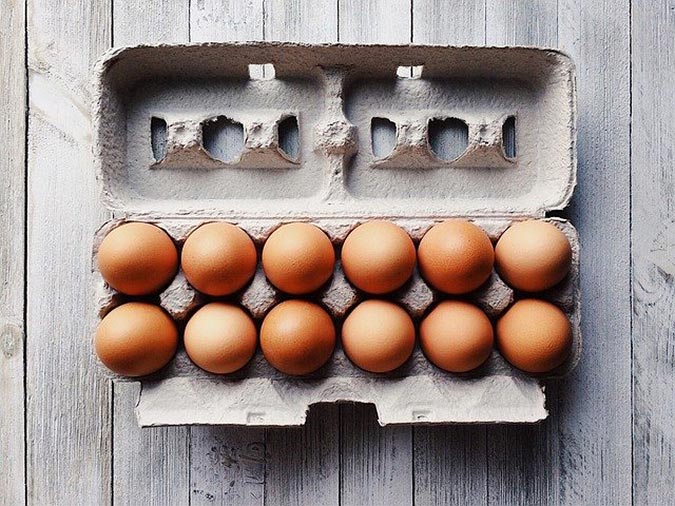
Image by Wokandapix from Pixabay
Get Cracking! 5 Top Tips for How to Preserve Eggs
For some 40 years, I had never eaten a fresh egg! Does that sound crazy to you? Looking back on it, it sure sounds crazy to me.
Naturally, I had eaten fresh eggs from the grocery store—but never a fresh-laid backyard egg or anything like it. That all changed about 10 years ago when my neighbor got chickens and soon found himself with so many extra eggs that he started bringing them over to my house by the dozen! With my first bite, my eyes were opened.
My world—and my breakfast—would never be the same.
You May Also Enjoy:
“Comparing Eggs and Five Things To Look for In Every Egg You Eat”
For weeks, my nice neighbor provided me with eggs, and I gladly offered to pay for them. It was a super deal for both of us until one day I saw him getting into his car and asked if he had any eggs I could buy.
“Nope,” he sighed. “For some reason, they just haven’t been laying lately.”
Learn how to raise your very own flock—and keep the eggs and meat coming no matter what the global supply chain is doing! Click here to save 79% on our Backyard Chickens 101 bundle!
This was a real problem for both of us. After some research, we learned what anyone who has ever kept chickens knows all too well. That is, while your consumption of eggs tends to remain fairly constant all year long, your hens’ production of these enjoyable gems of nutrition doesn’t. That bit of homestead knowledge led us to look into ways to preserve fresh eggs for leaner times.
The 1,000-Year-Old Egg
There is an old joke that states, “The best way to keep an egg fresh is to keep it in the chicken.” That may well be, but it was not what we needed, so we went to the library and started doing some research.
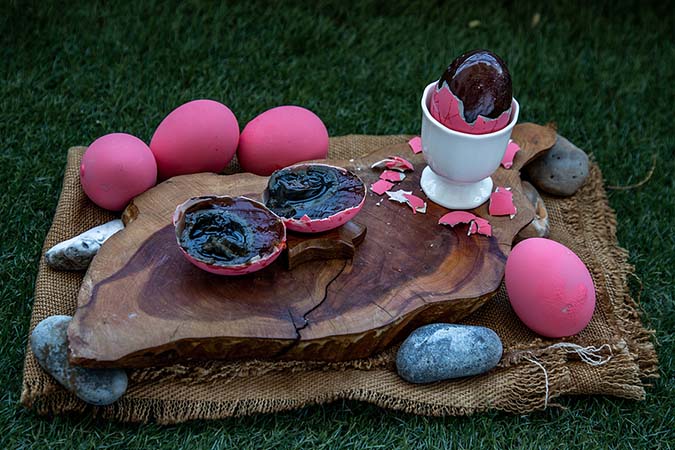
That led us to the 1,000-year-old egg. Okay, I can hear you now: “A 1,000-year-old egg? Yuck!”
That’s what I thought too. But it turns out that this Chinese delicacy—also called a century egg—is made by preserving chicken, duck, or quail eggs in a mixture of ash, clay, quicklime, salt, and rice hulls for several weeks to several months. (The eggs, of course, are not really preserved for a century, let alone 1,000 years! That’s just a cute name they give to eggs preserved in this way.)
This process causes the yolk of the eggs to take on a creamy, cheese-like texture. It also transforms the whites into a dark-colored jelly.
You May Also Enjoy:
“DIY Potting Soil Recipe Using 3 Simple Ingredients”
“Simple & Effective Worm Composting (VIDEO)”
“Aerobic Compost Tea, Worm Tea, and Leachate—A Clarification”
According to legend, these eggs have existed for centuries after their accidental discovery dating back to the Ming Dynasty (1368–1644) in China. A resident of the Hunan province supposedly discovered duck eggs in a pool of slaked lime leftover from the construction of his house two months earlier.
After tasting the eggs, he decided they were so good he had to make more. I don’t know if I could have or would have tasted those eggs, but hey, maybe the poor guy was really hungry!
A Cultural Nod to Fresh Egg Storage: Century Eggs
Later, people improved on this method of how to preserve eggs by adding wood ash, quicklime, and salt to increase the pH and sodium content of the clay mixture. This addition of natural alkaline compounds sped up the process and also helped prevent spoilage.
If you are into long-term fresh egg storage and want to try making your own century eggs, you should know that modern “1,000-year-old eggs” are first soaked in a brine of salt, calcium hydroxide, and sodium carbonate for 10 days. What follows next is up to 15 weeks of aging wrapped in airtight plastic. It seems that the egg becomes easier to digest because alkali breaks down protein and fat, which also lowers the cholesterol level of the eggs.
You May Also Enjoy:
“Eggsposing Some Basic Facts About Eggs”
Although not aesthetically pleasing, the way these look does not mean that century eggs are unsanitary or poisonous. They are just not very pleasing to the Western palate. However, if you are up to the challenge, there are many ways to enjoy them.
For one, they can be broken up in small pieces on top of chilled silken tofu, then seasoned with chopped spring onions, sesame oil, and soy sauce. Or as the Cantonese like them, you can slice them in wedges and top them with very thinly sliced pickled ginger. Another Cantonese specialty is a rice congee with shredded, salted pork and century egg.
In whatever way they are prepared, these unlikely delicacies are loved all over China.
However, my neighbor and I gave it some thought and agreed that century eggs were out! But we did find some other great ways to preserve fresh eggs, and it was really much easier than we thought it would be.
Crack the Code: How to Preserve Eggs
Method #1: Refrigeration
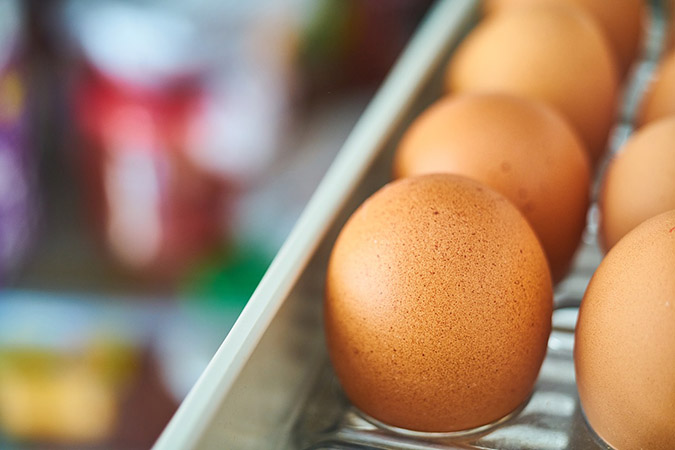
Image by Engin Akyurt from Pixabay
One thing we quickly learned was that eggs can be stored for up to 2 to 3 months at temperatures below 55°F without doing anything to them. This was great news, but we found that we had to carefully monitor the humidity. We discovered that it consistently needed to be close to 75%.
If the humidity level was too low, the eggs dried out; if it was too high, the eggs sometimes got moldy.
You May Also Enjoy:
“The 13 Best Chicken Breeds for Cold Climates”
“Chicken Coop Design: Meeting Your Chickens’ 6 Basic Needs”
“Cold-Weather Chicken Care: 11 Quick Ideas to Improve Chicken Comfort”
Also, it was important to use only clean, uncracked eggs. If the egg needed cleaning, we used it for breakfast and not for long-term fresh egg storage.
This is because when a chicken lays an egg, it has a natural coating on it known as the bloom. This bloom is a layer of protection for the egg that keeps out oxygen as well as harmful bacteria and germs. Anytime you wash or dry-buff an egg, you are removing that protective outer coating, which in turn allows bacteria to more easily enter the egg, causing spoilage.
Method #2: Mineral Oil Coating
Yes, this does work. Coating the egg with oil seals the shell to prevent evaporation during storage. The eggs you’re going to store this way should be oiled and stored within 24 hours of being laid.
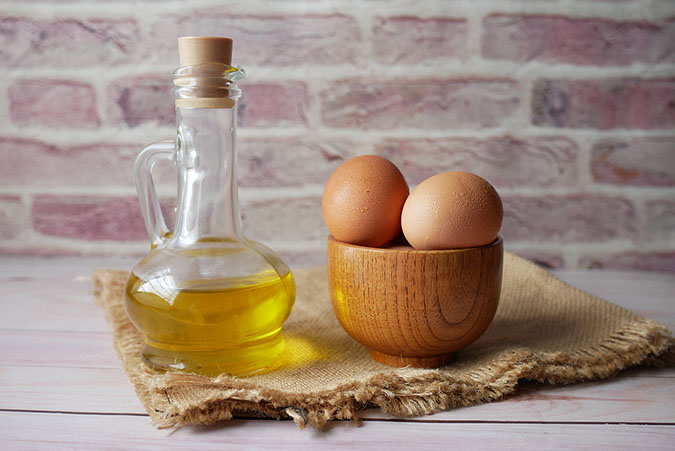
This is critical, so it means that you will not be able to oil and save store-bought eggs for the long term. I have heard of folks who used store-bought eggs successfully, but it has never worked for me.
If you are able to have fresh eggs from your own backyard or a neighbor’s backyard every day, then this method may be right for you.
The process is really easy. And if you store them in a clean, closed carton in a cool, dry place, your oil-dipped eggs will keep for several months. I have kept them for a full year in my refrigerator!
How to Properly Oil Fresh Eggs
To properly oil your eggs, they must be at room temperature to start (anywhere from 50°F to 70°F), and they must be dry.
- Be sure that your oil is free of bacteria and mold by heating it to 180°F for about 20 minutes.
- Then, with tongs or a slotted spoon, quickly dip the eggs one at a time in the oil. (The whole dipping process takes a second or less and will not start to cook the eggs.)
- Set the eggs aside on a metal drying rack (not on paper towels or newspaper), and let them drain for about 30 minutes.
- After they are completely dry, pack them away in clean, dry cartons. I recommend storing them in the back of your refrigerator and using them within about 8 months or so.
Of course, these instructions for fresh egg storage only apply to eggs which you intend to cook prior to eating.
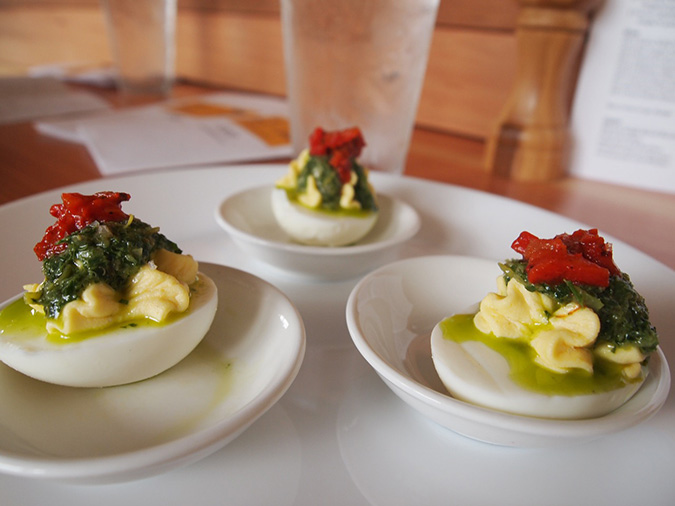
One really cool thing about preserving eggs this way is that if you love deviled eggs like I do, you will find that your deviled eggs will turn out better. This is because the shells peel off of older eggs easier and quicker when they are hard-boiled than they do with fresh eggs.
In fact, the only downside I have found is that once the eggs have been oiled, they’re no longer useful for making cakes or meringues. The oiling interferes with the foaming properties of the egg whites, so they no longer whip up as well as fresh eggs.
Method #3: Salt Preservation
This is another easy way to preserve fresh eggs. First off, be sure to use only truly fresh eggs that you have not cleaned. If they age more than 24 hours, your chances of success diminish rapidly. Also, exposure to extreme heat or cold will hinder your preservation process, so keep that in mind.
Next, stack the eggs and store them small-side down. I stored my eggs in salt, but your fresh egg storage can happen in any finely ground preservative you may have, such as bran, an equal mix of finely ground charcoal and dry bran, or finely ground oats. You can also store them in finely ground plaster of Paris, but that seems awfully unappetizing to me.
You can store the eggs layer upon layer as long as you make sure that they don’t touch metal, wood, or each other. Be sure you have enough finely ground preservative to pack them in well. Store them in a covered container, and keep it in a cool, dry place.
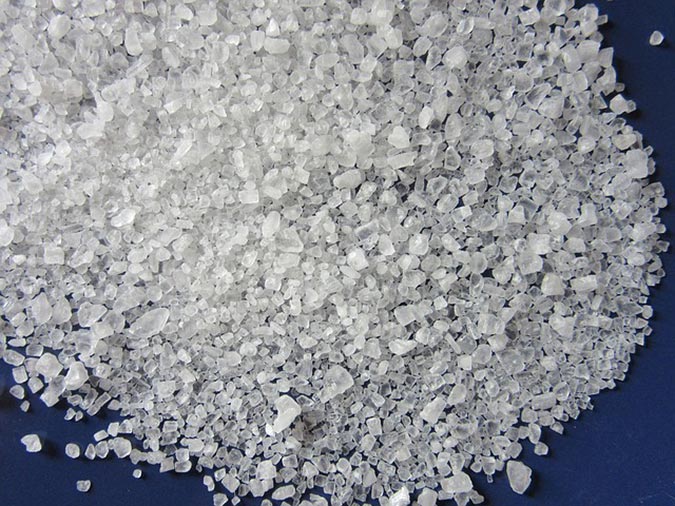
Image by Rupert Kittinger-Sereinig from Pixabay
Old timers often used a root cellar for this. However, see that you do not allow the eggs to be exposed to freezing temperatures as this will rot your eggs quickly. Properly prepared, these eggs will keep “fresh” for anywhere from 8 to 10 months. In fact, people in some countries are known to have stored their eggs in this way for up to 2 years.
If you are like me and you hate to waste anything, keep in mind that you need not discard the salt or bran you use for fresh egg storage. After you have used the eggs that were preserved in the mix, go ahead and feed the salt and bran to your cattle, or find another use for them.
Method #4: “Freeze Them Eggs, Son”
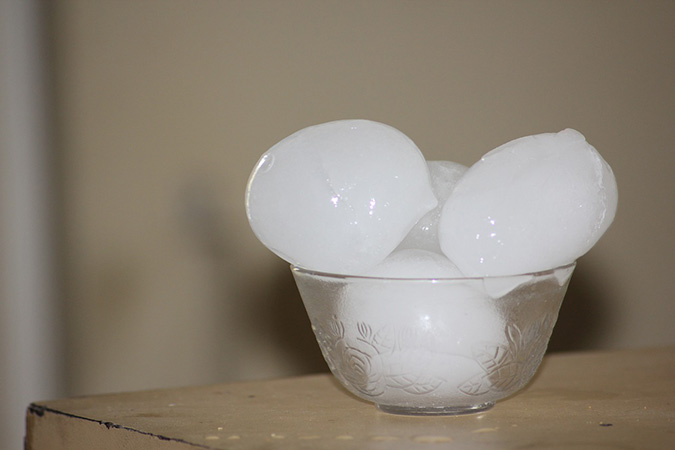
That’s what one local fella at the farmer’s market suggested. While I do not have a ton of freezer room, I do know that this works and is certainly easy to do. Freezing is the least time-consuming method for long-term storage, but it is energy dependent. Still, if you do have the freezer room, you might want to give it a try.
Eggs can be frozen in many different containers, such as freezer bags, mason jars, plastic containers, and ice cube trays. These frozen eggcicles perform much like the fresh version when thawed and used.
You May Also Enjoy:
“Using Game Cameras To Protect Your Backyard Chickens”
How to Store Fresh Eggs in the Freezer
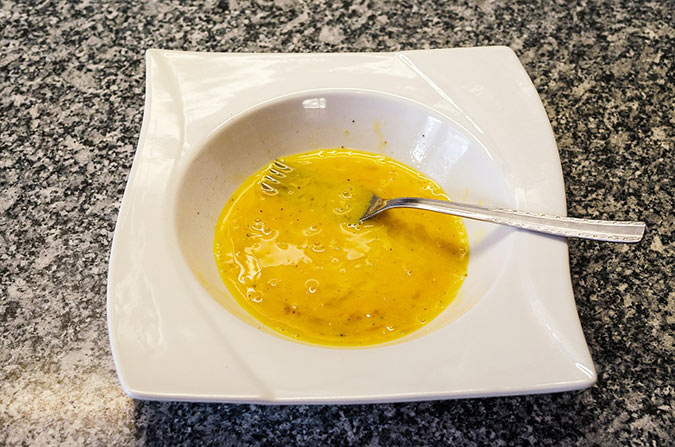
To freeze, simply break the eggs into a bowl, beat or push through a strainer to combine the yolks and whites, and then pour them into your container and freeze. To save space, I pour the eggs into an ice cube tray and, once frozen, remove them from the tray and place in a freezer bag.
How to Use Frozen Eggs
As a guide, remember that:
- 1 “egg cube” = approximately 1 egg
- 3 tbsp. frozen egg, thawed = 1 whole fresh egg
- 2 tbsp. frozen egg white, thawed = 1 fresh egg white
- 1 tbsp. frozen yolk, thawed = 1 fresh egg yolk
The beauty of freezing eggs in smaller amounts, such as in an ice cube tray, is that they thaw quickly and allow you to throw together a really quick meal. Between quiches, frittatas, and even “breakfast for dinner,” we are never at a loss for great egg-based meals at my house!
Method #5: Homemade Powdered Eggs
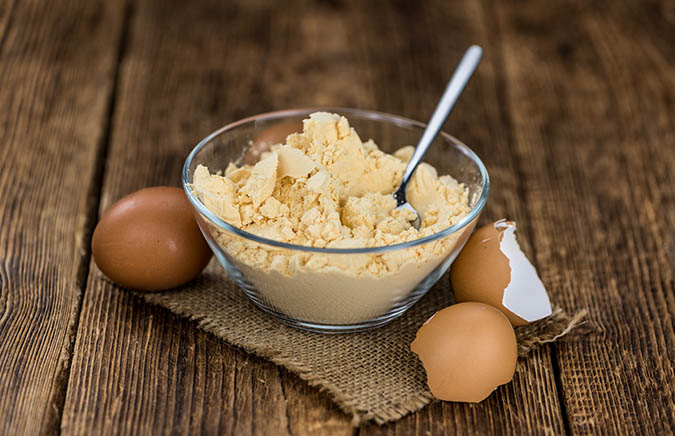
Okay, okay, so I know that powdered eggs just don’t sound very appealing, especially for those of us who have served in the military. But when reconstituted, they have a taste and texture very similar to fresh or frozen eggs. And it is kinda cool that you can do this as a DIY project using a dehydrator.
In fact, it makes a great long-term storage option that requires minimal space.
You can beat the eggs together and dry them, or dry the whites and yolks separately. Reconstituted eggs can be used in the same manner as fresh eggs. You can even use the dried egg whites to make a nice, fluffy meringue!
You May Also Enjoy:
“How to Treat Rabbit Ear Mites”
I just had to try this! I dried a dozen eggs and blended them into crumbles, and they fit into a 12 oz. mason jar. If I had blended them even more, into a real powder, I’m sure I could have fit that whole dozen into a half-pint jar. That would be 4 dozen dehydrated eggs per quart jar—a really super use of my rather limited pantry space!
The only downfall to this method is the amount of heat that the dehydrator puts out. In the hot summer months here in central Texas, it might be a better idea to freeze the eggs and then thaw and dehydrate them when it is cooler outside.
You can use the powdered eggs as follows: 1 tbsp. powdered egg + 1 tbsp. hot water = 1 egg.
How to Dehydrate Fresh Eggs
- Line the trays of your dehydrator with parchment or wax paper, folding up all the edges to form a tray so the liquid eggs won’t slide off and make a mess.
- Break your eggs and stir to combine, or separate them and dry the whites and yolks on two different trays.
- Slowly pour the eggs onto the tray, moving your bowl around so as not to pool them in the middle. I also used a spoon to spread the eggs to the very edges of each tray. You will want a very thin layer so that they dry evenly.
- Dehydrate at 135°F for 6 to 8 hours or until no moisture is left. It took about 6 hours for a dozen eggs on one tray to fully dehydrate in my unit, but your time may vary.
- Stir the eggs about halfway through, or a skin will form on the top and outside edges.
- Once dried, crumble the eggs up and store them in a jar with a tight-fitting lid. Or go a step further and grind or blend the crumbles into a powder. (I put the egg crumbles in the blender and grind them up.)
- To use, reconstitute with hot water and then cook as normal. When using for baking, simply add the powdered eggs with the dry ingredients and add the same amount of water with the wet ingredients.
Eggs-cellent Ideas
Well, there you have it—5 easy ways you can preserve the bounty your hens provide. From “1,000-year-old” Chinese eggs to homemade powdered eggs that even the grumpiest old Korean War veteran would love, you now know of some great ways to have your eggs around even if your hens aren’t laying. Oh, and as for my neighbor, you can be sure he learned how to store fresh eggs in a snap—which was important because I wanted to go right out and get hens of my own!
What Do You Think?
What’s your favorite tip for how to preserve eggs? How do you ensure you have eggs through the winter months? Let us know in the comments below!
___________
This is an updated version of an article that was originally published on September 16, 2015. The author may not currently be available to respond to comments; however, we encourage our Community members to chime in to share their experiences and answer questions!
The Grow Network is a participant in the Amazon Services LLC Associates Program, an affiliate program designed to provide a means for our team to earn fees for recommending our favorite products! We may earn a small commission, at no additional cost to you, should you purchase an item after clicking one of our links. Thanks for supporting TGN!
(Visited 82,354 times, 8 visits today)


