


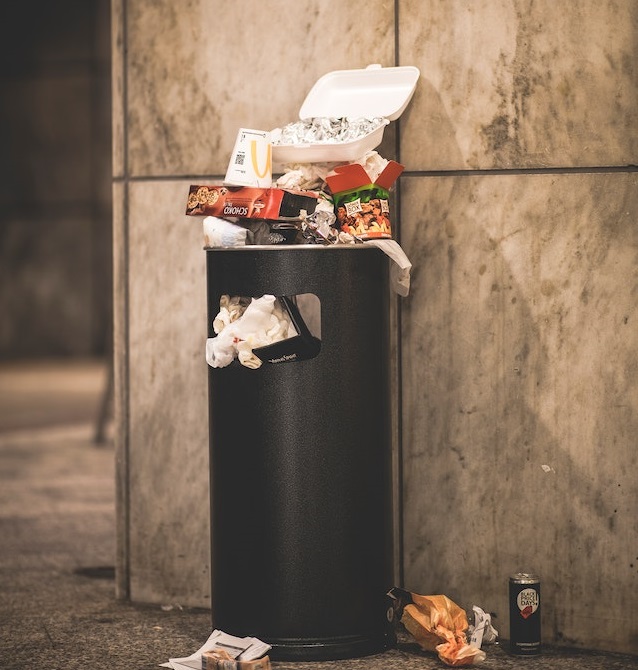
Did you throw away dinner because you were worried about overeating, feeling full, or being turned away by the taste? Did you realize that throwing away food also wastes water and contributes to climate change?
About 1.3 billion tons of food worth $1 trillion is lost or wasted every year. According to estimates by the World Food Program (WEP), approximately one-third of all food produced each year is wasted or lost before it is eaten.
And consider – after the US and China, wasted food It is the third largest carbon dioxide generator in the world. 8% to 10% of the world’s carbon emissions come from all these unconsumed products. According to statistics, the greenhouse gas (GHGs) emitted by food waste every year is equivalent to 3.3 billion tons of carbon dioxide.
Consider water waste
Uneaten food waste accounts for a quarter of our water use, or $172 billion in lost water.
According to the 2021 Food Waste Index report by the United Nations Environment Programme (UNEP), approximately 17% of world food production lost or wasted. Households generate approximately 61% of waste, with 26% from food service and 13% from retail.
Wasting food is irresponsible as it adds to the garbage burden and puts extra stress on people waste management system. Trash ends up in landfills. It also sometimes flows directly into bodies of water.
Consumer food is known to be lost during manufacture, storage and transportation. Recently, however, household food waste has increased rapidly. All of this wastes the energy, water and land needed to produce food.
So it’s important to remember that if you throw away leftovers, you’re not just throwing away tomorrow’s meal; every fork of food is responsible for greenhouse gas emissions before it reaches your plate. Food production, processing, packaging and transportation all contribute to global warming. When we discard it, it continues to produce greenhouse gases into the atmosphere as it decays.
According to estimates by the United Nations’ Food and Agriculture Organization (FAO), if food waste were a country, it would rank third in greenhouse gas emissions after the United States and China.
Agriculture accounts for one-third of all global greenhouse gas emissions, which we throw away approximately every year 1.8 billion tons of food, or 30% of what we produce. If we as a planet stopped wasting food entirely, we would reduce our total emissions by 8%.
Of course, not all of this waste is the fault of a particular family. According to a 2018 survey, about one-third of our fruits and vegetables are rejected before they hit the shelves because they are the wrong size or shape. (Learn more about a food chain overhaul to reduce waste.)
The need for sustainable development
E-commerce is expanding globally. In 2020, global electronic retail sales increased by 27.6% compared with 2019, accounting for 18% of total global retail sales. Due to the development of e-commerce, the number of delivery vehicles on our highways is increasing.
As customers become more environmentally sensitive, the demand for sustainable e-commerce is growing. According to a survey of 6,000 customers in North America, Europe and Asia, 72% of respondents are already actively purchasing greener products.
Greener solutions are needed due to the trend towards greener buying and the increasing greenhouse gas emissions generated by the e-commerce industry.
E-commerce businesses can benefit from it in a number of ways, such as improving their reputation, preparing for climate change policies, keeping the industry competitive, and attracting consumers and workers.Here’s Why E-Commerce Companies Are Crucial Estimating your carbon footprint About their shipping and other business operations.
By assessing their carbon footprint, a business or organization can determine how big their impact on the environment is.
However, the methods used to generate these estimates can vary widely and often only consider a small subset of variables that affect carbon emissions.
reduce your carbon footprint
The total amount of greenhouse gases (such as carbon dioxide and methane) produced by human activity is called the carbon footprint.
With one of the highest rates in the world, the average person in the United States has a carbon footprint of 16 tons. The global average carbon footprint is close to 4 tons.go through 2050the global average annual carbon footprint must fall below 2 tons to minimize a 2°C rise in global temperature.
It will take time to reduce your personal carbon footprint from 16 tons to 2 tons! We can all make changes by making small adjustments to our behavior, such as eating less meat, booking less connecting flights, and drying our clothes.
hungry stomach
All of this is happening as world hunger levels continue to rise. According to FAO estimates, 690 million people suffered from hunger in 2019. Two billion people can get nutrition from all the food they produce but never eat. To make matters worse, food loss and waste have an impact on the world economy, costing the economy $936 billion annually.
In fact, there is enough food for everyone. We waste too much and that’s the problem. Think about it: According to WEP, consumers in rich countries waste almost as much food each year as sub-Saharan Africa produces each year.
reduction method
A national policy to reduce food waste is critical. It is crucial for supermarkets to reduce food waste. They need to guarantee the safety and high quality of the goods. Monitoring the storage temperature of stored goods requires the use of technology.
Sustainable, wholesome and healthy food systems are fundamental to reducing food waste. The guiding principle should be to eat well, buy what you need, and preserve food properly.
Create a composting area, as wasted food may enrich the soil with nutrients and lower your carbon footprint. Home composting can reportedly divert up to 150kg of food waste per household from local collection agencies each year. Share or contribute to a food bank if you can.
It is clear that food waste is a global problem that requires a global solution. Governments must adopt legally enforceable targets to reduce food waste and prioritize reducing food loss and waste, especially on farms.
Plus, each of us can buy, cook and eat smarter by preparing only what we really need and avoiding food waste. To help fight poverty and reduce the environmental and climate impact of food production, we must ultimately reduce farm-to-fork food loss and waste by at least halving it.

