


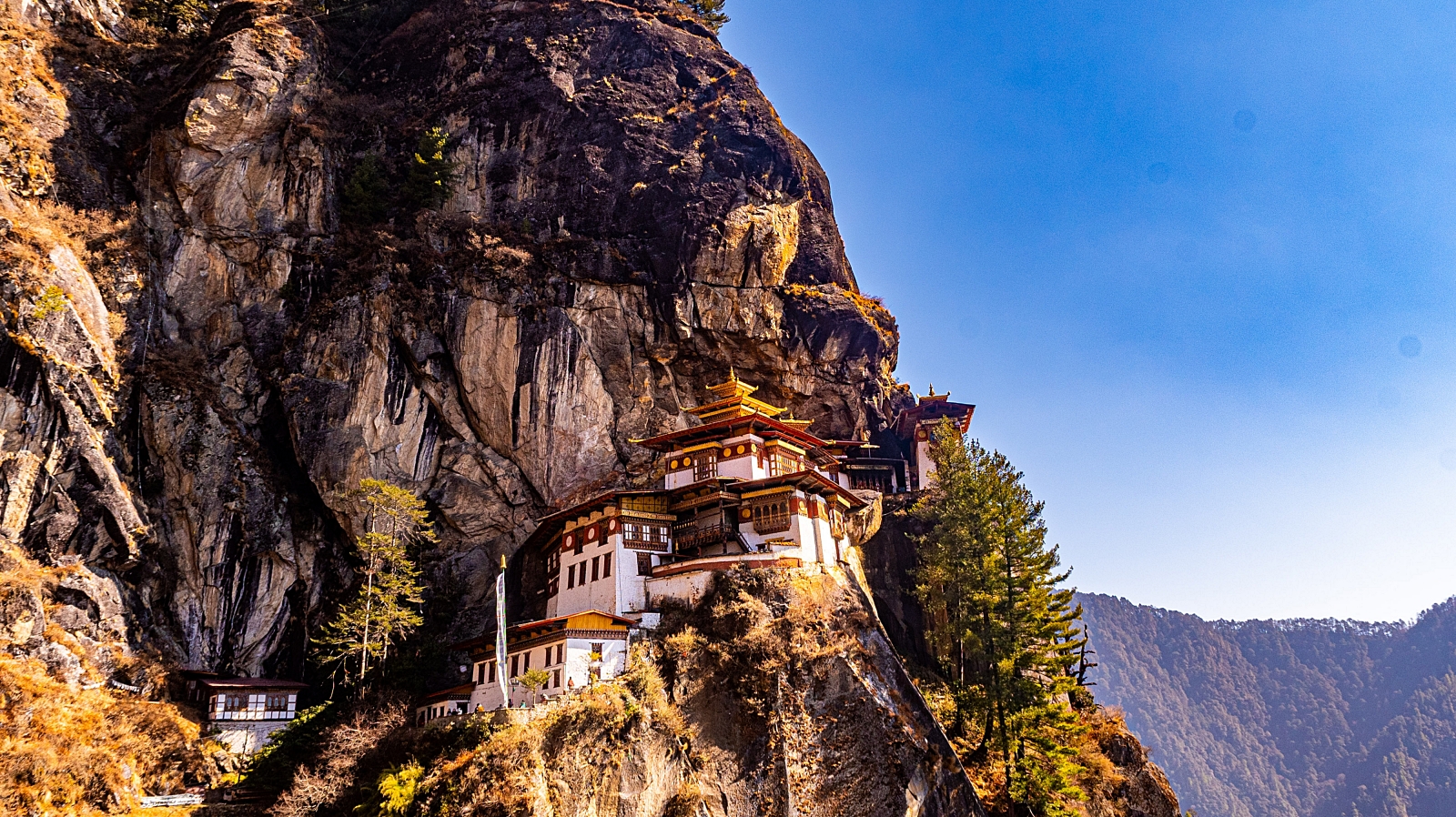
Built in 1692, Paro Taktsang Monastery – more affectionately known as Tiger’s Nest Monastery – sits on a hilltop in the Paro Valley at an altitude of 3,000 metres.
One of Bhutan’s crowning glories, Tiger’s Den is a sight that seems to have jumped out of a fairy tale. Once we arrived in Bhutan, it was one of the first places I was eager to explore – and it certainly didn’t disappoint! As the name suggests, this magnificent building is named for its legendary origin. That’s right, “Taktsang” literally means “Tigress’ Lair” – how about some trivia now?
The legend tells of an incredible feat by the 8th-century Indian Buddhist master Guru Rinpoche; being carried up a mountain by a disciple in the form of a majestic tigress! After arriving at the destination, Guru Rinpoche meditated in the cave for 3 years, 3 months, 3 days and 3 hours, which is really amazing. After finishing his meditation, the cave is said to have been transformed into a holy place called Paro Taktsang.
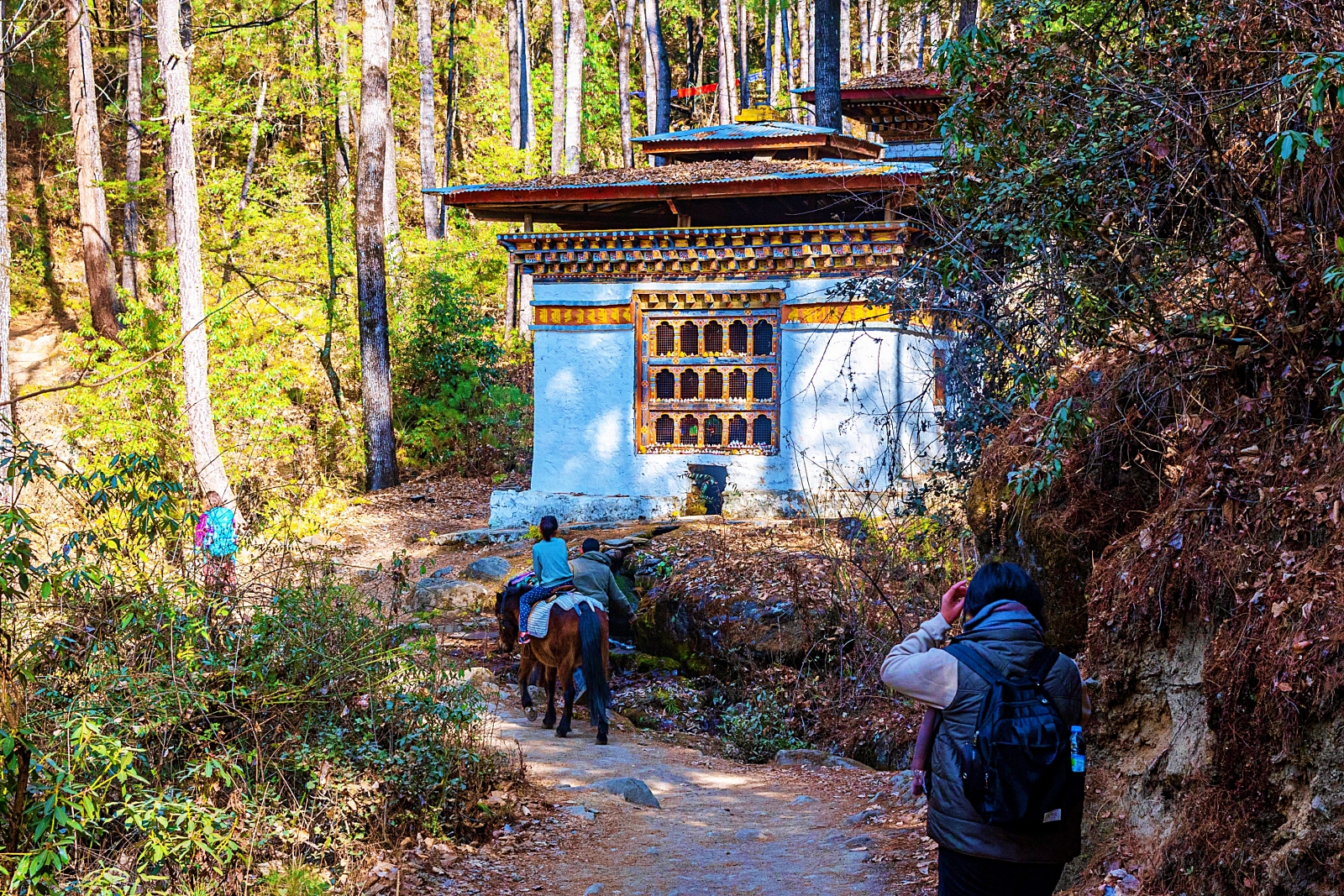
To get a head start on the Tiger’s Den tour and maximize our time, we woke up before sunrise and left Thimphu early in the morning at 7am. Target? Arrive at the foot of the mountain around 9am, as the site opens to the public at 8am. As I got closer, I noticed a variety of stalls selling souvenirs, crafts and – to my surprise – carved wooden walking sticks/trekking poles for only 50 num ($0.70).
The journey begins at a leisurely pace as we meander past the stalls. Through the gate we wandered across two fields to the foot of the cliff. It is here that the locals keep their mule trains, which you can hire to carry you up the rough trails. However, if you choose to ride one of these creatures, you can only go halfway up the mountain. We decided to climb – a decision that will pay off.
Even if you are a master of horseback riding, it is far less comfortable than going to the tiger’s den with your own two feet. But the rewards are worth it – the sense of accomplishment when we reach the top is amazing! We were up for the challenge, and the rising grade of the ground was all the confirmation we needed – we were officially on the climb!
Although still far from the majestic tiger’s den, I’m excited for the trek ahead. As we stepped into the lush wooded area covering the side of the cliff, I realized that the “difficult” part of the trail was nothing more than a steady incline along the side of the hill. As you tackle the increasingly steep terrain, winding paths between the trees keep you off the slopes, although some adventurers have carved out their own shortcuts.
While these may appear to be the more direct routes, they are not always the quickest journeys, as these rogue paths are much steeper than the main route. So if you feel like you can manage gradients, you can try to carve your own path – just make sure you don’t get lost along the way! For me, the trek was a crazy ride! After an epic trek up and down the mountains, we finally arrived at a rest stop in the middle of the Tiger Cave hike.
Here, we were lucky to have restrooms and an indoor seating area where we could take a break, have a snack and refreshment, and even drop off our weary mules – if you rent one. Ah, sweet relief! After what felt like forever to climb the cliff, we stopped for a much-needed cup of tea. We knew we had to move as the weather got hotter, so we reluctantly finished our tea and hit the road again. Little did we know we’d have to go up and down hundreds of meters (and up again, ouch!) to reach the majestic tiger’s den.
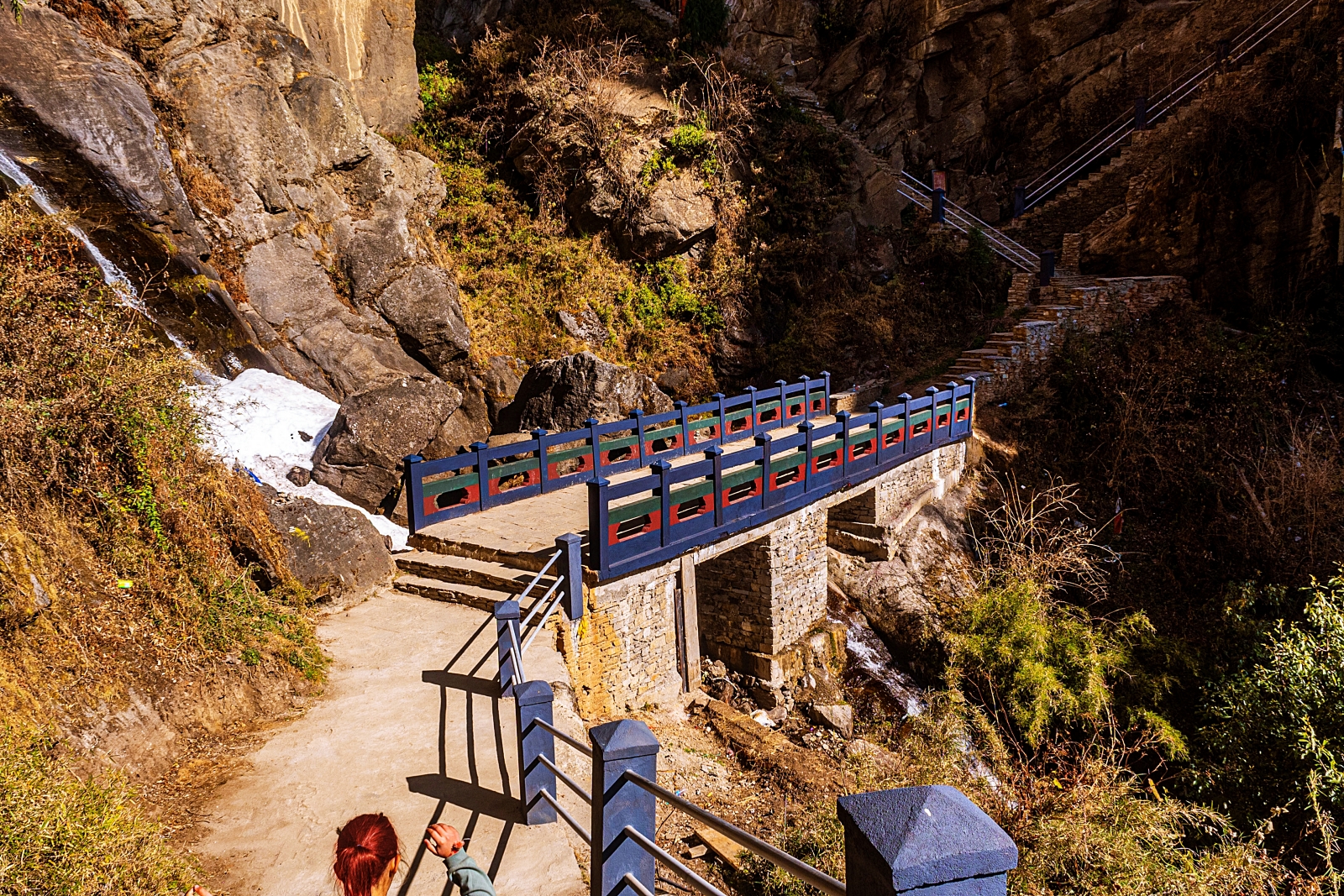
After several hours of hard climbing, we were starting to lose sight of the tiger’s den. But when we turned a corner on a strangely flat path, our eyes were greeted with a breathtaking sight! There it is, perched atop a cliff, its grandeur radiating toward us. The Tiger’s Den has been shown to us and we marvel at its splendor! We sat on our platform overlooking the tiger’s den from a height. Beyond the platform, a cable bridge spans a small valley, and the two ends of the bridge are decorated with colorful prayer flags, fluttering in the breeze. Below, a waterfall cascades down the stone wall, adding to the majestic beauty of the view.
As I approached the summit, I knew the rest of the trek would be the most challenging. To get to the Tiger’s Nest Temple, I had to climb hundreds of steps up the mountain—through ropes—and even more on the other side. Sure, the descent would be nice, but the thin air and suffocating heat make it seem like an impossible task.
We trudged down the steps to the end of the path, burning with each step. My lungs are out of breath and I’m about to collapse! But the moment we reached the bridge, all the exhaustion seemed to disappear in an instant. The prayer flags fluttered in the breeze, the water mist from the waterfall floated in the air, and we were deeply impressed by the peaceful and peaceful atmosphere. It was a truly invigorating experience, after which we were ready for the final leg of our journey – refreshed and refreshed!
As I trudged up the seemingly never-ending ladder to the tiger’s den, I was sure the ladder was getting steeper (it turned out it wasn’t). But despite the challenges, I kept going and was rewarded with stunning views once I reached the top. It’s definitely worth the climb! We reluctantly gave up our cameras and phones and left our shoes behind as we walked up all the steps to the tiger’s den. Before crossing the threshold into the Tiger Cave Temple, we paused for one last panoramic view of the valley, feeling a sudden sense of relief.
Bhutanese say that once you step into a monastery, you will be blessed for a lifetime – so it’s no surprise to see many people entering the monastery with their hands folded to pray. To explore the inner chambers of Tiger Cave Temple, we decided to join one of the guided tours. It is headed by a permanent resident monk. Nestled among breathtaking Himalayan peaks, Paro Takstang stands majestically like a living monastery. With its four magnificent temples and residential areas suitable for monks, it is an active pilgrimage site for tourists from all over the world.
Here, spiritual seekers and tourists alike are welcome to bask in the serene atmosphere as temples are timeless cultural and religious monuments. After your epic journey through the Tiger’s Den, your next step is to follow the trail back to your starting point while capturing all those postcard-worthy photos. It’s an experience that’s sure to stay with you forever – looking back, you’ll never want to put it down!
Business hours: Visit the Tiger Cave Temple, open from 8am to 1pm and again from 2pm to 6pm
cost: If you are a tourist in Bhutan, you pay for the tour which includes a spectacular trek to the famous Tiger’s Nest, all arranged for you by your guide! But for all the Bhutanese out there, you get free entry to the majestic Paro Taktsang as long as you wear your national dress.For foreign residents and Indian tourists, you need to pay 2000 Ngultrum, which is about US$25
What to bring: Bring your hiking shoes, hiking gear, water and trekking poles. Don’t forget to take nausea medication too – better safe than sorry!
Visit time: If you’re looking for the ideal time of year to visit Bhutan, you might want to skip summer. Temperatures can be hot, and we recommend going in spring or autumn if you don’t want to break a sweat on your trip.


