


this EU Deforestation RegulationsA major leap forward in sustainable business with a focus on reducing the EU’s deforestation footprint. The regulation, which targets commodities such as cattle, palm oil, soybeans, cocoa, rubber, coffee and timber, must be taken seriously by companies operating within the EU.
This provision ushered in an era of heightened accountability. All companies, regardless of size or position in the supply chain, that import or export products containing the targeted commodity will need to ensure their operations comply with the new regulations. It’s not just about obeying the law, it’s about protecting our forests, maintaining biodiversity and fostering responsible supply chains.
The key to compliance is a strong due diligence system. Businesses must assess risks, implement mitigations, and continuously monitor their supply chains. In addition, the regulation requires full documentation and traceability, thereby enhancing the transparency of the journey of these commodities from the point of origin to the market.
To complicate matters, the regulation also has a backward-looking element, requiring products to originate from land that has not been deforested after December 31, 2020. This is where artificial intelligence-powered satellite surveillance could be a game-changer. Such innovative technologies provide real-time data, high-accuracy and cost-effective monitoring that simplify compliance and make it more efficient and precise.
this EU Deforestation Regulations This is not just a new rule, but an invitation to join the global movement for sustainable and deforestation-free supply chains. By understanding and implementing the requirements of the regulations, businesses have the opportunity to make a meaningful contribution to the future of the planet. Now is the time to move towards a greener, more sustainable future, one commodity at a time.
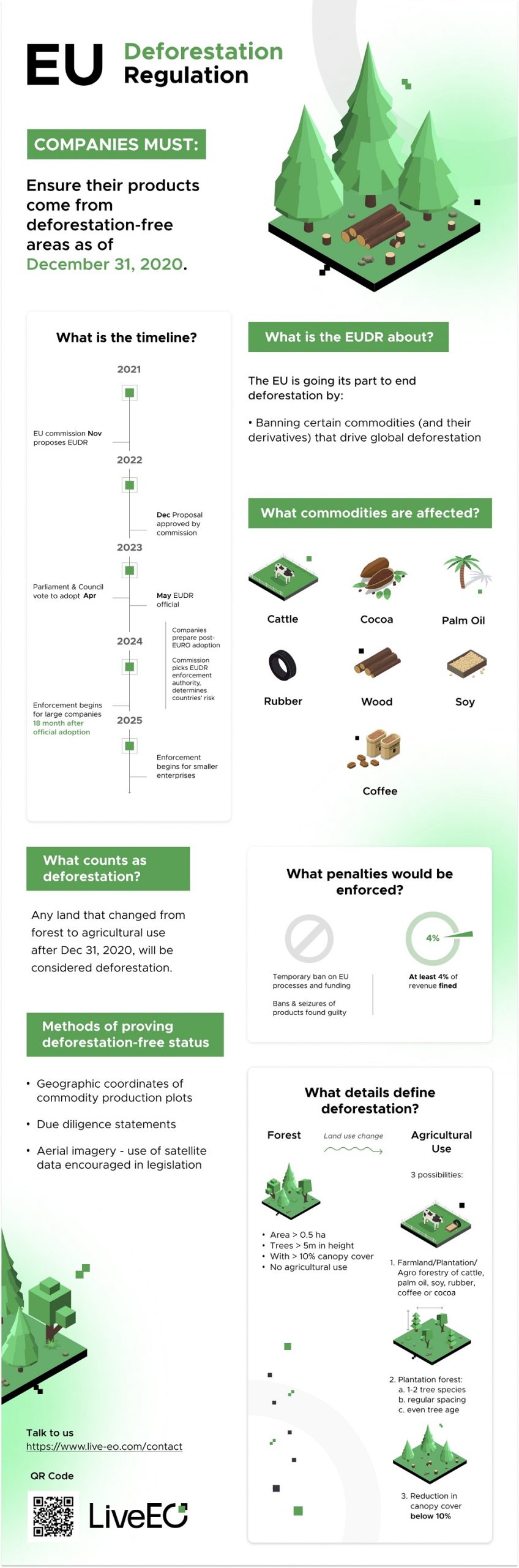
Infographic shared by: https://www.live-eo.com/solution/eudr-compliance

