Free Printable: Low Carb & Keto Food List
This post may contain affiliate links, which help keep this content free. (Full disclosure)
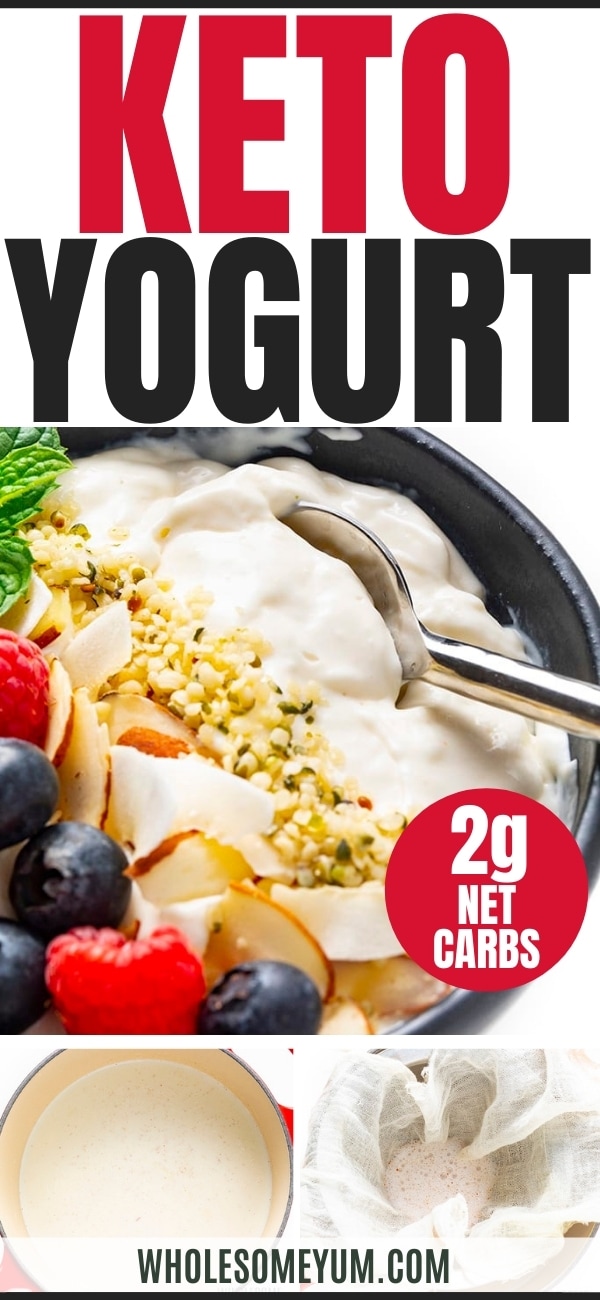
This (almost) sugar-free yogurt is smooth, creamy, and totally keto! Skip the store-bought versions that can hide artificial ingredients or sugar, and make this keto yogurt instead. I’ll also cover all of the burning questions around low carb yogurt: Is yogurt keto? How many carbs in yogurt? What is the best yogurt for keto? …and more.
Because this keto yogurt is unsweetened, you can also use it in recipes that call for plain yogurt, like my keto butter chicken, easy Greek tzatziki sauce, creamy keto frozen yogurt, or even keto naan! But, I highly recommend you try it on it’s own first. It makes a filling keto breakfast or snack that you can customize with so many good-for-you toppings.
Why You’ll Love This Keto Yogurt
- Thick, creamy texture
- Tangy plain yogurt flavor, but easy to customize with flavors
- Just 5 basic (and clean) ingredients, plus water
- Only 2g net carbs per serving
- Simply delicious, nutritious, and versatile
Is Yogurt Keto?
No, yogurt is not really keto — at least, most store-bought varieties are not, as they are made with a base of milk and many are also sweetened with sugar, both of which crank up the carbs and macros fast. Even if it’s labeled keto, you’ll want to check the ingredients closely, as they typically contain a lot of artificial ingredients.
Luckily, even though yogurt is usually off the table for keto breakfast recipes, there is still a way for you to enjoy it on a keto diet! Much like making swaps to keto oatmeal, making your own yogurt is easy and much lower in carbs.
Ingredients & Substitutions
This section explains how to choose the best keto yogurt ingredients, what each one does in the recipe, and substitution options. For measurements, see the recipe card below.

TIP: You can’t use store-bought almond milk here!
The preservatives will prevent the low carb yogurt from fermenting properly!
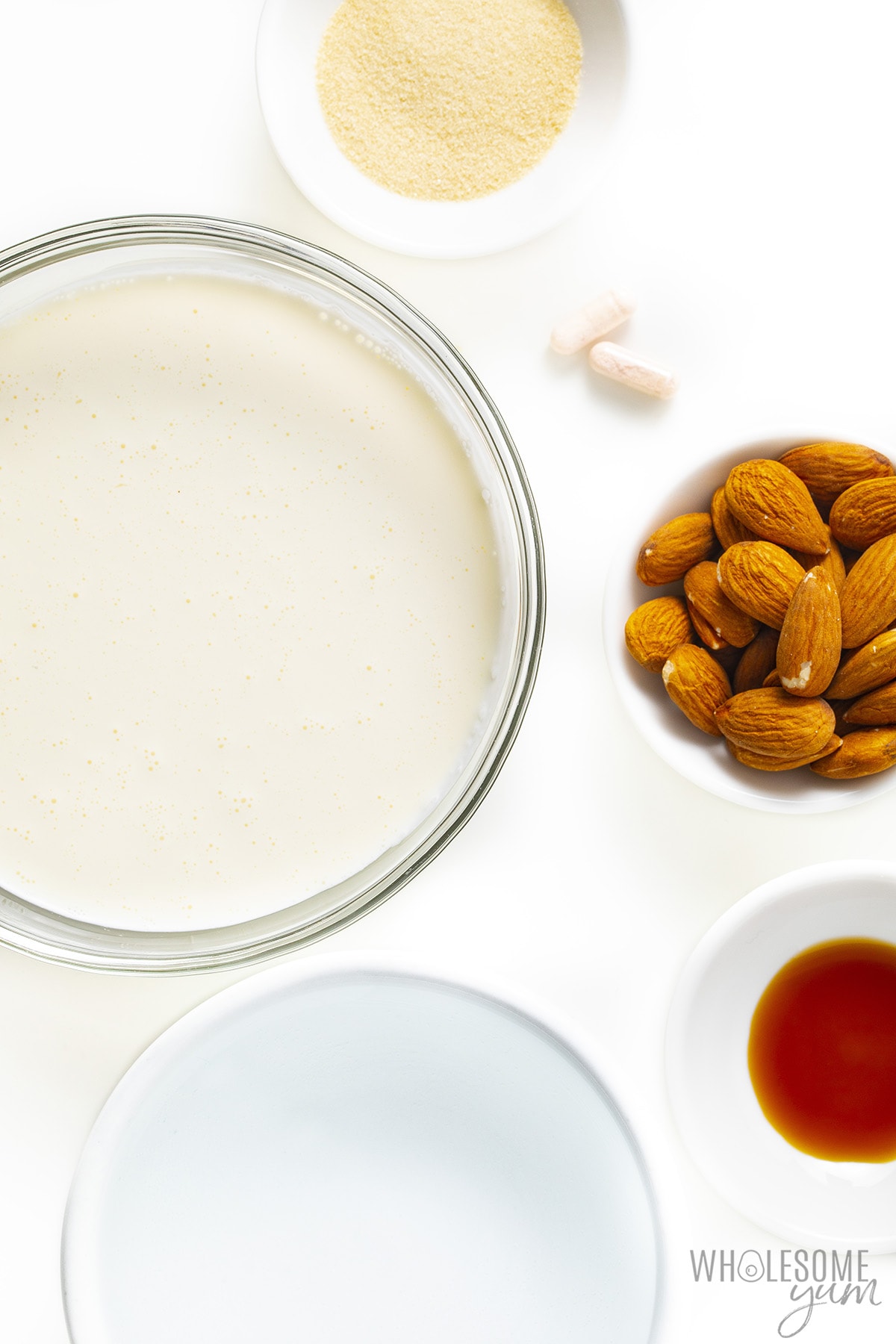
- Heavy Cream – Makes the yogurt thick and creamy. For a dairy-free option, you can swap out the heavy cream for full-fat coconut milk (or make coconut yogurt instead). You can also just use more almond milk instead, which would make the yogurt low fat, but you might need more gelatin to make it thick.
- Gelatin Powder – This is what makes this keto friendly yogurt thick like plain Greek yogurt. If you don’t use it, the yogurt will be thinner. You only need a small amount, but you’ll like this gelatin for other keto recipes too, like pillowy sugar-free marshmallows, creamy keto chocolate pudding, or even some unusual uses (I add to almond flour pie crust to make it work as a top crust!).
- Liquid Sunflower Lecithin – This is optional, but I recommend using it for the best keto yogurt, as it helps with texture and to reduce separation.
- Probiotic Capsules – The active cultures in probiotic capsules are the key component to fermenting the yogurt, plus they have health benefits. Make sure they are fresh, or they won’t work.

VARIATION: Make flavored keto yogurt!
- For fruit flavors: Be sure to use only keto fruit! Simmer fruit with your favorite sugar substitute (I recommend Besti Powdered Monk Fruit Allulose Blend for the best taste and texture, because it dissolves completely and has no aftertaste!), until it gets soft and releases juices, then blend. You can stir the fruit puree directly into your low carb yogurt, or strain it first if you prefer.
- For other flavors: If you want to add vanilla extract, spices, or cocoa powder, simply stir those in, to taste.
How To Make Low Carb Yogurt
This section shows how to make keto yogurt, with step-by-step photos and details about the technique, to help you visualize it. For full instructions, including amounts and temperatures, see the recipe card below.
- Sterilize the jars. Clean 2 16-oz jars in the dishwasher or with hot, soapy water. Dry and set aside.
- Make the almond milk. Use almonds and water to make homemade almond milk. Blend the almonds and water, then strain through a nut milk bag or cheesecloth, into a saucepan.
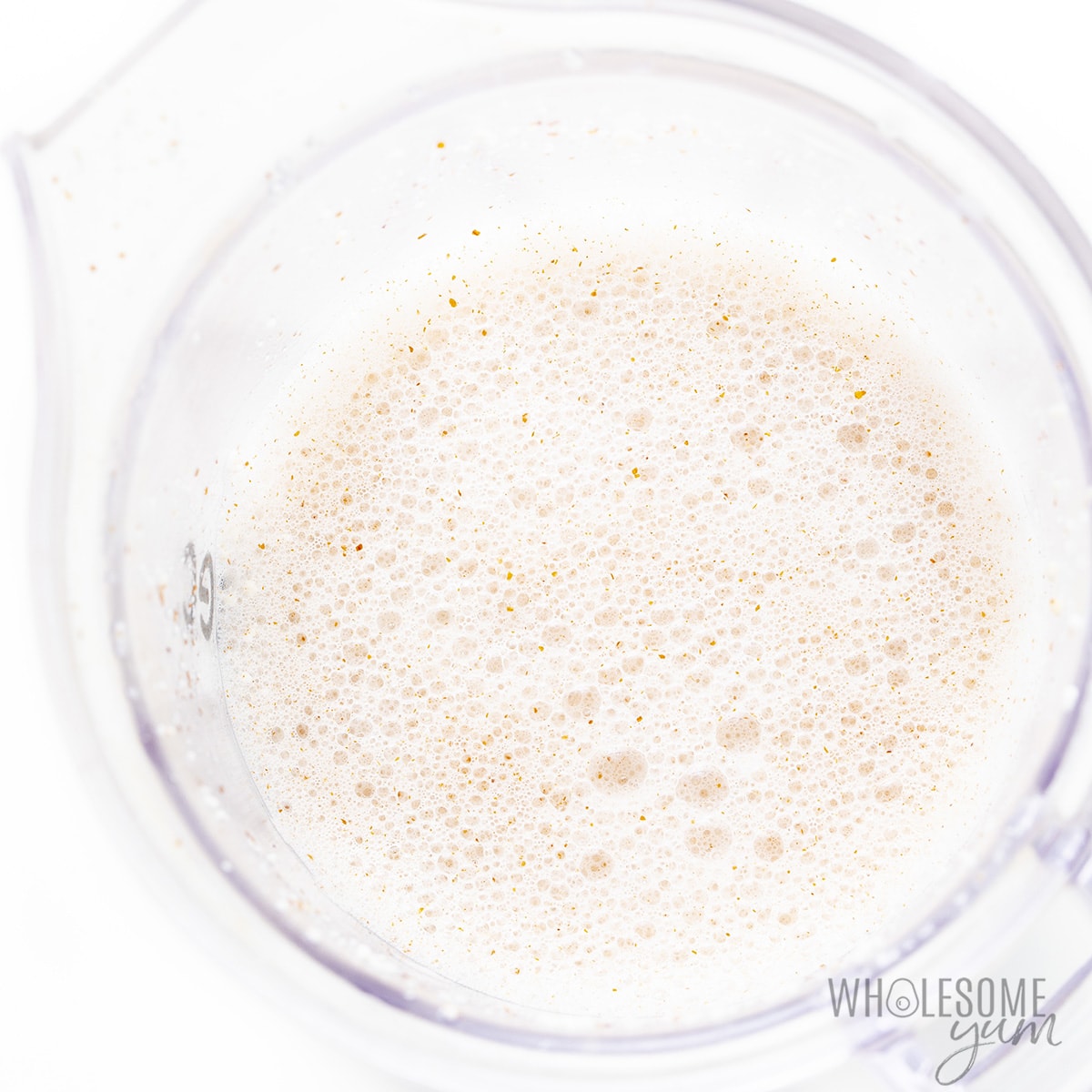
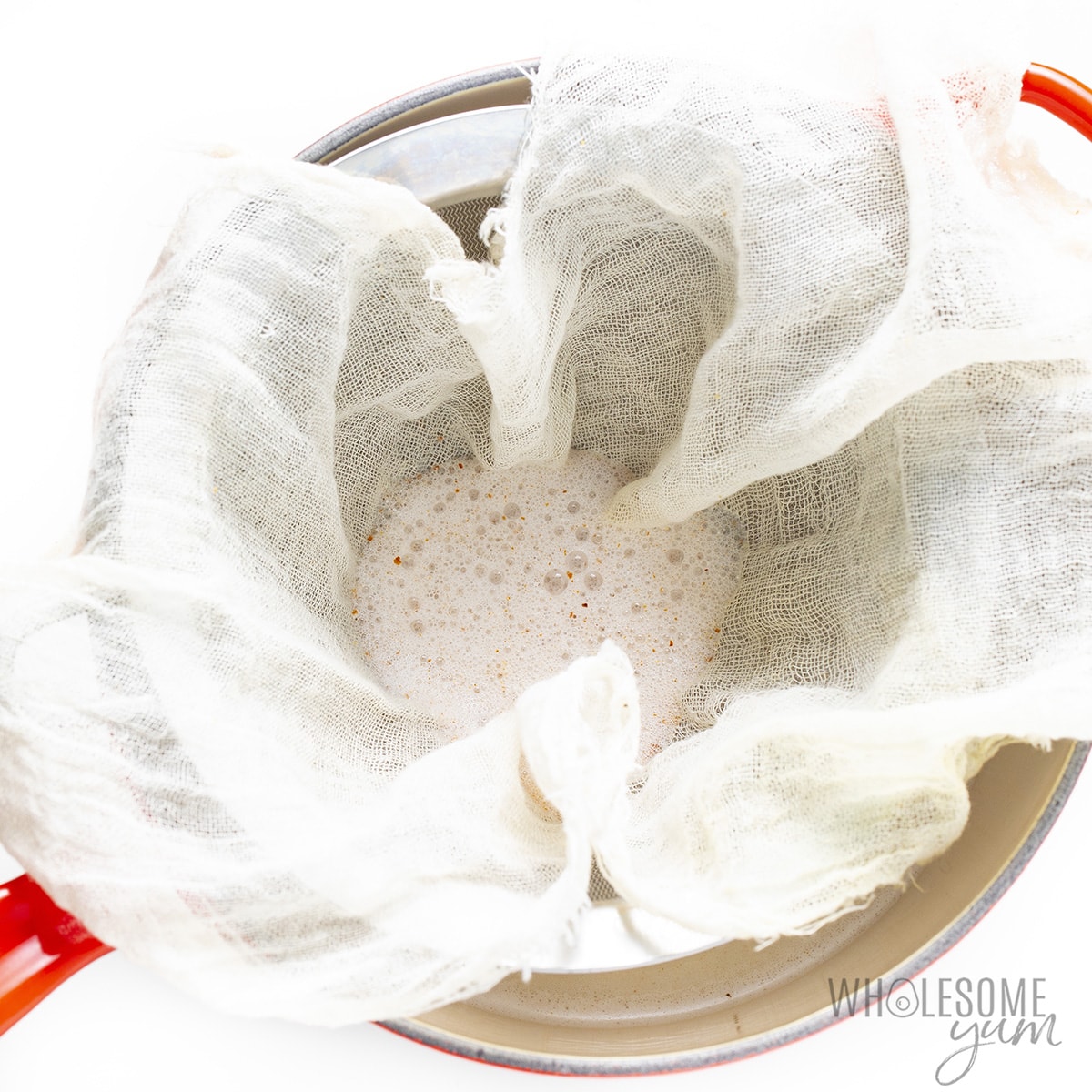
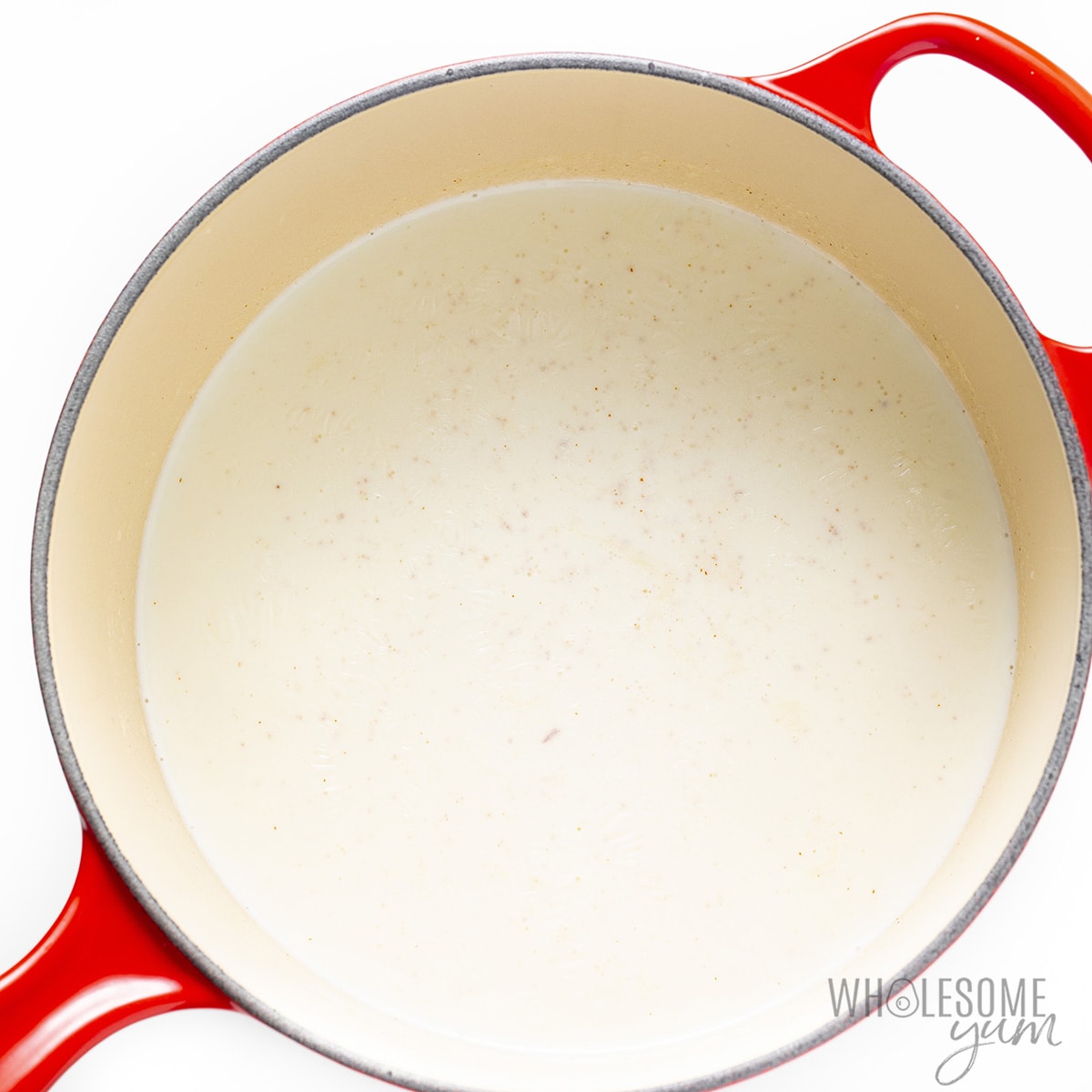
- Heat. Pour the almond milk and cream into a medium saucepan over medium-low heat. Heat gently, stirring occasionally, until bubbles form around the edges. Do not simmer or boil!
- Add the gelatin and lecithin. Sprinkle in the gelatin (don’t just dump it in or it will clump!) over the saucepan and whisk until dissolved, then remove from heat and whisk in the sunflower lecithin.
- Let cool. Pour the cream mixture into sterilized jars and let sit at room temperature until it’s between 100-110 degrees F.
TIP: Use a thermometer.
The temperature is important. If it’s too high, the probiotic cultures can die, but if it’s too low, they won’t activate. Use an instant read thermometer to double check the temperature.
- Add the probiotics. Cut open a probiotic capsule over each jar and stir in the powder until combined. Cover with lids.
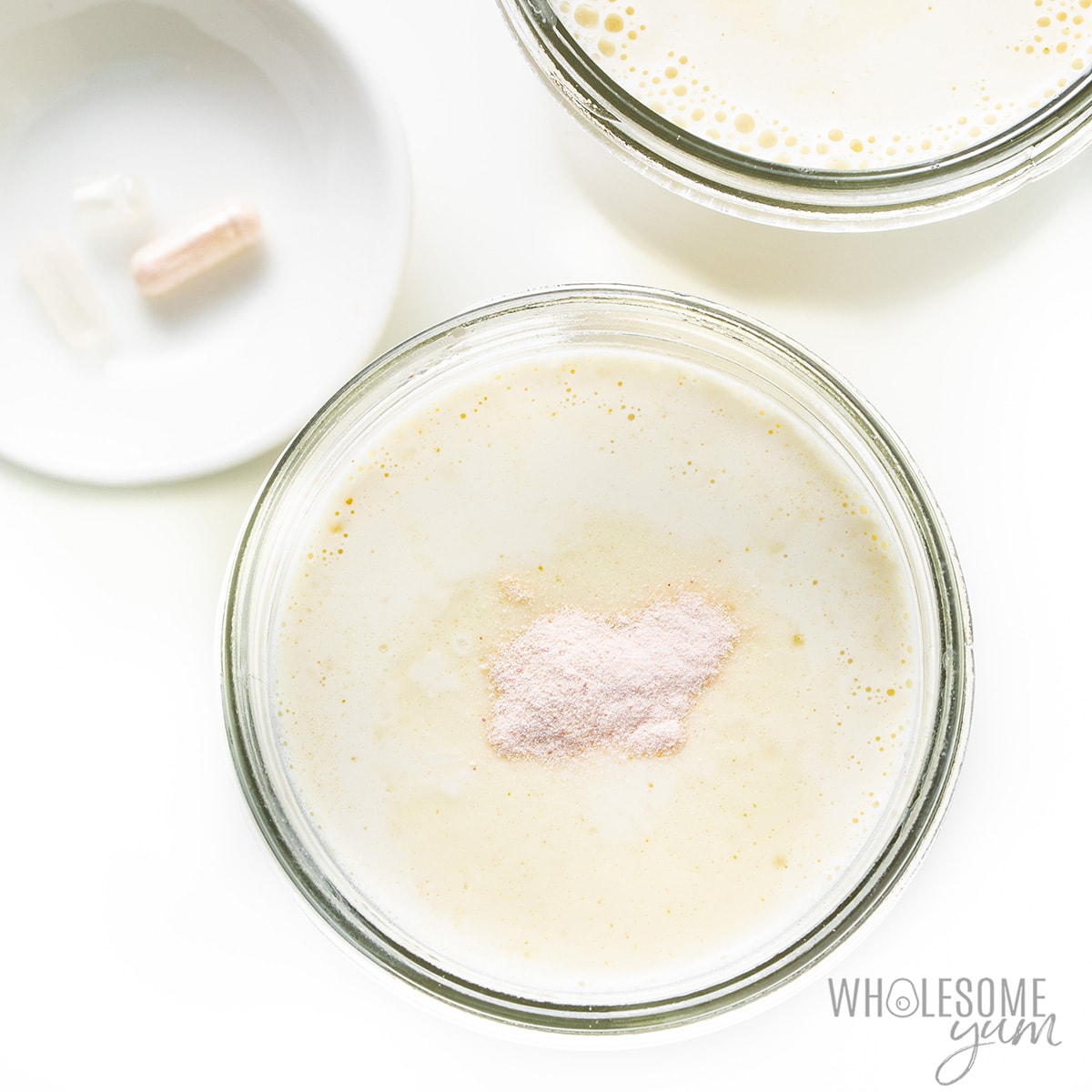
- Ferment the keto yogurt. Turn oven light on (not actual oven, just the light!) Place the jars on a sheet pan in the oven, close the door, and leave it to ferment for 12-24 hours.
TIP: Don’t forget about your yogurt.
The longer you incubate, the more sour your yogurt will be. If you’re like me and tend to forget about it, stick a post-it note on your oven door. 😉
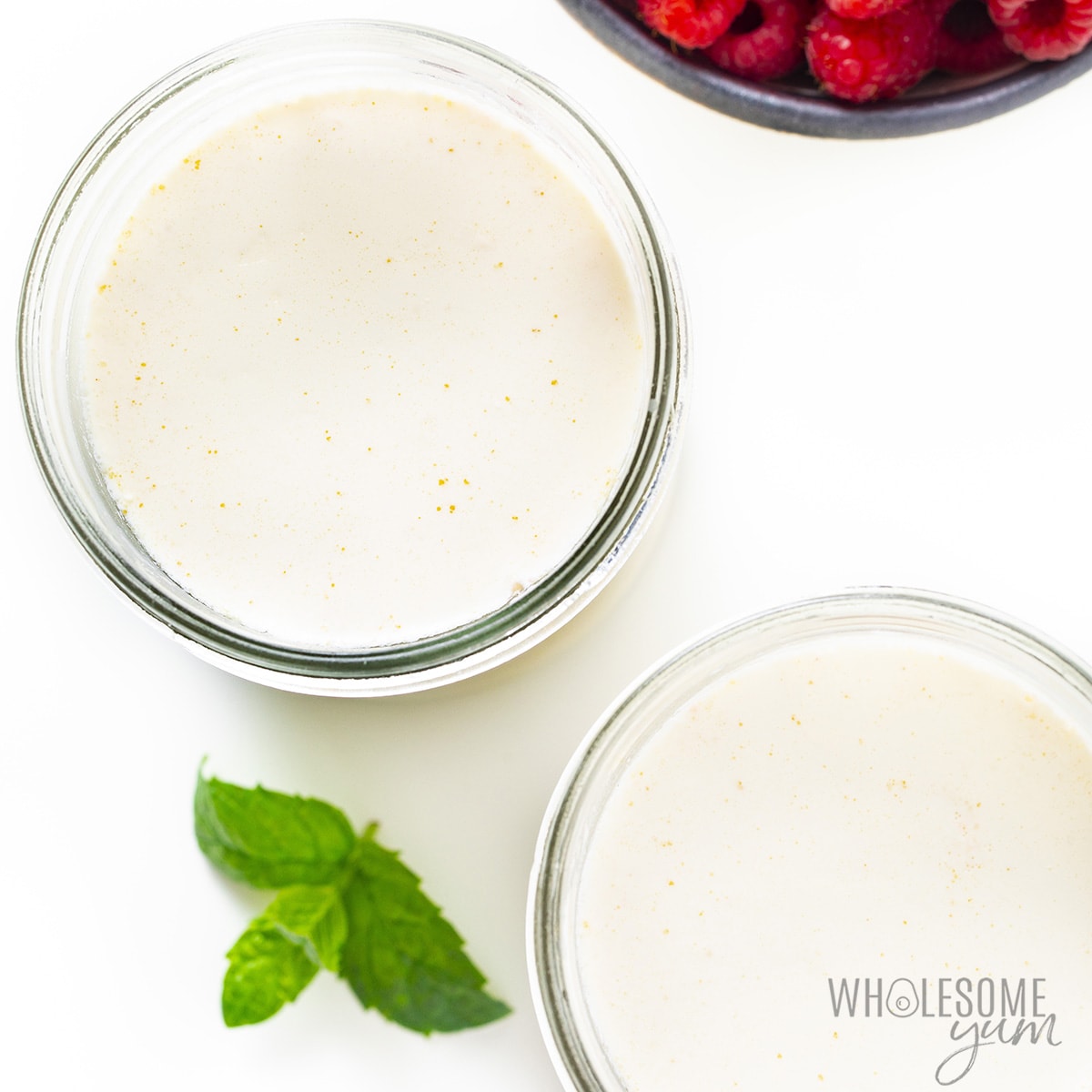
- Chill. Refrigerate until cold. (The yogurt will continue to set.)
- Stir or blend. You can stir with a spoon, but I usually prefer to do a quick blend in a blender to get it extra smooth. This is optional!
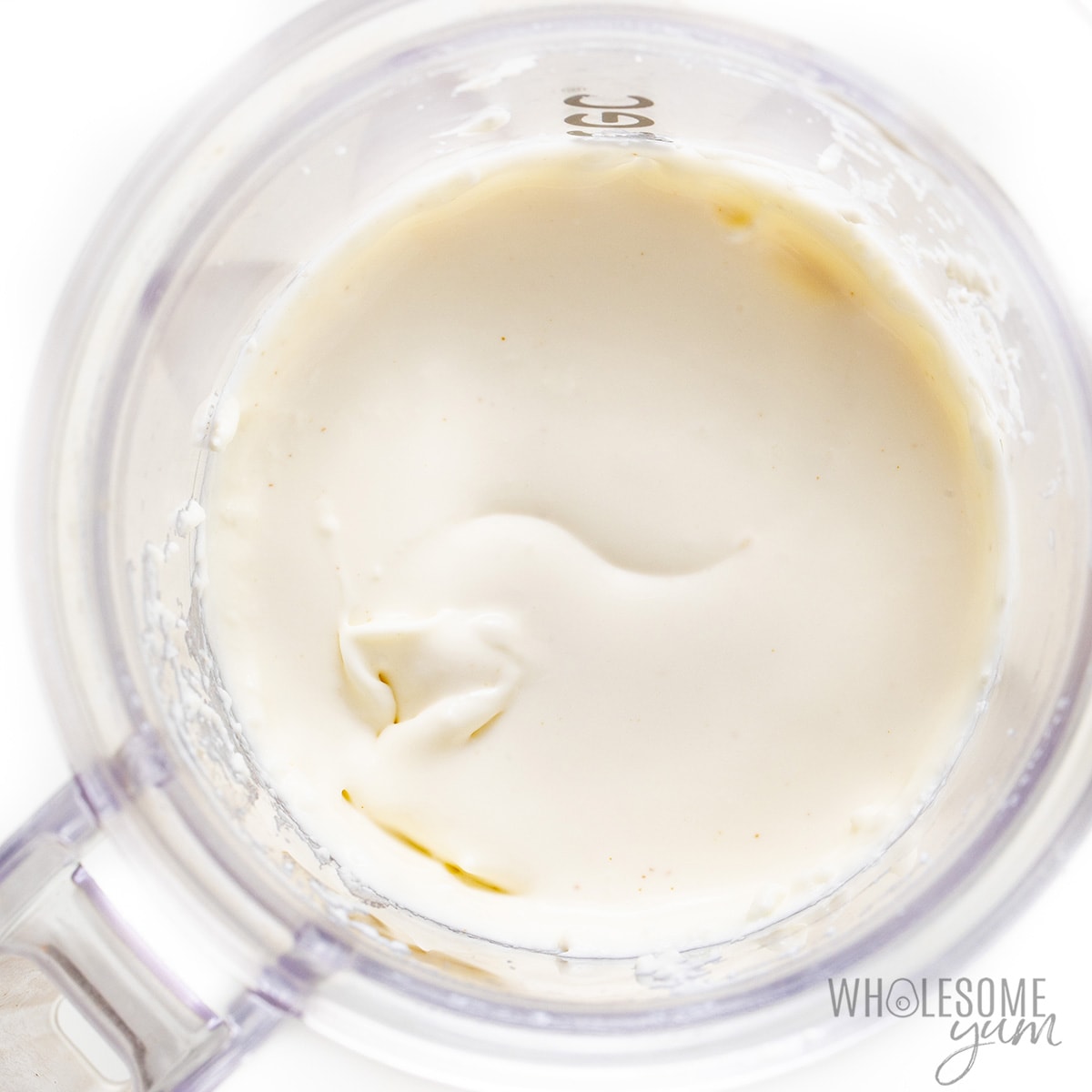
Troubleshooting Keto Yogurt
If your low carb yogurt doesn’t set and ends up watery, it could be for a couple of reasons:
- It needs more time to ferment. Your keto yogurt mixture will be liquid when you first set it out, and will firm up as it ferments. If it’s still very thin overall, you can continue to ferment for longer, or just use what you have in keto smoothies. (However, if your yogurt smells bad, that means it sat out too long and spoiled. Sorry, discard it and start over!)
- Your probiotics aren’t fresh. The active cultures in probiotics naturally die over time, so older ones won’t ferment yogurt.
- It may have separated. This recipe is naturally very thick, so this doesn’t usually happen, but if it does, it’s easy to fix. Simply strain it, pour off the liquid, or blend it.
Storage Instructions
Store homemade keto yogurt in glass jars in the refrigerator for up to 5 days. You can also use it to make keto frozen yogurt, which has some extra steps to make it freezer-friendly.
How Many Carbs In Yogurt?
Depending on the type, most yogurt brands have 8-13 grams of carbs per serving on the label. However, the real answer is more complex. Like other fermented foods, the bacteria in yogurt consume some of the lactose (a kind of sugar, which is carbs) in milk and convert it to lactic acid. Since fermentation levels vary, it’s difficult to dial in how many carbs your yogurt could truly have. Food brands are required by law to provide nutrition information based on their listed ingredients [*], but the actual count is likely lower.
Fortunately, if you make my keto yogurt recipe below, the carbs are very low even if you count all the carbs in the listed ingredients (and my nutrition info below does just that, because I have no way to know how much to list otherwise). While this recipe is not quite a no carb yogurt (I don’t think that exists!), it’s very close: Only 2 grams net carbs per serving.
Keto Yogurt Options At The Store
When you’re looking for the best keto yogurt brands from the store, here are the best options:
- For plain yogurt: Simply look for full-fat Greek yogurt (4% or 5% fat), or if you’re less strict (more low carb than keto), full-fat regular yogurt will be okay as well.
- For flavored yogurt: These are normally high in sugar, so be sure that is labeled low carb or keto. There are a few keto brands available now, but check the carb count and ingredients. Some versions may have added sugar or artificial sweeteners such as sucralose… which is also why you may just want to make your own!
In my book? The recipe below is the best keto yogurt. It’s thick, creamy, and much lower in carbs than store bought versions.
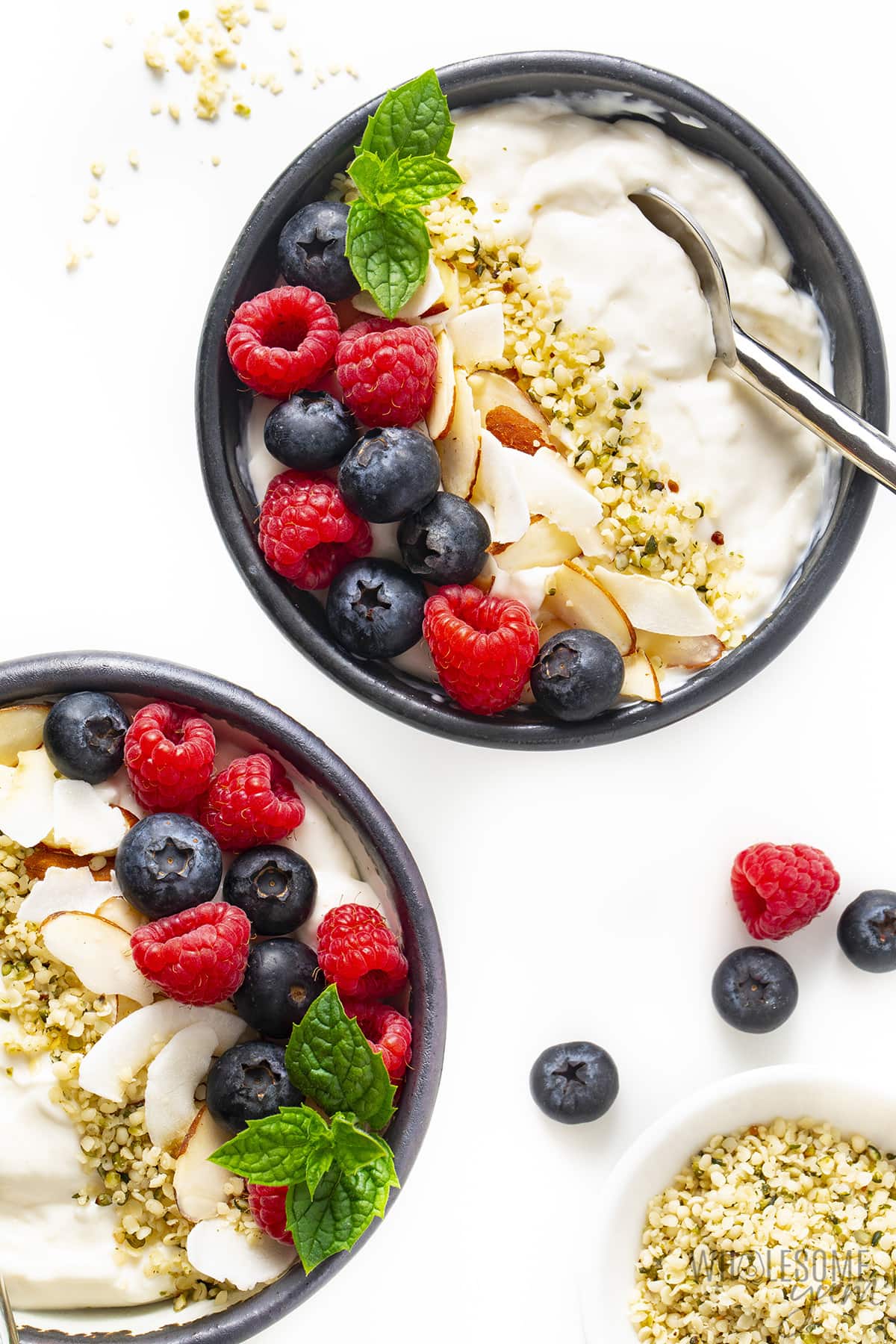
Keto Yogurt Toppings
Once you’ve made your keto friendly yogurt, it’s time for the fun part – the toppings! I like to top my yogurt with a mix of flavors:
- Berries – Fresh berries (or frozen!) will give your yogurt extra sweetness and a fruity flavor. Raspberries, blueberries, blackberries, and strawberries are all great options. If you’re interested in carb counts, check my keto fruit list.
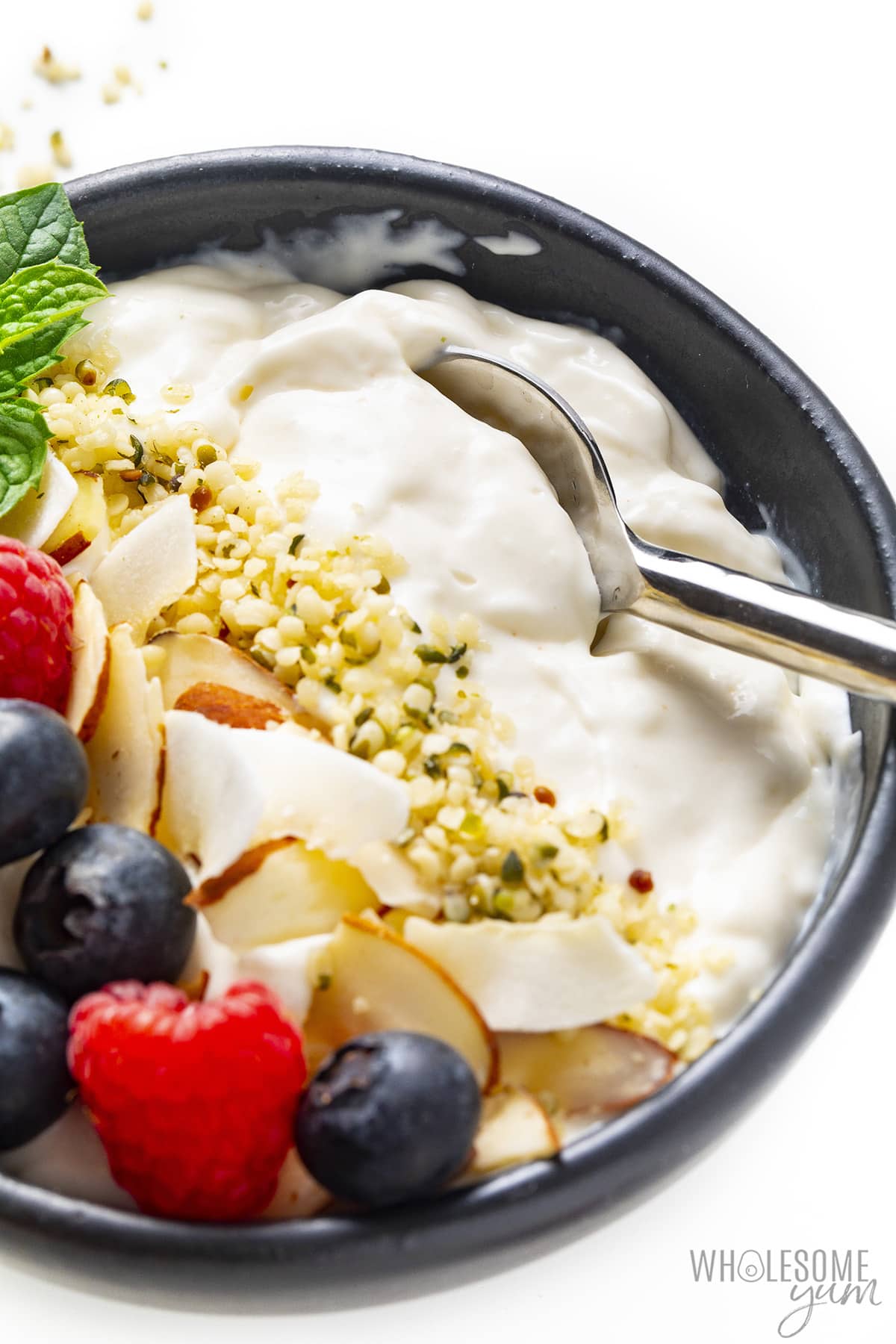
- Nuts & Seeds – A great way to add both crunch and a healthy high fat content! Use sliced almonds and hemp seeds (pictured above), or choose one from my keto nut list for specific carb counts, as they do vary.
- Coconut Chips – Another great way to add some flavorful fat. Be sure to find the unsweetened variety, as many shredded coconut or coconut chips are sweetened with sugar.
- Jam – Sure, berries are delicious, but adding a dollop of sugar-free strawberry jam will really take this keto-friendly yogurt up a notch.
- Granola – If you miss crunchy cereal, my keto granola is a must! It gives the yogurt a nice crunch and makes a filling breakfast topping.
More Keto Breakfast Recipes
If you’re looking for more delicious and satisfying options to kickstart your keto mornings, here are some additional mouthwatering keto breakfast recipes that will keep you energized and on track with your low-carb lifestyle:
Keto Yogurt (2g Net Carbs!)
Make the BEST, creamy, easy, low carb keto yogurt — with only 2g net carbs and 5 ingredients! You can also customize flavors and toppings.
Prep: 10 minutes
Cook: 5 minutes
Resting Time 12 hours 20 minutes
Total: 15 minutes
Servings: 8 (adjust to scale recipe)
Ingredients
Tap underlined ingredients to see where to get them. Please turn Safari reader mode OFF to view ingredients.
Instructions
Tap on the times in the instructions below to start a kitchen timer while you cook.
-
Sterilize 2 16-oz jars in the dishwasher or with hot, soapy water. Dry and set aside.
-
Use the almonds and water to make almond milk using these instructions. (You don’t need the vanilla and salt in that recipe unless you want to add them.) Do not use store bought almond milk – the preservatives will prevent your keto yogurt from fermenting properly.
-
Place the homemade almond milk and cream into a medium saucepan over medium-low heat. Heat gently, stirring occasionally, for 5-7 minutes, until bubbles form around the edges. (Time can vary significantly depending on your pan material – mine was a cast iron saucepan like this.) Do not simmer or boil.
-
Sprinkle (don’t dump) the gelatin over the saucepan and whisk until dissolved.
-
Remove from heat. Sprinkle in the sunflower lecithin and whisk until dissolved.
-
Pour the cream mixture into the sterilized jars. Let the jars sit at room temperature for about 20 minutes, until the mixture is below 110 degrees F (43 degrees C), but still above 100 degrees F (37 degrees C). This is critical – a higher temperature will kill the probiotic cultures.
-
Open or cut one probiotic capsule over each jar and stir in the powder. Cover with lids.
-
To incubate your yogurt, turn on your oven light (not the oven). Place the jars on a sheet pan and place in the oven, with the door closed and light on, for 12-24 hours, depending on how sour you want your keto yogurt to be. (Alternatively, you can wrap the jars in a warm blanket to keep them warm.
-
When the yogurt is done, refrigerate until cold. It will be thick, so stir well. Enjoy topped with Hemp Hearts!
Recipe Notes
Serving size: 1/2 cup
Nutrition facts do not include toppings.
Nutrition Facts
Amount per serving. Serving size in recipe notes above.
Calories 236
Fat 24.1g
Protein 3.1g
Total Carbs 2.6g
Net Carbs 2g
Fiber 0.6g
Sugar 1.9g
Nutrition facts are provided as a courtesy. Have questions about calculations or why you got a different result? Please see our nutrition policy.
© Copyright Maya Krampf for Wholesome Yum. Please DO NOT SCREENSHOT OR COPY/PASTE recipes to social media or websites. We’d LOVE for you to share a link with photo instead. 🙂