


What drives innovations that transform industries? The fascinating story of Nvidia’s rise from a small startup to a powerhouse in technology answers this question compellingly. Founded in 1993 by visionaries Jensen Huang, Chris Malachowsky, and Curtis Priem, Nvidia embarked on a mission to push the boundaries of computing graphics. This article delves into Nvidia's origins, shedding light on the ambitions and challenges faced by its founders. Discover how a simple idea evolved into groundbreaking technology, setting the stage for Nvidia's meteoric rise and reshaping the future of graphics processing.
Nvidia's Foundational Years and Vision
Nvidia was founded in 1993 by three visionary engineers: Jensen Huang, Chris Malachowsky, and Curtis Priem. Jensen Huang, who later became the face of Nvidia, brought a wealth of experience from his previous roles at AMD and LSI Logic. Chris Malachowsky, with a background in computer engineering, and Curtis Priem, known for his work at Sun Microsystems, shared a common belief in the potential of graphics technology to transform computing. Together, they set out to establish a company that would redefine how graphics are processed and displayed, driven by a shared commitment to innovation and excellence.
The journey was not without its challenges. Nvidia's initial focus was on developing a single chip solution to accelerate graphics interfaces, a task that required significant technical breakthroughs and resources. In 1995, the company launched its first product, the NV1, a multimedia accelerator card. While the NV1 showcased Nvidia's technical prowess, it faced market challenges due to incompatibility issues with emerging industry standards. Despite this setback, the experience gained from the NV1's development laid the groundwork for future innovations and strategic pivots.
From the beginning, Nvidia was guided by a clear vision: to enhance the capabilities of computing graphics and redefine visual computing. The founders envisioned a future where advanced graphics would not only power video games but also drive a wide range of applications across various industries. This mission served as a guiding principle, fueling the company's relentless pursuit of technological advancement and its commitment to addressing the most complex challenges in computing. Through determination and strategic foresight, Nvidia laid the foundation for what would become a leading force in the technology sector.
Breakthrough Products and Industry Impact
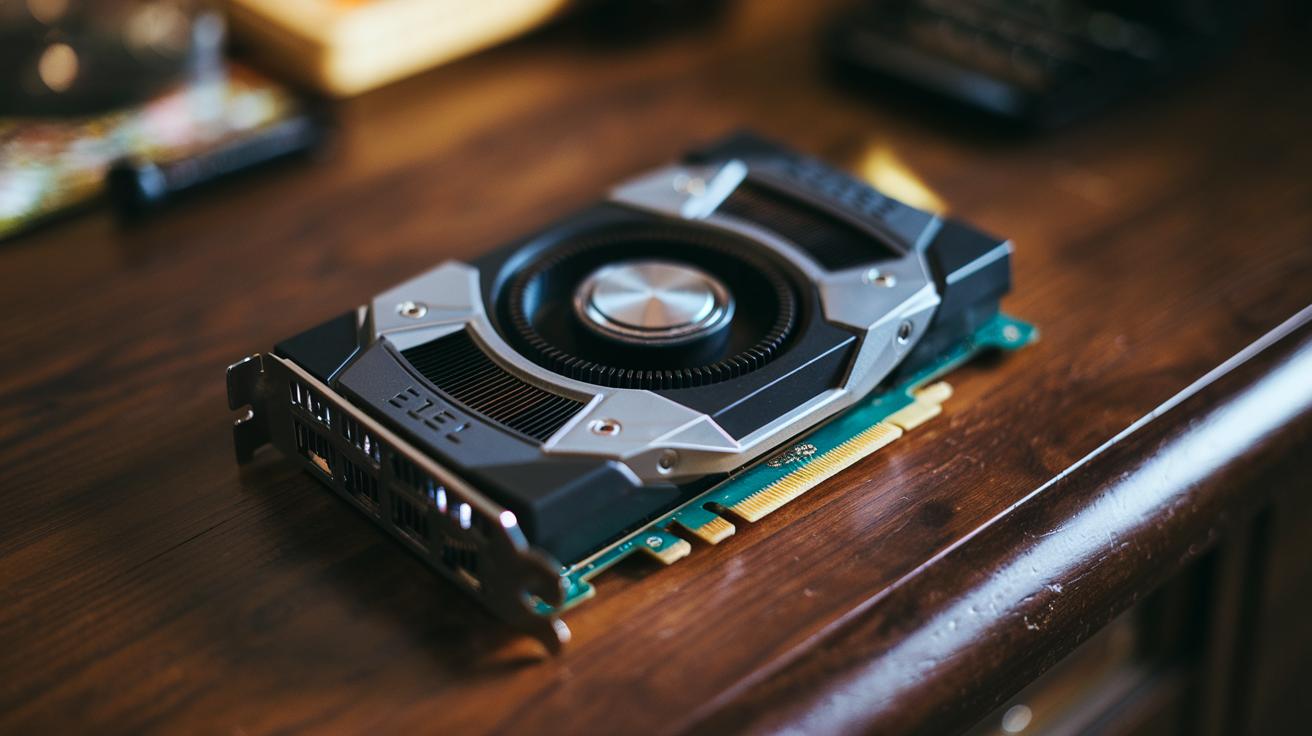
The launch of the GeForce 256 in 1999 marked a pivotal moment in Nvidia's history, establishing it as a formidable player in the tech industry. Marketed as the world's first graphics processing unit (GPU), the GeForce 256 redefined what was possible in graphics computing. This product's ability to handle complex calculations and deliver real-time 3D graphics significantly enhanced the visual experience in video games and other applications. By integrating transformation and lighting in hardware, it set a new benchmark for graphics technology and propelled Nvidia into the spotlight, earning it recognition as a leader in the field.
Prior to the GeForce 256, Nvidia had already made significant strides with the release of the Riva 128 in 1997. This product was notable for its integration of 3D, 2D, and video acceleration, addressing a wide range of multimedia needs. The Riva 128 showcased Nvidia's innovation and set the stage for future advancements. Another groundbreaking development was the introduction of CUDA architecture in 2006, which allowed GPUs to be used for general-purpose computing. CUDA revolutionized parallel computing, enabling developers to harness the power of Nvidia's GPUs for tasks beyond graphics, such as scientific research and artificial intelligence.
- Introduction of real-time 3D graphics
- Enhanced gaming experiences
- Revolutionized parallel computing with CUDA
- Improved graphics fidelity with programmable shaders
- Set new standards in visual computing
These groundbreaking products and innovations positioned Nvidia as a leader in technology, with a profound impact on various industries. The advancements brought about by Nvidia's GPUs extended beyond gaming, influencing sectors such as scientific research, entertainment, and machine learning. By consistently pushing the boundaries of what was possible with graphics technology, Nvidia solidified its reputation as a pioneer in visual computing, setting the stage for its continued leadership and innovation in the tech industry.
Strategic Acquisitions and Expansion
Nvidia's strategic acquisition strategy has been pivotal in its expansion and diversification into new markets. The company targeted acquisitions that would bolster its technological capabilities and broaden its market reach. A key acquisition was Ageia in 2008, which brought Nvidia the technology for physics processing, enhancing the realism of video game environments. This move was followed by the purchase of Icera in 2011, which aimed to strengthen Nvidia's position in mobile computing, providing baseband processors for smartphones and tablets. These acquisitions exemplify Nvidia's approach to integrating complementary technologies, enabling it to offer more comprehensive solutions and maintain a competitive edge in various sectors.
Partnerships have also played a significant role in Nvidia's global presence and technological advancement. Collaborations with leading tech companies and research institutions have accelerated innovation and expanded Nvidia's influence beyond traditional graphics processing. For instance, the acquisition of Mellanox Technologies in 2020 for $6.9 billion was a strategic move to enhance Nvidia's capabilities in high-performance computing and data centers, critical areas for cloud computing and AI applications. This partnership not only expanded Nvidia's technological arsenal but also reinforced its leadership in providing end-to-end solutions in the computing industry.
|Acquisition |Year|Purpose |
|——————–|—-|—————————————–|
|Ageia |2008|Physics processing technology |
|Icera |2011|Mobile computing capabilities |
|Mellanox Technologies|2020|High-performance computing and data centers|
Nvidia's Innovation in AI and Computing

Nvidia's graphics processing units (GPUs) have become indispensable in the realm of artificial intelligence and deep learning. How have Nvidia's GPUs become crucial for AI? Through their ability to process large amounts of data simultaneously, enabling rapid computations required for complex neural networks. This capability is significantly enhanced by Nvidia's CUDA platform, a parallel computing architecture that allows developers to utilize GPUs for tasks beyond traditional graphics rendering. CUDA's versatility has empowered researchers and developers to advance AI applications, notably in fields such as image and speech recognition. This transformation has placed Nvidia at the forefront of technological advancements in AI, leveraging the immense computational power of its GPUs.
Nvidia's contributions to AI research and development have been both substantial and transformative. What are Nvidia's major contributions to AI research? The development of GPU-accelerated machine learning frameworks has been pivotal. By optimizing these frameworks, Nvidia has facilitated breakthroughs in AI model training, reducing both time and computational costs. Furthermore, the company's focus on scalability and efficiency has enabled more accessible AI deployment across various platforms, from data centers to edge devices. Nvidia's commitment to innovation in AI has driven the creation of more sophisticated algorithms and techniques, fostering significant progress in areas such as autonomous driving, healthcare diagnostics, and natural language processing.
Nvidia and OpenAI
Nvidia's partnership with OpenAI underscores its leadership in AI development. What does this partnership entail? Collaborative efforts have centered on providing the computational infrastructure necessary for training cutting-edge AI models, such as ChatGPT. This collaboration has not only accelerated the development of generative AI technologies but also demonstrated the scalability of Nvidia's GPU solutions in handling large-scale AI projects. The partnership with OpenAI highlights Nvidia's strategic focus on fostering innovation and addressing the computational demands of next-generation AI applications.
The broader impact of Nvidia's innovations extends across multiple industries, reshaping the landscape of computing technology. By enabling more efficient AI processing, Nvidia has facilitated advancements in sectors ranging from entertainment to scientific research. How has Nvidia's technology influenced various industries? Its GPUs power high-performance computing tasks in fields like climate modeling, genomics, and financial modeling, driving insights and discoveries. By pushing the boundaries of what AI and computing technology can achieve, Nvidia continues to lead the charge in transforming how industries leverage data and computational resources to solve complex problems.
Nvidia's Future Outlook and Challenges
Nvidia's strategic goals are centered on pioneering advancements in AI and computing technology, with a particular focus on exploring new frontiers such as humanoid robots and superintelligent AI. The company aims to leverage its expertise in GPU design and AI to drive innovation across various sectors. In line with this vision, Nvidia is actively pursuing collaborations that enhance its technological capabilities and broaden its market impact. These strategic goals reflect Nvidia's commitment to staying at the forefront of technological evolution, ensuring it remains a key player in the rapidly changing tech landscape.
-
Increasing competition in the GPU market
-
Legal challenges and controversies
-
Navigating the rapidly evolving tech landscape
- Maintaining innovation amidst market pressures
To address these challenges, Nvidia is adopting a multi-faceted approach. The company is investing heavily in research and development to maintain its leadership in GPU technology and expand its AI capabilities. By fostering strategic partnerships and acquisitions, Nvidia aims to enhance its product portfolio and strengthen its market position. Additionally, the company is focusing on improving transparency and compliance to mitigate legal risks. Through these measures, Nvidia endeavors to sustain its competitive edge, adapt to industry shifts, and continue its legacy of innovation in the tech sector.
Final Words
Nvidia's journey, from its foundational years in 1993 to its landmark achievements,
showcases a relentless pursuit of innovation and adaptability.
Launching the GeForce 256 and expanding through strategic acquisitions,
such as with Mellanox Technologies, positioned Nvidia as a tech industry leader.
Their contributions to AI and computing, including significant partnerships
with entities like OpenAI, reflect their enduring influence.
Facing future challenges from competition and market dynamics,
Nvidia's commitment to solving computing's toughest problems ensures its relevance.
Nvidia: How it came to be, exemplifies a story of vision, progress, and resilience.
FAQ
Q: How did Nvidia come to be?
A: Nvidia was founded in 1993 by Jensen Huang, Chris Malachowsky, and Curtis Priem with the vision to enhance computing graphics, beginning with the development of a single-chip solution for graphics acceleration.
Q: What is Nvidia known for?
A: Nvidia is known for its pioneering work in graphics processing units (GPUs), specifically its significant contributions to gaming, AI, and high-performance computing technologies.
Q: When did Nvidia go public?
A: Nvidia went public in 1999, allowing the company to expand its market reach and invest in further research and development initiatives.
Q: Did Nvidia invent the GPU?
A: Nvidia did not invent the GPU, but it did market the world's first graphics processing unit with the release of its GeForce 256 in 1999, revolutionizing visual computing.
Q: What does Nvidia do for AI?
A: Nvidia develops GPUs and platforms like CUDA that are fundamental for AI and deep learning applications, enabling advances in fields from image recognition to autonomous vehicles.
Q: Where is Nvidia headquartered?
A: Nvidia is headquartered in Santa Clara, California, a central hub for technology innovation in the United States.
Q: How did Nvidia become a $1 trillion company?
A: Nvidia achieved a $1 trillion valuation through strategic product innovations, market expansion in AI and data centers, and strategic acquisitions that bolstered its technology portfolio.
Q: How did Jensen Huang start Nvidia?
A: Jensen Huang co-founded Nvidia in 1993, focusing on the development of GPU technologies to transform computing graphics and establish Nvidia as a technology leader.
Q: How did Nvidia get huge?
A: Nvidia grew substantially through innovative products like the GeForce GPUs, strategic acquisitions, and partnerships with leading tech companies to expand into artificial intelligence and data center markets.


