


Nurses have always faced unique and complex challenges. In 2022, these challenges are exacerbated by severe and persistent staffing shortages, demographic changes, bureaucratic and managerial demands, tight budgets, stress, burnout, and cultural shifts, including an increase in traveling nurses and temporary assignments. These factors place nurses and their patients at considerable risk.
To assess care vulnerability, 4,634 malpractice claims closed between 2018 and 2021 were assessed and 850 specific incidents in which nurses were directly involved in so-called medical errors were identified. We identified the root causes of these events and used our analysis to point out significant risk trends. Conclusions are not absolute discoveries. Instead, they are data-based assumptions — past warnings about where vulnerabilities exist and may still be at work.
Key Risk Issues in Nursing
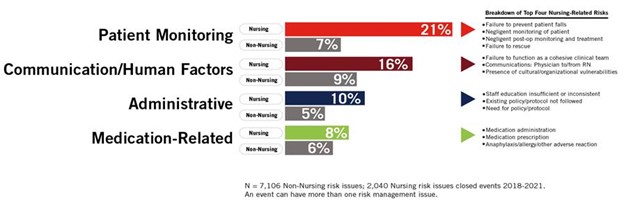
Nursing-related events had a much higher rate of peak-risk occurrence compared to claims that did not involve nurses.
Topics and Trends
The data yielded clear themes and trends when it came to nursing-related risks:
- Comprehensive information is essential for successful care. Errors are more likely to occur in the absence of detailed information about the patient’s medical history, such as the presence of comorbidities, allergies, and other important factors. Nurses need to know: “What is this patient’s story?” Stories can be curated in a number of ways: reviewing electronic health records and updating them in the process; talking directly to patients and other providers; behaviors and symptoms; and ask key questions.
- Understaffing is the root cause of most preventable adverse events. While clinical judgment is essential, a common thread among a large number of adverse nursing events is a lack of proper staffing. Errors occur when there are too many patients to care for; when nurses have to leave one patient unattended to get to another bedside; when caregivers are distracted while taking medication; when assistance is not available – up , down or across the chain of command. Caring for too many patients and doing so under great pressure can lead to missing critical procedures (such as checking EMRs for allergies or lab results).
- Ongoing assessment and training is imperative. Nursing-related claims often involve avoidable knowledge gaps, such as a lack of proper training on how to assess skin integrity or manage uncommon medications. Hospitals and medical practices that focus on best practices and provide training in vital nursing skills inevitably create safer environments. The skills of staff and travel nurses must also be regularly assessed.
- Nurse empowerment is key to patient safety. Many nurses are not sufficiently encouraged to speak up when they have concerns. Cultural flaws can make the entire team fear reprisals or blame for questioning authority or reporting mistakes. Institutions that empower nurses and expand their voices can significantly improve patient safety.
- Some patient populations are at higher risk than others. Our data show that some patients are at higher risk for adverse care events. These include elderly or unaccompanied patients; patients with language, health literacy, or cultural barriers; patients requiring close monitoring (eg, postoperative patients); patients taking multiple medications (especially opioids, anticoagulants, and and/or antibiotics); and those with comorbidities such as cardiovascular disease, hypertension, diabetes, and behavioral health. Nurses and organizations that identify and evaluate high-risk patient groups can increase the chances of good outcomes.
- Every nurse is as good as their team. The decisions and actions of each team member affect the individual nurse’s ability to succeed and the patient’s ability to grow. These data underscore the importance of effective teamwork and team communication.

