
Exploring web3 through new lenses Image via @JEZAR, UNSPLASH.COM
This is a very important time and inflection point in the evolution of web3. This is a fantastic opportunity for brands and marketers willing to get involved with this new technology.That said, with the recent volatility in the NFT and crypto markets, industry wavesclosure, theft, hackerand SEC investigationit is clear that web3 leaders and supporting ecosystems must prioritize trust and security, utility, and long-term value and community to encourage adoption.
recently CMO Club Innovation Forum Focusing on web3 in Los Angeles, I spent time with brand executives eager to understand the promise of the next web. We explored various aspects of web3, including Metaverse and NFTs, as well as underlying technologies such as cryptocurrencies and blockchain. In addition to brand NFT placements, live events, concerts, and Metaverse marketing campaigns, I learned that brands can gain early access to a unique window of opportunity.Some of these courses are organized into a CMO’s Guide To “Understand the future of brands, consumers and communities in a web3 world”.
It’s a rare moment for brands to observe, learn and ask questions without taking a big risk of missing out. The insights gained can create important new moments for brands and consumers and build value-added communities that win market and cultural relevance in new areas.
Value creation in web3 starts with a beginner’s mind – branding, commerce, service, loyalty and marketing in a future web of openness, desire and lack of preconceptions.
The first questions brands should ask when exploring web3 opportunities include:
- What is my purpose?
- Who are my clients and what do they value?
- What new value can I create with web3?
- How to strengthen the relationship with existing consumers and potential customers?
- How do we create new, long-term communities where consumers are also stakeholders?
- How can I continue to add value as we progress between iterations from web2 to web2.5, web3 and beyond?
How does Web3 improve on Web2?

Traditional Brand Style Guide, ANTONI SHKRABA, PEXELS.COM
When comparing the disadvantages of web2 and the prospects of web3, we can another link.
With the inherent transparency, accountability and fairness rooted in the web3, brands have the opportunity to transform their relationship with their customers – from consumers to stakeholders, and from marketplaces to communities.
Over the next 10 years, web3 will surpass web2 with the promise of decentralization, ownership, portability, and 3D immersion. Today, most of what we see is technically web2, just using encryption to facilitate transactions and a blockchain ledger to capture transactions.
To migrate from web2 to web3, brands must imagine new possibilities and experiment. They must also reimagine the hierarchical relationship between brands and consumers for empowerment and shared value.
The value unlocked by web3 is the empowerment of consumers. Through data sharing, portability, ownership and equity, web3 enables consumers to become stakeholders of brands – through digital assets, NFTs, tokens, achievements and experiences, and more. Web3 unlocks new, previously unimagined opportunities that brands can use to connect with consumers and communities. Brands will be able to attract a new generation of digital natives and early adopters who are looking for more unique, immersive and equitable relationships.
The trade-off is that brands must allow for the democratization of brands themselves. This is something brands are not used to.Most brands use a command and control approach to marketing and Brand Style Guide. In a web3 world, brands must start thinking about decentralized style guides, engagement style guides, and collaborative style guides.
A question to explore is: if the brand is part of the community, and the community defines the brand, what does a meaningful and productive community look like?
How is Web3 changing the way marketers build and maintain communities?
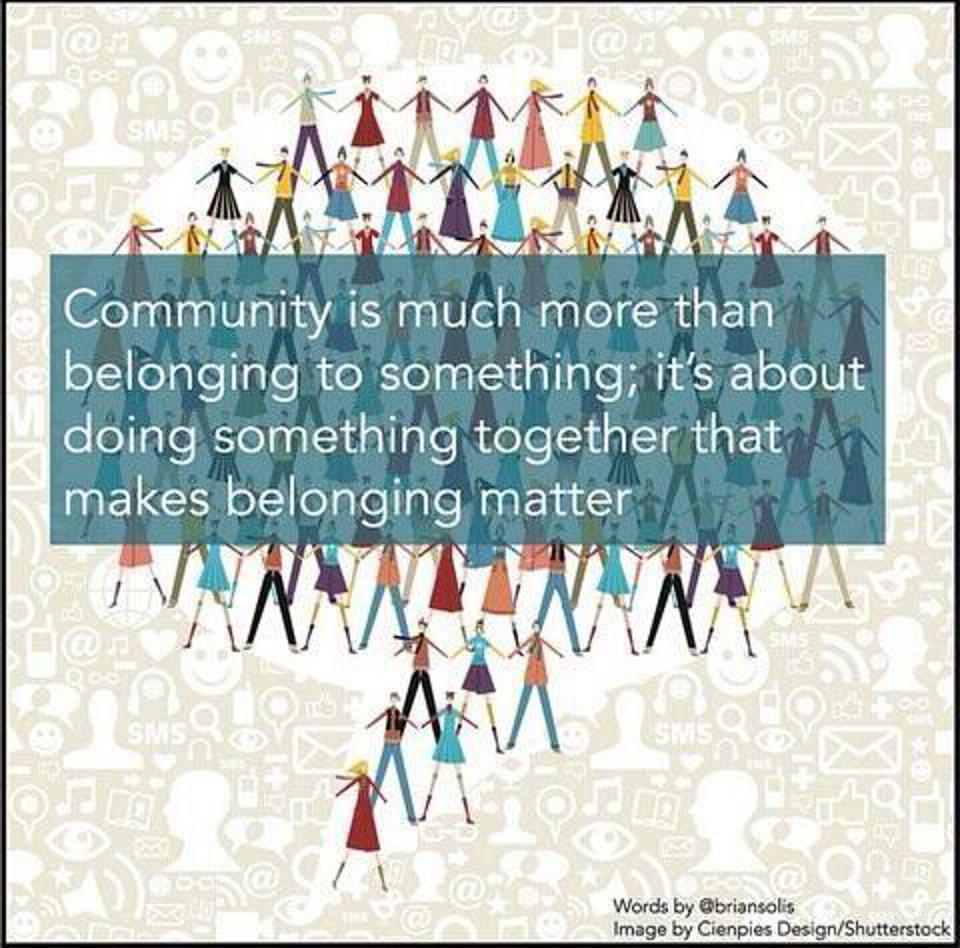
The power of true community, @BRIANSOLIS
Web3 will change everything (as long as its future is shaped by creatives, innovators, and optimists) about how brands view today’s communities and who owns them. I’ve always believed that being a part of the community is the real magic. When a community works together to build something greater than the ideas of the community or the individuals themselves, it gives it a purpose.
The famous Simon Sinek asked business leaders to start with “Why?”
Why ask “Why?”
It’s a question brands don’t ask enough. But this is just the beginning of a more reflective and auspicious exercise in finding meaning, value and opportunity to reshape customer experiences and relationships.
To add to the list of questions above, also ask:
- Why do you believe you belong here?
- Why do we do this?
- Why now?
- Why do customers spend time in these corners of the web?
- Why do you think this will create value for your business and a better user experience?
The answers inspire meaningful strategies for pilots and long-term value creation.
The answer challenges the traditional “build it and they’ll come” mindset.
Instead, the next era of networking and the next era of brand engagement is continually adding value and empowering communities, not just today, but in the future. It’s also about asking how the community can even be fragmented, engaged, and actively involved in shaping what a brand means in the marketplace.
What value can we create for someone now and over time? Community is about values, and relationships are about mutually beneficial participation.
How does Web3 empower consumers?

Web3 Empowers New User Experiences, EKATERINA BOLOVTSOVA, PEXELS.COM
The way web3 empowers consumers is through wallets. Web3 wallet is a dedicated application with access to cryptocurrencies and NFTs, as well as a lending platform on a decentralized exchange (DeX). But over time, wallets will also become part of people’s online and IRL identities, giving consumers control over their data, how it is used, and their costs/benefit.
On the road to decentralization, blockchain provides authentication and verification of digital transactions, building trust in the process. This will ultimately change the dynamic between brands and consumers.
Right now, we’re in between web2 and web3; we call it web 2.5. Today, even though we are transacting with crypto, NFTs, blockchains and exploring virtual worlds, centralized networks still control customer data and resell that information, which is then used for targeted advertising and personalization. Because we are in the middle stage, marketers are limited in their experiments with the web3 platform, mainly using the methods and metrics defined for marketing in web1 and web2. Ultimately, in a web3 world, as data becomes interoperable, portable, and owned by consumers, their wallets will be the super cookie of tomorrow. Privacy, identity, preferences, history, insight and access become currency. Consumers become part of the process and have a say in how they are marketed (or not). Attention, enhancement and consent are the keys to building customer connection, engagement and loyalty.
Brands must be more creative, active and dynamic. Unlike the top-down, centralized approach of traditional marketing, brands will have to relinquish control and create incentives and hyper-personalized benefits to entice customers to grant access to wallets. Brands must not only understand who dynamic consumers are, but also deliver real-time dynamic value across platforms to attract and retain them over time.
Web1 and web2 will coexist with web3 for the foreseeable future. But that doesn’t mean that marketing itself only needs to evolve for web3. Cookies are gone. Today, customers want greater personalization, value and experience. Traditional approaches must be reimagined for the next network. Lessons and insights from web3 engagement can only benefit how marketers engage customers in web1 and web2.
How do you go beyond your transactional relationship with Web3 as a customer?

Blurring the Lines Between Worlds, MATHEUS BERTELLI, PEXELS.COM
Historically, businesses today often define the customer journey as a funnel or infinite loop with touchpoints designed to convert attention into transactions. One of the big shifts since the 2020 disruption is that the world has become digital-first, and with these new technologies and behaviors, customers are more aware of their capabilities, aware of new options, and empowered to change their daily lives according to their best interests .In fact, every year more and more customers say Experience Brand Offers as important as their products and services.
If you think about it, much of the accelerated digital transformation of the past few years has not leveraged advances in digital technology to innovate. They digitized the pre-pandemic process. But customers don’t just want meaningful experiences, they want in this digital-first world, they now expect Personalization and anticipation. Customers expect you to… know them, provide personal value, understand or anticipate their unique needs and expectations, demonstrate empathy, and provide an integrated service and experience, not as numbers, metrics, or statistics.
Marketing innovation can’t wait for web3, creating new value, personalizing engagement, and making customers part of the experience are imperatives in the web 2.5 era. After all, that’s the definition of innovation. It is changing the original idea of creating and delivering new value.
So, what do changing consumers value? Perhaps a stronger question is that consumers don’t know what they’re going to love when they see it?
Marketing innovation centered on customer experience and empowerment will connect the dots between web2, web2.5 and web3
Web3 isn’t just about the evolution of tokens, NFTs, or the metaverse – it’s about how the next chapter of the web can reimagine the relationship between people, companies, and information. It forces a reshaping of touchpoints and customer journeys.
Brands face crossroads in adapting next-generation technologies, new platforms and human-centric design to gain attention, engage people and create innovative experiences to foster community and ultimately loyalty. This is a rare opportunity to reimagine marketing, services and commerce for a decentralized world.
Together you will create a new chapter in the Internet, business value and customer experience.
Keep it open.
Be curious.
ask questions.
Design experiences and relationships and consider how they can be implemented in new touchpoints to facilitate mutually beneficial outcomes, now and over time.
Create multi-dimensional experiences that go beyond transactions.
Measure relationships and communities.
experiment. Continuously.
Originally Posted in Forbes