


Combat everything from fatigue to allergies and anemia by harnessing these 19 age-old stinging nettle benefits and bonus uses!
Stinging Nettle Benefits: 19 Ways to Net Better Health
Stinging nettles have been used by cultures around the world as part of all major herbal medicine systems throughout recorded and unrecorded history. They have been grown for food, medicine, and clothing. Nettles were even noted for producing a fabric that was stronger than, and often preferred to, cotton.
Did you know? We offer organic bulk herbs—including stinging nettle—in the TGN store. Click here to get yours!
Stinging Nettle at a Glance
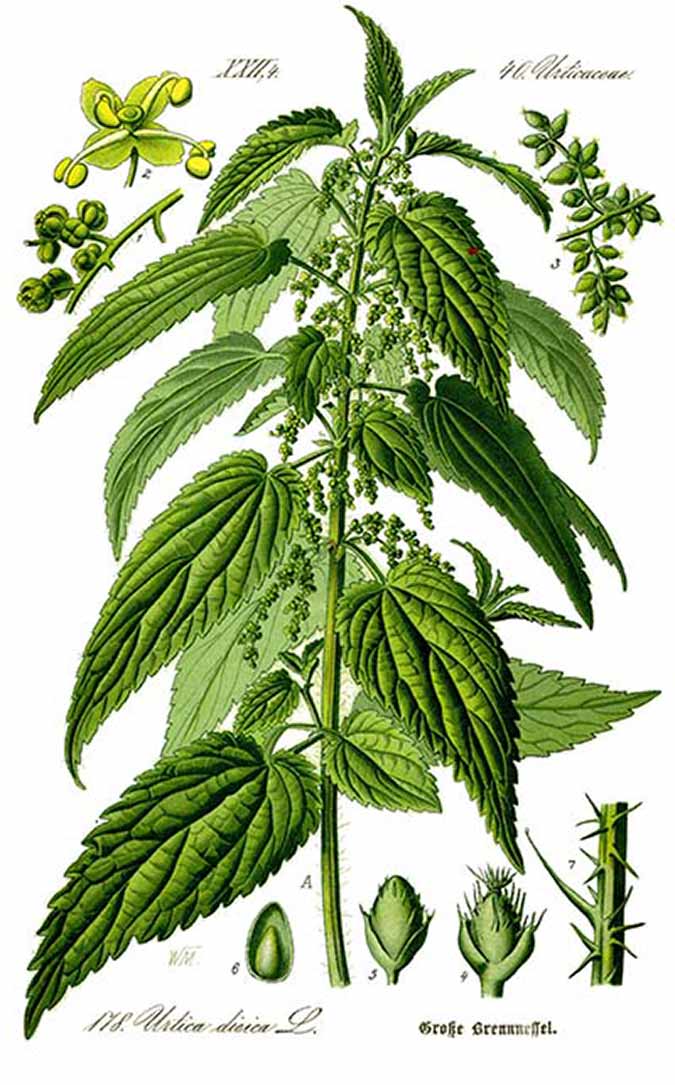
[User:Kilom691 [Public domain], via Wikimedia Commons]
Botanical Name: Urtica dioica
Family: Urticaceae
Other Common Names: Nettle, common nettle, burn weed, burn hazel, burn nettle, stingers, devil leaf
Parts Used: Leaves, seeds, roots
Energetics: Dry
Thermal Properties: Cool
Actions: Adaptogen, alterative, anti-tumor, anti-spasmodic, astringent, counterirritant (mucous membranes), diuretic, emmenagogue, expectorant, galactagogue, hemostatic, hypotensive, nutritive, trophorestorative (kidney/adrenal), vermifuge
Taste: Bitter, salty
Plant Uses: Allergies, arthritis, asthma, blood deficiency, eczema, fatigue, hypothyroidism, menstrual cramps, seasonal allergies, sluggish metabolism, urinary tract infections, weak hair/teeth/bones
Plant Preparations: Food, freeze-dried, juice, nourishing herbal infusions, tea, leaf tincture, seed tincture, seed wine, dried seeds, root tincture, pills, tablets, cream
Toxicities/Warnings: Sting from fresh plant, possible allergic reaction
A Long and Storied History
The ancient Romans and Greeks cultivated huge amounts of nettle. Native Americans used nettle fibers to make cloth and cordage. The fiber was naturally insulating, thanks to its hollow core—one of many stinging nettle benefits.
Nettle fiber burial shrouds dating back to the Bronze Age have been found in Denmark. Unfortunately, nettle fabric fell out of favor as modern industry came to fabrics. Machines were not able to remove the nettle plant’s fibers. Thus, nettle clothing began to gradually disappear.
You May Also Enjoy:
“Superweed: Nettles Are an Early Spring Food”
“35+ Powerful, Inexpensive Organic Fertilizers You Can DIY” (Using Nettles in Compost Tea Fertilizer)
The naming of nettles tells us a bit more about it. The first half of the scientific name, Urtica, means “sting” and might be related to the word “urine.” Each possibility makes sense in its own way, though the two ideas don’t sit comfortably together in the imagination.
The second half, dioica, is Greek for “of two houses” and refers to nettle’s trait of having separate male and female flowers. Any given stinging nettle plant may have one or both types of blooms.
19 Stinging Nettle Benefits
Increase Your Energy Levels
Nettles are used as a traditional spring tonic to strengthen and support the entire body. Their high nutritional value makes them ideal for anyone suffering from exhaustion, poor nutrition, or just general disease. They’re a great choice for pregnant women (see cautions below) and those recovering from injury or illness.
The seeds are adaptogens, helping us to respond to stress and strengthening our adrenals.
Detoxify Your Body
This general detoxifier has positive benefits for the entire body and is often used specifically as a blood purifier. Be sure to drink plenty of water to counter its diuretic nature.
You May Also Enjoy:
“15 Natural Antibiotic Alternatives”
Treat Eczema
Nettles are useful for all varieties of eczema, but especially childhood eczema and nervous eczema.
Stop Bleeding
When taken internally, the astringent properties of nettle can help to relieve hemorrhage symptoms throughout the body. Topical application is also effective.
Strengthen Bones and Connective Tissue

Image by Łukasz Dyłka from Pixabay
Stinging nettle nutritional benefits include high levels of calcium, silica, and other minerals to strengthen the bones and connective tissues.
Manage Blood Sugar
Nettles possess both hypoglycemic and hyperglycemic constituents. In animal studies, nettles have been shown to lower blood sugar in hyperglycemic rabbits. Human studies have shown decreased inflammation markers and improved levels of fasting glucose, 2-hour postprandial glucose, and HbA1C.
Promote Urinary System Health
The diuretic effect of nettles helps it to flush out urinary tract infections and stones.
Relieve Musculoskeletal Pain
Nettles’ anti-inflammatory and counterirritant properties can be beneficial for arthritis pain when infusions of the plant are consumed or the plant is allowed to sting the affected area. Topical application of the stinging leaf can also help with myalgia and non-arthritic inflammation, pain, and stiffness. A single application may be enough to relieve symptoms for 4–8 days.
You May Also Enjoy:
“Top 10 Most Dangerous Plant Look-alikes”
Promote Prostate Health
Stinging nettle benefits comprise roots and seeds that may be useful in presentment and treatment of benign prostate enlargement. One study found that nettle root may have a beneficial effect on prostate cancers as well.
Gently Relieve Diarrhea/Constipation
The astringency of nettles makes them useful in the treatment of diarrhea and dysentery. However, they also have a mild laxative effect in cases of constipation.
Prevent and Reverse Anemia
Nettles are an excellent source of bioavailable iron, making them beneficial for those suffering from iron deficiency.
Encourage Kidney Health
Nettle seeds are powerful kidney supporters and restorers. They have a protective effect if used during chemotherapy.
Relieve Allergies
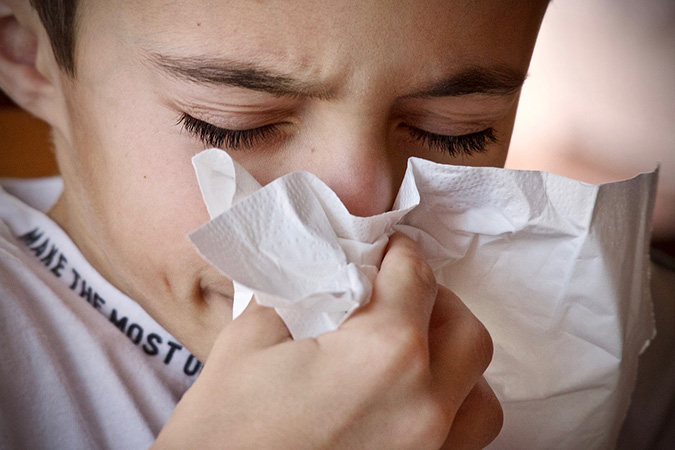
Image by Luisella Planeta Leoni from Pixabay
Nettles have the ability to reduce the allergen response of the body and help reduce excess mucous production in the nose.
Promote Lung Health
Related to its allergen-reducing attributes, nettles have been used as a folk treatment for any mucous membranes that are out of balance, including those in the respiratory system. Nettles act as a counterirritant, stimulating correct mucosal function in the digestive system (if ingested). In turn, this produces a sympathetic response in mucous membranes throughout the rest of the body.
This can help to relieve the effects of asthma and bronchitis. Consuming nettles as food, as an infusion, or even as steam breathed in while nettles cook can help the body to recover.
Address Female Issues
Nettles are frequently used for menstrual issues, fertility problems, in PMS formulas, and for menopausal issues. They may also help to stimulate milk production.
Promote Hair Health
Image by Engin Akyurt from Pixabay
Nettle juice can be used as a nutrient-rich final rinse after washing your hair. This juice has traditionally been ascribed with the ability to stimulate hair growth. You can also use nettle-infused vinegar for this purpose.
Taken internally, nettle juice nourishes and strengthens hair and nails from the inside out.
Shrink Hemorrhoids
Nettle juice can also be used as a spray or as a sitz bath to help relieve hemorrhoids.
Promote Heart Health

Image by 👀 Mabel Amber, who will one day from Pixabay
Nettle’s high potassium content helps it moderate high blood pressure and lower the chance of stroke.
Restore Digestive Health
Fresh nettle juice and greens help to tone the mucosa of the digestive system. In addition, they have been linked to anticancer activity.
But We’re Not Done Yet
Stinging Nettle Nutritional Benefits
Nettles are prized for their high nutrient value. They accumulate minerals and micronutrients from the soil and produce high levels of vitamins in forms that are easily accessible to the human body.
Indeed, many of nettle’s medicinal properties may stem from its ability to fulfill the body’s nutrient requirements. Once properly supplied, the body can then take care of itself.
The following chart lists minerals, micro-, and macronutrients in milligrams, unless otherwise stated, for every 1 oz. of dried nettle. Nettles are excellent sources of calcium, chromium, magnesium, silicon, and zinc. They are high in manganese, phosphorus, potassium, riboflavin, selenium, thiamine, vitamin C, B complex vitamins, and vitamin K. Nettles also contain a good amount of fiber, fat, iron, and niacin, and they are high in vitamin A and low in sodium.
The Grow Network offers organic bulk herbs—including stinging nettle—in our store. Click here to get yours!
Dried nettles are 25.2% protein and 2.3% fat, and they have only 0.6 calories per gram. Fresh nettles are also a good source of chlorophyll.

Preparations and Typical Dosing
Nettles are one of the most universally applicable of all medicinal herbs. So much so, that herbalist David Hoffman is often quoted as saying, “When in doubt, use nettles.”
Their safety, effectiveness, accessibility, and overall versatility make them an important plant to learn how to use.
Food
One of the easiest ways to capture stinging nettle nutritional benefits is as a food. Nettles can be blanched for 2 minutes to deactivate their sting and then used as you would any cooked green. They are often steamed or boiled and can be incorporated in a variety of applications, including soups, smoothies, stir-fries, and more. The cooking water can also be used in teas or soups.
You May Also Enjoy:
“Holistic Weight Loss for Gardeners” (Nettle, Asparagus, and Broccoli Soup Recipe)
Nutritive Herb
As a nutritive herb, they are generally viewed as safe, even in high amounts and over long periods of time.
Nourishing Herbal Infusion
Another favored strategy for accessing stinging nettle benefits is a nourishing herbal infusion. Unlike a typical infusion, a nourishing infusion is prepared with a much larger quantity of the herb.

Image by Fernando Villalobos from Pixabay
For a quart or liter of nourishing infusion, use 30 g. of dried nettle. Using dried herbs is important for this method since drying breaks the cell walls, allowing the mineral and vitamin content to move from the herb into the water.
Discover the shockingly simple way to get real nutrition that will deeply nourish your body. (Seriously, this method is so easy—and effective—you’ll wonder why you’ve never heard of it before!) Click here to learn more!
Place your dried herbs into a canning jar, and pour boiling water over them. Seal the jar, give it a shake, and then leave it to infuse for at least 4 hours. Overnight is fine. Then strain out the nettles with a cloth, being sure to wring all of the liquid from the herbs.
Drink your infusion immediately, or refrigerate for up to 3 days. Consume hot or cold. Sweeten as desired. Mint leaf can also help the flavor.
Standard Infusion
A standard infusion can also be prepared with 1–3 teaspoons of dried herb. Pour 1 cup of boiling water over the herb, and let it infuse for 10–15 minutes. This will typically be taken 3 times a day, but can be consumed as often as desired.
Tincture
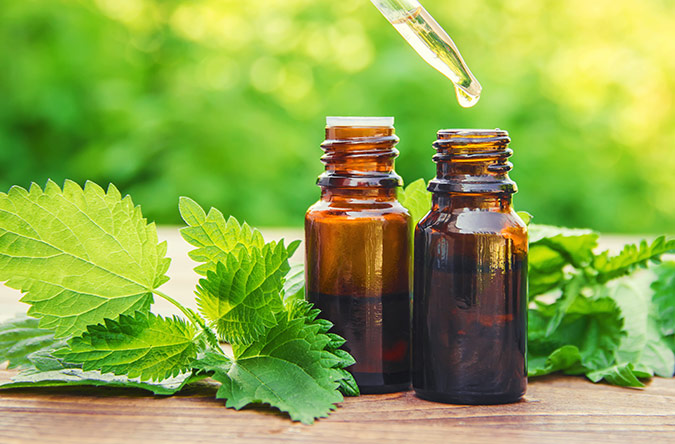
Tinctures can be prepared using 40% alcohol. Use 1 g. of dried nettle for every 5 ml. of alcohol. A typical dosage would be 2–6 ml. 3 times a day.
Capsule
Capsules of freeze-dried nettle powder are a convenient option for reducing allergy symptoms. Start with just a few grams per capsule, and gradually increase the amount until the desired effect is achieved. Capsules and tablets are used for the same purpose.
If stomach discomfort occurs with any of these, take them with food.
Juice
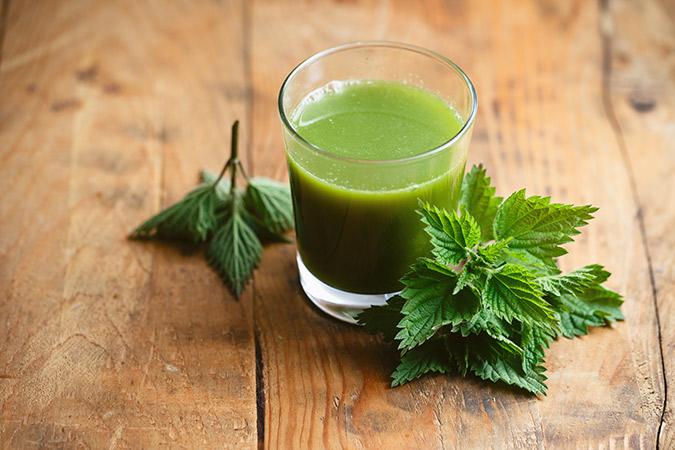
Another favored preparation is fresh nettle juice. Typical consumption is 5–10 ml. 3 times a day. The juice can also be used as a wash or soak for arthritis pain; as a hair rinse; or as a spray or sitz bath, as needed, for hemorrhoids.
Urtication
Urtication is used as needed, or as can be comfortably endured. Practitioners can either thrust an affected area into a patch of nettles or use fresh nettles to lightly strike the skin. Should the stinging become too intense, it can be relieved by crushing plantain, yellow dock, or teasel leaves and applying them to the area.
In place of the sting, nettle root tincture or cream can also be used topically for this purpose.
Uses for Animals
Dried nettles can also be given to animals. Historically, they have been dried and used as a nutrient-dense winter food for livestock. Mammals in general, including your dog or cat, respond to nettles much as humans do. The seeds and leaves can also be fed to birds.
Precaution/Dangers/Contraindications
The nettle’s sting is our primary concern. While not dangerous, it can still be quite painful. The degree of sting will vary from plant to plant due to genetic diversity and growing conditions. Some subspecies have no sting at all.
A nettle’s sting is caused by droplets of fluid at the ends of hollow, hair-like structures (trichomes) on the undersides of its leaves and along the stem. Underground rhizomes have the capacity to sting as well.
Formic acid, the same chemical found in ant and bee stings, is present in the stinging liquid and has traditionally been blamed for the sting. However, the amount of this acid is not especially high and may not fully account for the pain of nettle stings. The current thinking attributes the stinging sensation to histamines, such as acetylcholine and serotonin.
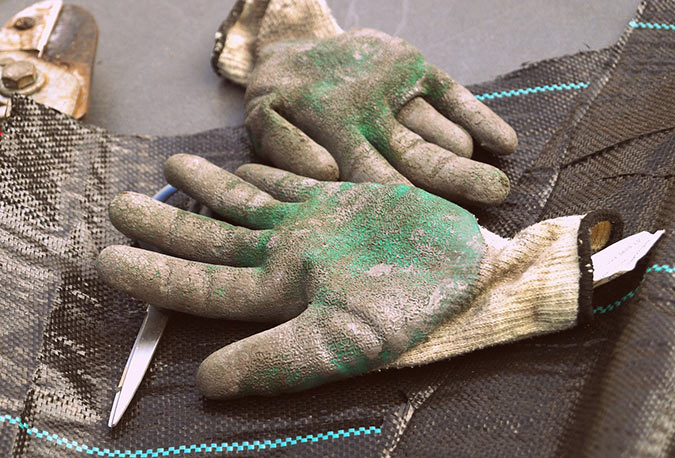
Gloves or careful handling can lessen the risk of stings. If handling without gloves, a firm grip may result in less stinging than a gentle grip. Drying, heating, or mashing the leaves makes them safe to handle. Young leaves do not sting.
Pregnancy
Nettles are generally considered to be safe for everyone, including the very young, the very old, and the very pregnant. You will sometimes encounter controversy over its use with pregnant women due to its ability to influence menstrual cycles. However, nettles have been safely consumed by pregnant women throughout human history.
While most of the concerns we hear are probably the result of ever-repeating, ever-exaggerated warnings, it is plausible that in very large doses, nettles could influence the odds of a miscarriage. Use appropriate caution.
Allergic Reactions
Nettles have been used by people at all levels of health, including those who are immune compromised. However, some cases of allergic reaction have been reported. Side effects of an allergic reaction may include nausea, a burning sensation in the digestive tract, or hives after consuming fresh nettles.
This risk is reduced by harvesting materials before the plant flowers and by drying them.
Headache
Some people report that nettle tea gives them a headache. This may be due to its diuretic effect causing them to become slightly dehydrated—or due to detoxification. Drinking more water can often fix this.
You May Also Enjoy:
“9 Simple, Effective Probiotics You Can Make at Home” (Stinging Nettle Vitamin C Enhancer Recipe)
Hallucinations
One of the more interesting application is to take a tablespoon of seeds and soak them in wine overnight. Then sip the wine throughout the day to help deal with illness. Reportedly, consuming very high quantities of nettle seed or nettle seed products can cause hallucinations. Very high amounts of alcohol won’t help either.
Coagulation
Nettles could theoretically reduce the effectiveness of anticoagulation drugs due to their high levels of vitamin K.
Plant ID
You should always be completely sure about the identify of a plant before eating it. Consult with multiple sources to ensure proper identification.
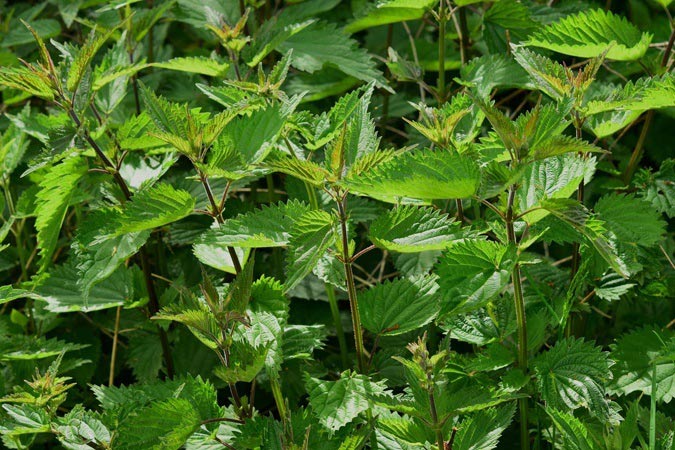
Nettles are herbaceous perennials, growing 3–6 ft. tall. Though their appearance is not eye-catching, they are difficult to confuse with look-alikes. That is, they’re difficult to confuse after you touch them.
In fact, nettles are more often the “dangerous” look-alike for something else.
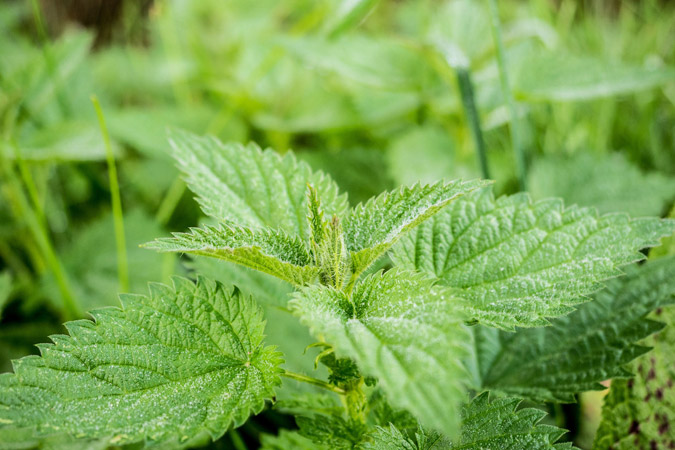
Other members of the nettle family may strongly resemble stinging nettles. However, the stinging hairs (trichomes) help to differentiate these. Two related genera, Laportea and Hesperocnide, can sting as well. Individual species can still be differentiated. For example, wood nettles (Laportea canadensis) have a mixture of opposite and alternate leaves, whereas stinging nettles’ leaves are always opposite.
Most members of this family are edible as potherbs. A few relatives are dangerous. In some related tropical nettles, the sting can be felt for years. Another dangerous nettle is the tree nettle (Urtica ferox) of New Zealand, which is toxic and has caused fatal poisonings.
Clearweed (Pilea pumila) and mulberryweed (Fatoua villosa) may also be considered look-alikes. They can easily be distinguished by their lack of stinging hairs.
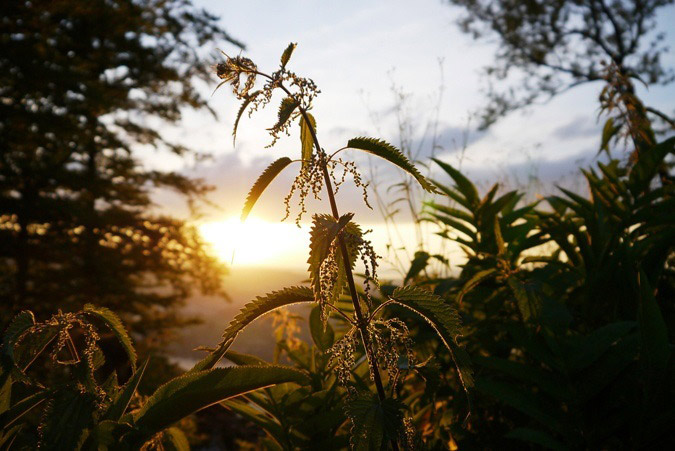
Mints and stinging nettles share a superficial resemblance, both having square stems and opposite leaves. However, nettles can be differentiated by the short, transparent hairs along the stem and undersides of their leaves. Nettle leaves are simple, jagged, and are often somewhat heart-shaped, though this can vary. The flowers are small and inconspicuous.
If all else fails, just start touching the plant. You’ll figure it out.
Where It Grows and Where to Find It
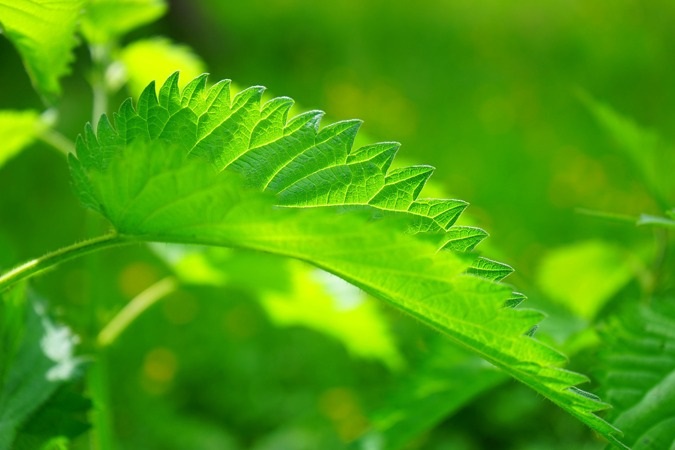
You can find nettle throughout most of the world. It grows on every continent but Antarctica. Look for it in rich, fertile, moist soil.
Common locations include along stream banks, at the edges of ponds, in low areas, beside barns and stables, along the sides of houses, and sneaking into gardens. In some places, nettles are a common lawn plant. Nettles prefer partial shade but will tolerate full sun exposure as long as they don’t dry out.
Nettles are easy to grow and can readily be transplanted or propagated from runners. However, they spread easily, so select a site with plenty of room and where they will not interfere with your outdoor activities.
How and When to Harvest
Harvest nettle tops in spring while the plants are still around knee high and before they flower. If you use restraint and take only the top third, you may be able to get a second harvest.
Scissors and gloves help to prevent accidental stings. You can also avoid the sting by folding a leaf over (so that only the top is exposed) and pinching it between finger and thumb.
Seeds can be harvested in fall. Rhizomes are available year-round, but they will have more potency in late fall through early spring.
What Do You Think?
Stinging nettle benefits are aplenty—as long as you respect them. Their contribution to human culture, food, and medicine cannot be overstated.
In considering stinging nettle nutritional benefits, are you pondering starting your own nettle garden? Or do you already have a favorite use for this versatile plant? Let us know in the comments below!
______________________________
This is an updated version of an article that was originally published on February 28, 2019. The author may not currently be available to respond to comments; however, we encourage our Community members to chime in to share their experiences and answer questions!
Psst! Our Lawyer Wants You to Read This Big, Bad Medical Disclaimer –> The contents of this article, made available via The Grow Network (TGN), are for informational purposes only and do not constitute medical advice; the content is not intended to be a substitute for professional medical advice, diagnosis, or treatment. Always seek the advice of a qualified health care provider with any questions you may have regarding a medical condition. If you think you may be suffering from any medical condition, you should seek immediate medical attention. You should never delay seeking medical advice, disregard medical advice, or discontinue medical treatment because of information provided by TGN. Reliance on any information provided by this article is solely at your own risk. And, of course, never eat a wild plant without first checking with a local expert.
(Visited 31,252 times, 1 visits today)

The Grow Network is a global network of people who produce their own food and medicine. We’re the coolest bunch of backyard researchers on Earth! We’re constantly sharing, discovering, and working together to test new paths for sustainable living—while reconnecting with the “old ways” that are slipping away in our modern world. We value soil, water, sunlight, simplicity, sustainability, usefulness, and freedom. We strive to produce, prepare, and preserve our own food and medicine, and we hope you do, too!


