


pass through Giovanna Chiara Italian, mark
Giovanna writes for MARK UP in Italy on the ‘Great Reset’ and its implications for the future of retail. She cites Brian Solis and his work on “Digital Darwinism”.
This article is in Italian, but there are also translations here.
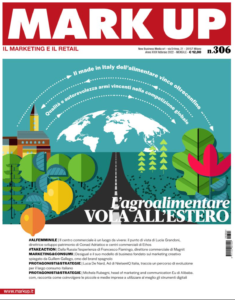
Retail and its supply chain can withstand the shock of the pandemic by investing in customer experience, which has become a real driver of change
Last World Economic Forum 2021 (World Economic Forum) Davos As far as the world is concerned, it has an iconic title to confront and eradicate the epidemic as soon as possible: “The Great Reset”. The idea of using the impact of the pandemic on businesses (and not just) to try to reset, restructure and restructure different departments, looking at various distortions, bottlenecks, and negative externalities in general, is the idea that matures as a response to the virus. Constructive responses to discomfort and difficulties. The long wave of the “big reset” also invested retailit is dealing with the elimination of many modus operandi and the transformation of many sectors associated with it, effectively weakening its “Retail Reset”.
In this sense, however, it is necessary to clarify immediately that the core element on which this reset is based today is the digital element fueled by the pandemic phenomenon, which facilitated its dissemination, rather than the application of the technological paradigm itself. In itself, this was already there in the pre-pandemic period. In fact, the current reality is “hybrid” and is grappling with analog and digital forms that interact with each other (integrate or replace each other) in a more or less fluid way.
evolving
So it seems interesting to come up with the following concept Digital Darwinism (Digital Darwinisma representation created by technical innovation experts Brian Solis), refer to”The evolution (or revolution) of business ideas, processes, models and systems for competing in the digital economy. Technology is not the answer to change.” Invoke with hashtag-monito #AdaptOrDieBrian Solis wants to raise awareness of the fact that we need to know how to adapt and live with the fleeting and elusiveness of sudden change Exogenous to the companyhowever, who also has to know how to react in a certain way endogenous. So companies are designed to gradually improve over time, optimizing themselves, selectively replicating, getting better through slow but coherent and tested evolution.
However, if the system worked before the pandemic, and it is indeed already being tested The speed of technological and social change, now things are different.This Digital DarwinismIn fact, with the pandemic, it took on new connotations, as the spread of infectious diseases became part of the Darwinian survival variable.Agility and, most importantly, risk tolerance seem to be two basic privileges, even finding one new leadership style, A new way of fair retribution and a new corporate culture.
full text here (Italian).
Brian’s English Section
evolving
So it seems interesting to come up with the concept of digital Darwinism (Digital Darwinism, an expression created by tech innovation expert Brian Solis), which refers to “the evolution (or revolution) of business ideas, processes, models and systems to compete in the digital economy. Technology is and is not the answer to change”.Use label warnings #AdaptOrDie, Brian Solis wants to raise awareness of the fact that we need to know how to adapt and live with the fleeting and elusive nature of sudden changes exogenous to companies, however, it must also know how to react endogenously. So companies are designed to gradually improve over time, optimizing themselves, selectively replicating themselves, getting better through slow but consistent and proven evolution.
But if the system worked before the pandemic, and has indeed been tested by the speed of technological and social change, it is different now. In fact, digital Darwinism took on a new connotation with the pandemic, as the spread of infectious diseases became part of Darwinism’s survival variables. Agility and, most importantly, risk tolerance seem to be two fundamental perks, also used to find new leadership styles, new fair pay and new corporate cultures.


