


Meta recently shared how professionally produced content compares to “everyday life” content.
Data shows that low-fidelity content is a major contributor to brand ad recall and content views.
Why are we seeing this cultural change now?
Meta believes this may be due to the availability of smartphones, giving us a potentially unlimited audience.
Another theory is that brands need to share content faster and more frequently. After all, our attention spans are limited!
Also, today’s social media culture has changed dramatically. More and more users are celebrating “real life” moments and stories. They don’t want to see the perfection and polish of the brand.
In fact, a YPulse study found that, 79% of users “Tired of seeing the perfect image in advertising”.
Let’s dive into the six cultural codes that Meta shares can benefit from brands.
#1: Real People Tell Real Stories
As mentioned above, users are tired of seeing perfection in ads. These images do not match the reality of the daily life of most of us.
A brand that showcases its own employees or real customers provides credibility; more importantly – relevance to your audience.
By letting others tell the story, it brings more authenticity to their experience with the brand.
#2: Use the platform language
When it is said that brands can benefit from using the language of the social platform, it does not mean the language in the literal sense (English, Spanish, etc.).
This means that brands adopt and publish accepted behaviors across platforms. Examples of this might be:
- Create your own viral dance or routine rendition
- Use popular transition effects or voiceovers in your videos
The reason why language and culture are so important has to do with user reliability.
#3: Build relationships with creators and influencers for credibility
In Meta’s research, they noted that 63% of adults aged 18-34 trust creators’ perceptions of brands.
Furthermore, these people trust the creator more than the brand itself.
One reason brands can benefit from creator relationships has to do with context.
Many times, creators have a way to tell a story about a product or brand in a way that brands can’t.
This helps make your brand look more authentic. You are asking customers to listen to other customers, not you.
Leveraging outside sources like creators or influencers can help build credibility for you and them.
Take Cerebral, an online mental health company. Cerebral works with former US Olympic medalist Simone Biles to advocate for mental health.
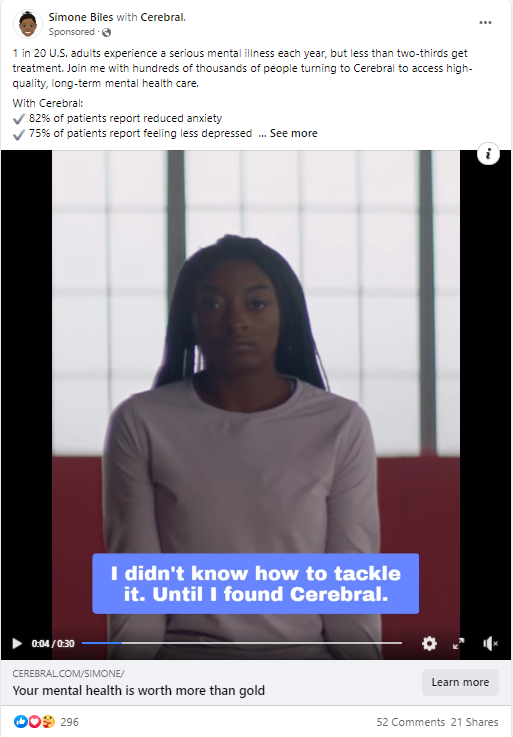
The ad uses influencers to help normalize conversations about mental health. Anyone can struggle with mental health, celebrities and athletes.
#4: Take the user behind the scenes
This cultural code that Meta talks about is directly related to the aforementioned YPulse research.
Users are tired of seeing perfect images and descriptions of unrealistic lifestyles.
To some users, perfectly retouched images and videos may not look real.
By taking users “behind the scenes” in some way, you help them connect more with you. Whether it’s a “day in the life” of different departments, startups, and founders, showing what you’re doing goes a long way.
You’re showing them what it takes to make perfect (or imperfect) content. It’s a lot harder than they thought!
#5: Use Lo-Fi Editing Techniques
Brands using low-fidelity editing and production tools have an advantage among modern consumers. These types of tools help paint a more handcrafted image rather than a polished airbrush look.
It also helps from a relevancy standpoint, since users don’t want to see perfection.
If you are new to lo-fi editing, some brands offer specialized courses on how to use lo-fi techniques and tools.
#6: Break Boundaries with Humor
Brands that use humor in their content engage their audience more.
Humor can help remove a brand’s rigidity and need for perfection.
An example of a brand that uses humor in its content is Charmin. They participated in the #DollyPartonChallenge, which is going viral, not only with their brand, but with their users.
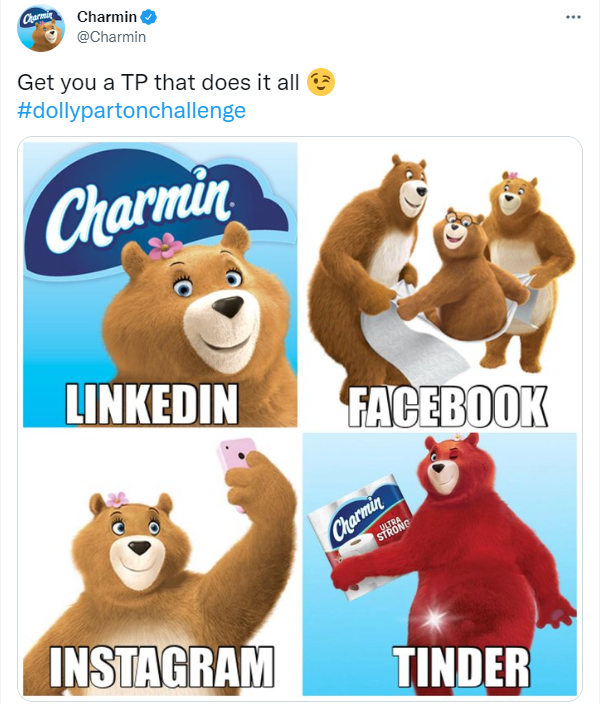 Image credit: Twitter.com, Screenshot by author, May 2022
As a general reminder, if you’re going to use humor, it’s always possible to inadvertently backfire.take this Chase example:
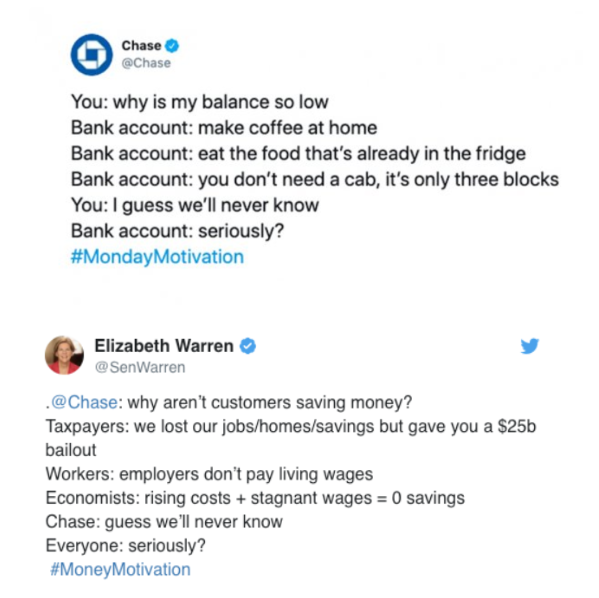 Image credit: contentworks.agency
If you’re going to use ads, be sure to read your user base ahead of time and spot any potential negative reactions. It’s always a good idea to have a customer service plan in place in case something goes wrong.
generalize
The culture of social media is always changing. Arguably, the cultural community has changed dramatically due to the pandemic.
By understanding the social and cultural norms of today’s society, your brand has a better chance of staying relevant with users.
Featured image: DisobeyArt/Shutterstock


