


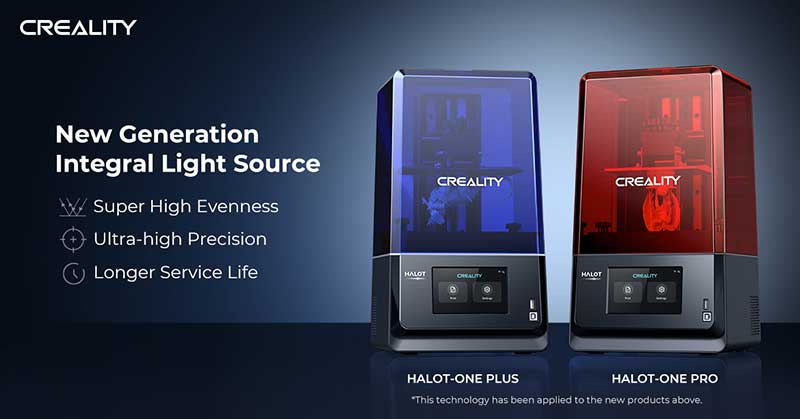
Sponsored News – As many 3D printer experts know, most resin 3D printers are designed to use parallel firing technology. However, some feedback reflected that the joints in the model received lower light intensity, resulting in uneven prints. Damaged LED units can also negatively affect the accuracy of the model, making it difficult for the user to make a perfect print.
In order to solve this problem and optimize the user experience, the Creation R&D team worked hard and came up with a technological breakthrough. This year, Chuangxiang successfully released a new resin 3D printer with a new generation of integrated light source technology. The new generation of integrated light source technology is impressive with stronger light intensity, excellent light uniformity and ultra-high printing accuracy.
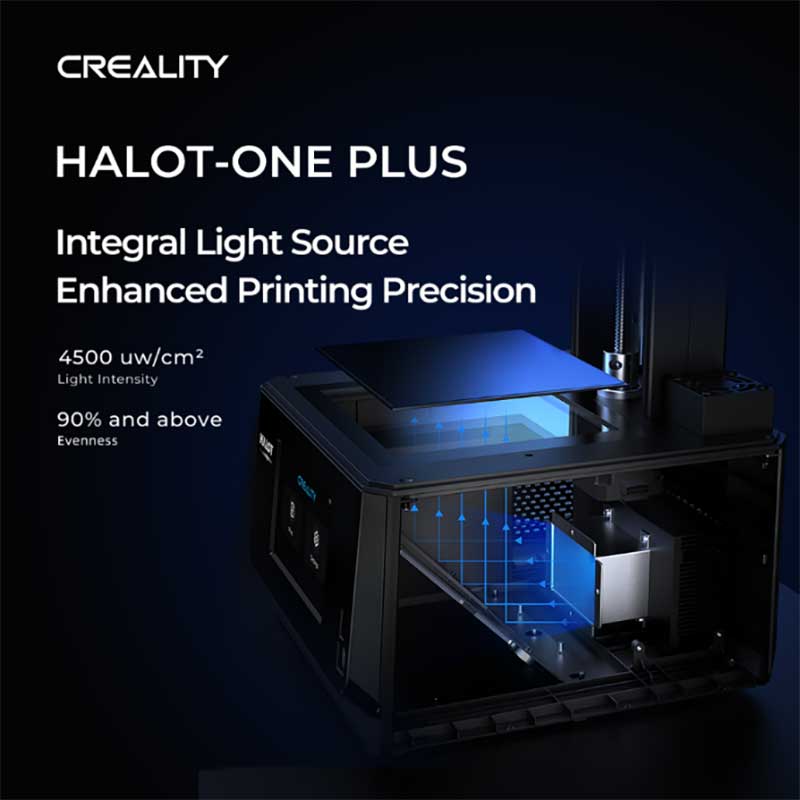
Why choose an integrated light source?
Lighting uniformity
Parallel firing is a technique commonly used in resin 3D printers that uses a UV LED matrix and LED cells. Therefore, if there are broken LEDs, the printed model will suffer from uneven lighting. Also, the light intensity at the joints is not quite consistent with other areas of the model, which also affects the final print.
Unlike parallel emission, the new generation of integrating light sources is based on the working principle of reflection and refraction. Five LED units, each with four emitting chips, ensures a uniformity of 90% and above with a lighting intensity of 6000uw/cm². It doesn’t matter if the LED unit is broken, providing users with more stable printing conditions.
According to test statistics, the luminous uniformity of the new generation of the overall light source can reach up to 93.5%, while the parallel luminescence is only 51.1%. This remarkable uniformity is quite reliable for printing precise models with high gloss levels.
Illumination uniformity differences (visual comparison)
| parallel launch | Integrated light source |
|
Avenue: 7496 |
Avenue: 3769 Max: 3869 Minimum: 3618 Accuracy: 93.5% |
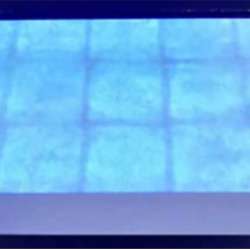 |
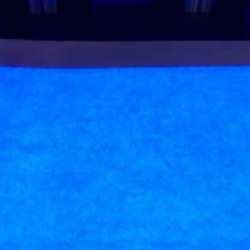 |
accuracy
Resin 3D printers with a new generation of integrated light source technology have greatly improved printing accuracy. Take the following T0 model as an example. Printing a 60 x 60 mm model, the model printed with Integral Light Source Technology turned out to be 59.91 x 59.93 mm with 99.73% accuracy, which is more accurate than the model printed with Parallel Emission Technology.
| Parallel emission printing technology | Integrated light source printing technology |
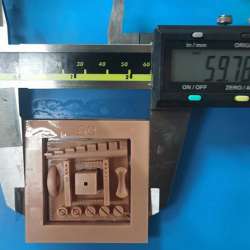 |
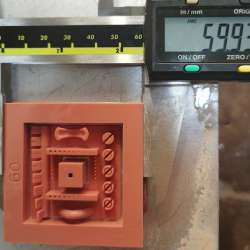 |
| Target print size 60 x 60 mm | Target print size 60 x 60 mm |
| Actual print size 59.78 x 59.78 mm | Actual print size 59.91 x 59.93 mm |
| Accuracy: 99.27% | Accuracy: 99.73% |
A new generation of integrated light source technology has been applied to the Creality HALOT ONE series, including HALOT ONE, HALOT ONE PRO and HALOT ONE PLUS. Let’s take a closer look at HALOT-ONE PLUS. As a new resin 3D printer launched in 2022, HALOT-ONE PLUS will impress users with high precision, intelligence and ease of use. Its 7.9-inch 4K monochrome LCD allows anime fans to print their favorite cartoon characters, tools, and more. Even micro-holes and micro-pillars can be vividly printed, bringing imagination to life with rich details.
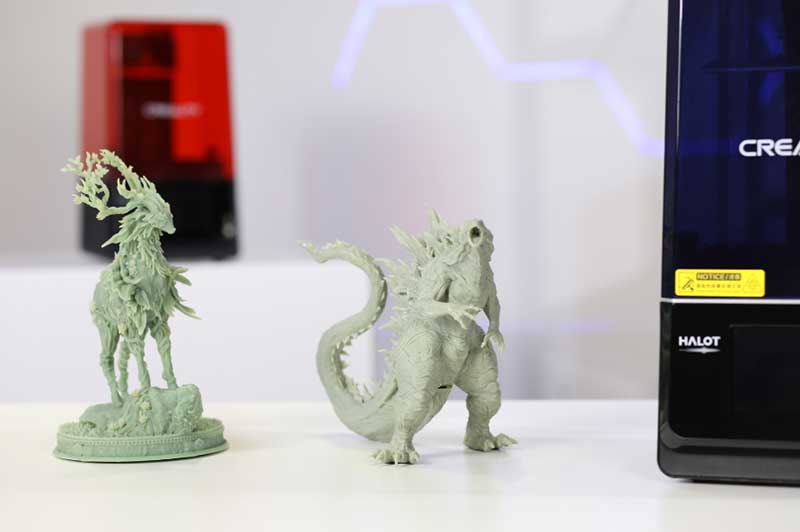
In addition to animation printing, a new generation of integrated light source technology is favored by the jewelry industry. Illumination uniformity of up to 92% can perfectly print 0.1-0.3mm micro-stands, which are suitable for models with complex structures. High precision and enhanced speed greatly improve the 3D printing experience.
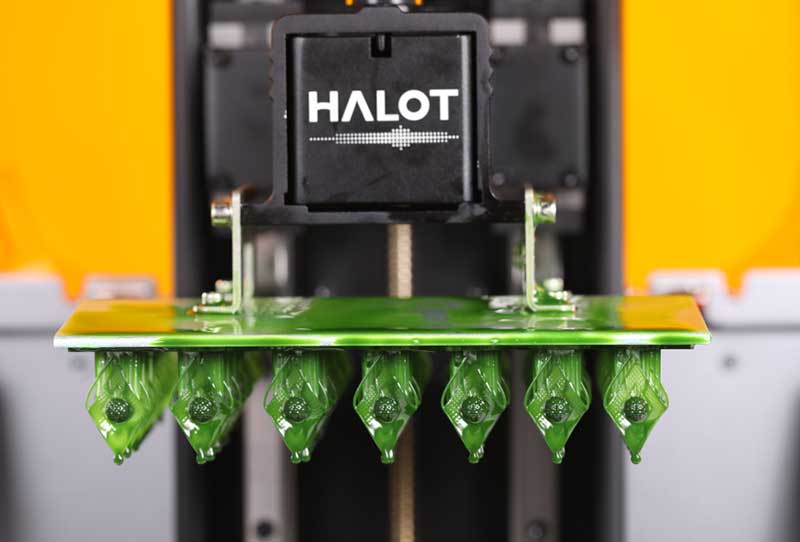
The HALOT-ONE series 3D resin printer adopts a new generation of integrated light source technology, which will surely bring surprises. Anyone interested in this, why not print something and have fun?
https://store.creaity.com/products/halot-one-plus-resin-3d-printer


