


Sharing is caring!
James Donkey RS4 TKL Wireless Gaming Keyboard Review Score
generalize
The James Donkey RS4 is a great keyboard for anyone who wants a TKL with linear switches. It works fine in both wired and wireless mode, and has a decent battery. The media knob is a nice extra that similar keyboards lack.
advantage
- Overall excellent build quality
- Three connection methods
- If you like linearity, the Gateron Pro 2.0 yellow switch is great
- Impressive RGB
- Large capacity battery
shortcoming
- I can’t download the companion software
- Similar to the slightly cheaper Keychron K8
James Donkey is a Chinese peripheral manufacturer specializing in gaming mice and mechanical keyboards.
It looks like the only supplier of this hardware is Mechkeys, who also provides this sample.
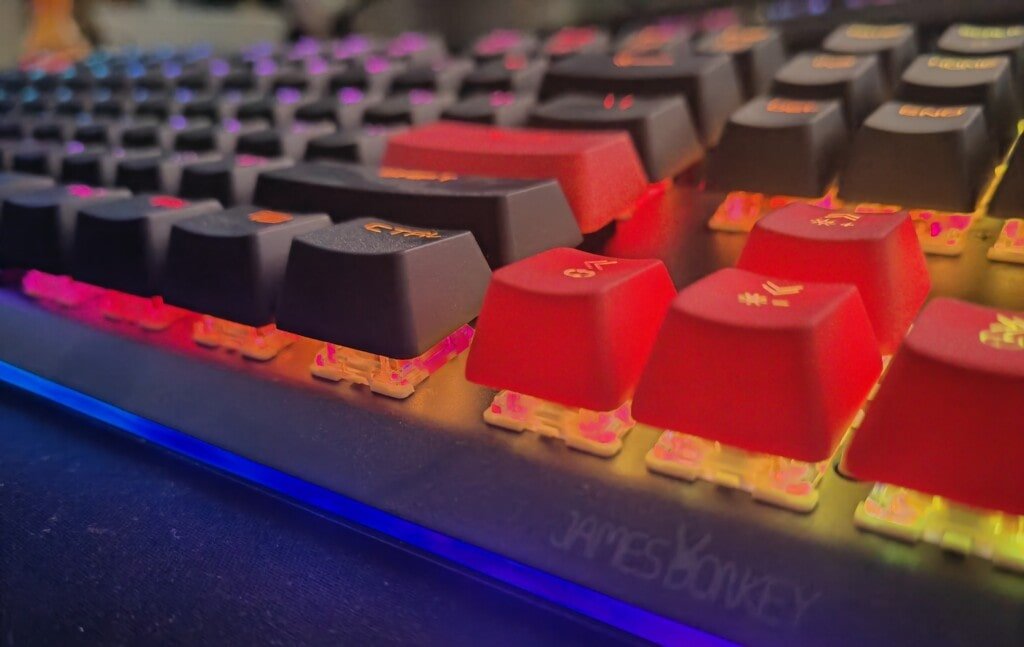
The James Donkey RS4 is an 87-key Tenkeyless mechanical keyboard that uses Gateron Pro 2.0 yellow switches and can operate in wired or wireless mode using Bluetooth or 2.4Ghz.
Specification
- 87-key TKL layout.
- Gateron Pro Yellow 2.0 Switch.
- Triple connection mode and hot-swappable PCB.
- Bluetooth, wireless 2.4GHz, USB Type-C wired connection.
- Industrial grade design, aluminum alloy frame and PBT keycaps.
- Fully backlit RGB design.
- Multimedia volume knob.
- Smooth and linear operation.
- Battery capacity: 4000mAh
- Weight: 780 grams
review
It’s an RGB keyless design with 87 keys and a uniquely positioned media knob on the left.
RGB
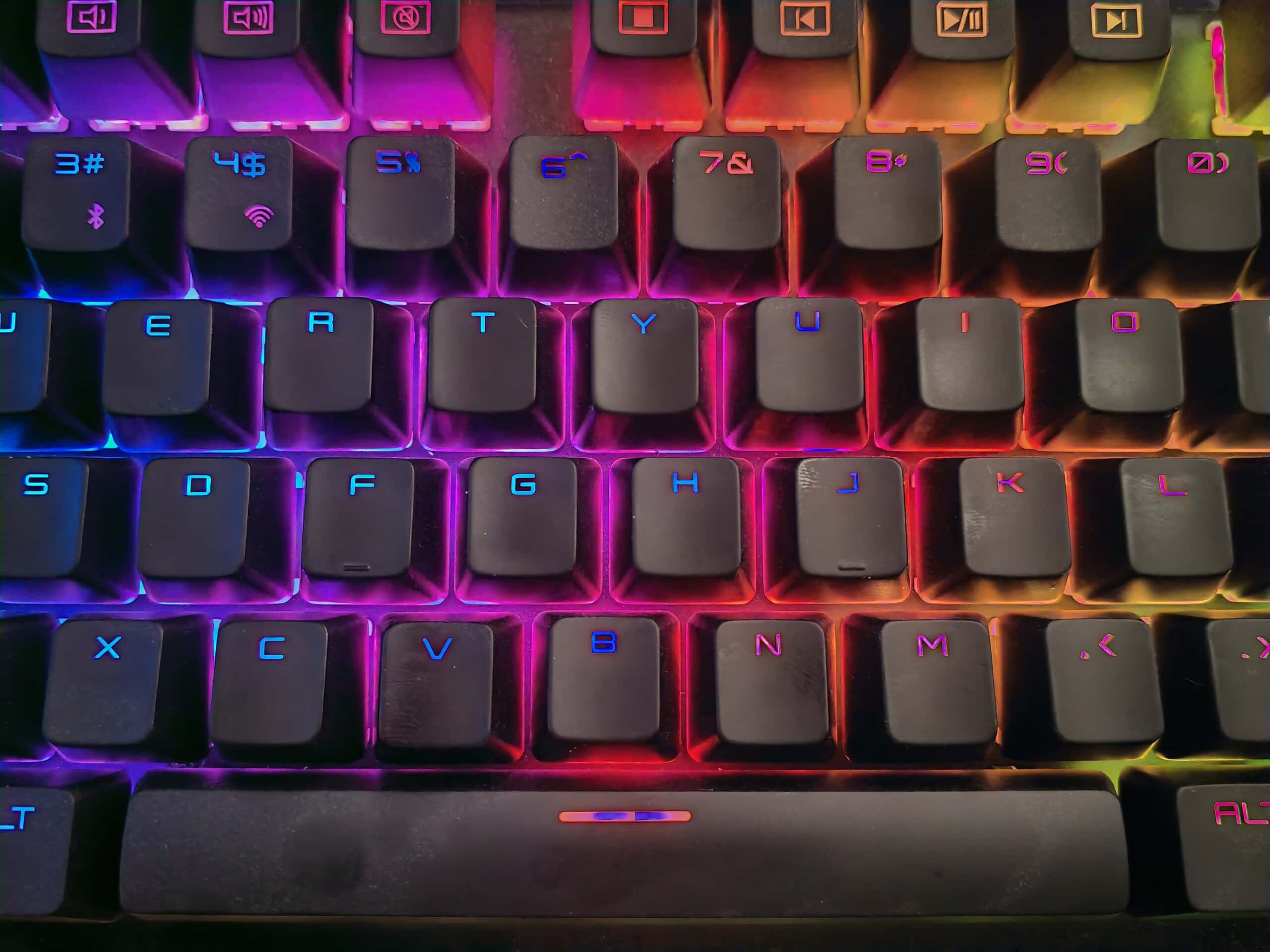
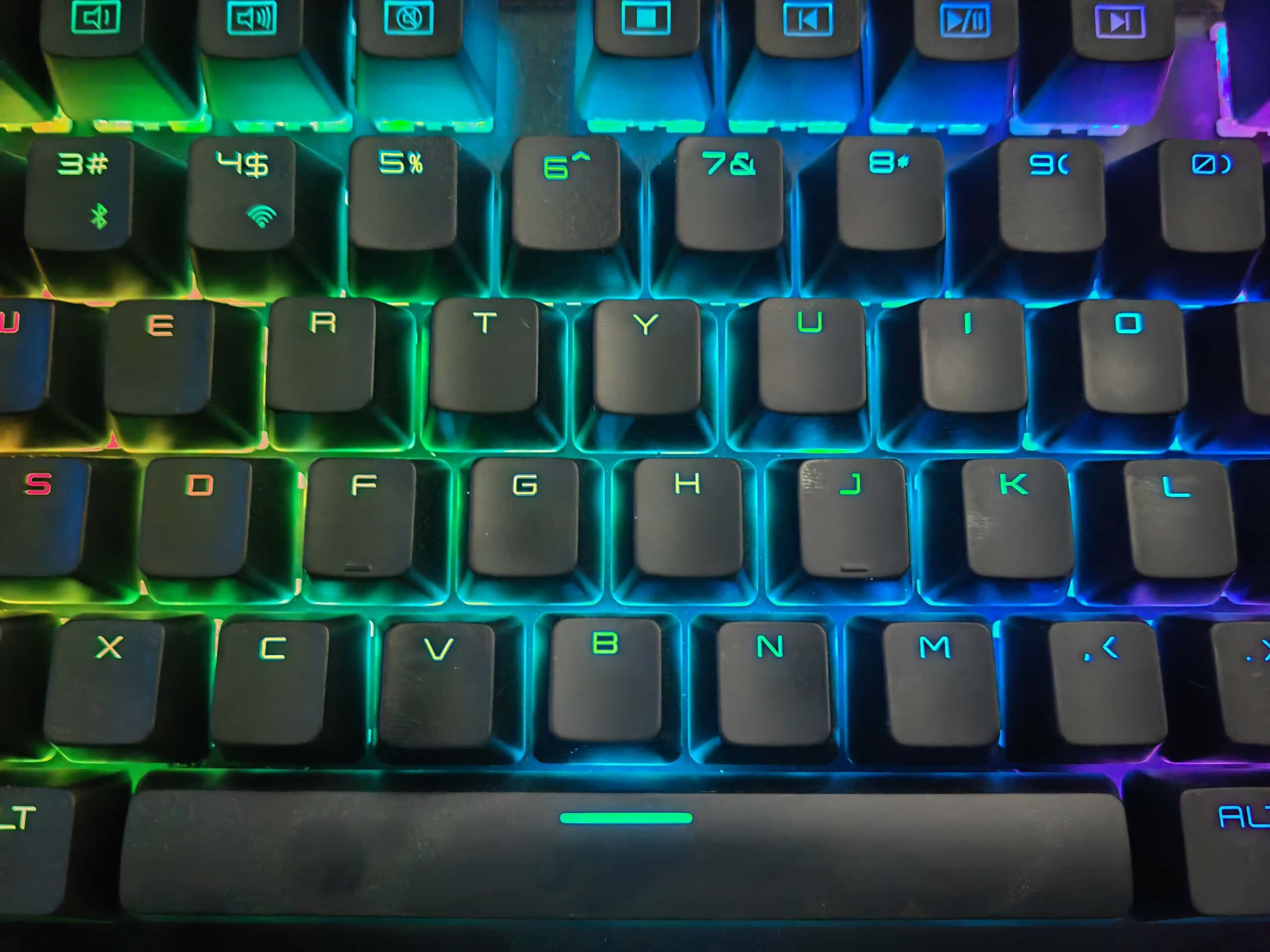
Similar to the HyperX Alloy Origins 60 I reviewed before and many RGB keyboards now, the frame sits flush with where the LEDs are, fully exposing them. This gives you a vibrant RGB look. This is then complemented by horizontal RGB bars running along each edge of the keyboard. This makes it the most RGB-y keyboard I’ve reviewed.
Technically, RGB can be programmed using James Donkey software, but I couldn’t download that software when I tried it. You can also use the switches on the bottom of the keyboard to turn on/off the keyboard LEDs and light bar.
Gateron Yellow Switch
The switch is Gateron Pro 2.0 Yellow, it has 50g of actuation and 4mm of travel, this is the first time I’ve used a switch of this brand. My everyday keyboard is the Thermaltake TT Premium X1 with nice clickable cherry blue switches.
Gateron Yellow is quite different, with smooth keys and linear actuation, making it a good alternative to Gateron Red (and Cherry Red). There’s 5g more actuation force than the Red, so it’s a good choice for those who want more feedback from the keys.
Since I haven’t used this switch or red in a long time, it takes a little getting used to. The smooth, linear keys have a slightly squishy feel.
The noise you get is the sound of the keys bottoming out, more like a plastic touch than the actual click you get from a tactile or click switch. I think I’m more of a touch/click type, but I work from a home office by myself and find these styles great for writing without worrying about being annoying.
The more I use the keyboard, the more I like the Gateron Yellow switches, which I think happens with most switches. I found that after a brief adjustment, my typing and gaming performance seemed to be about the same as other keyboards.
media knob
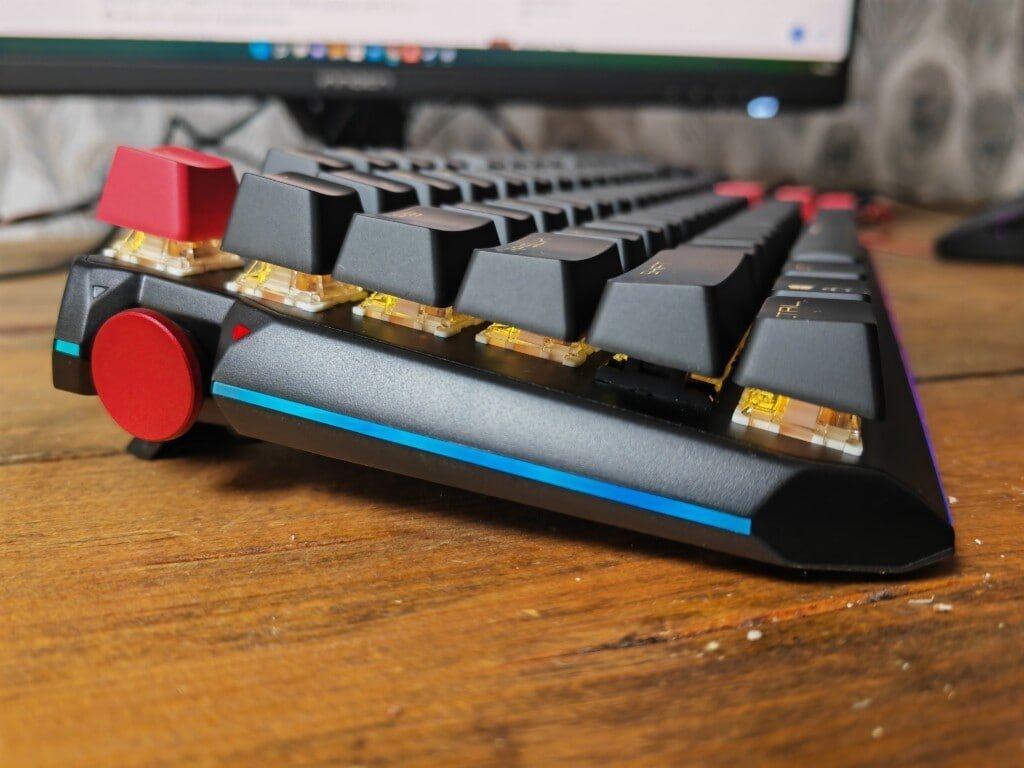
I love the volume wheel and media keys, so this was a welcome addition. However, it doesn’t work as well as the id, the scroll wheel has high resistance, and there are no grooves to provide grip, so quickly adjusting the volume isn’t as easy as I’d like. Again, once I got used to it, I liked it more and more; it was easier to pinch it with two fingers than to roll with one index finger. Press the knob to pause and start the media, which works great.
Connect and control switches
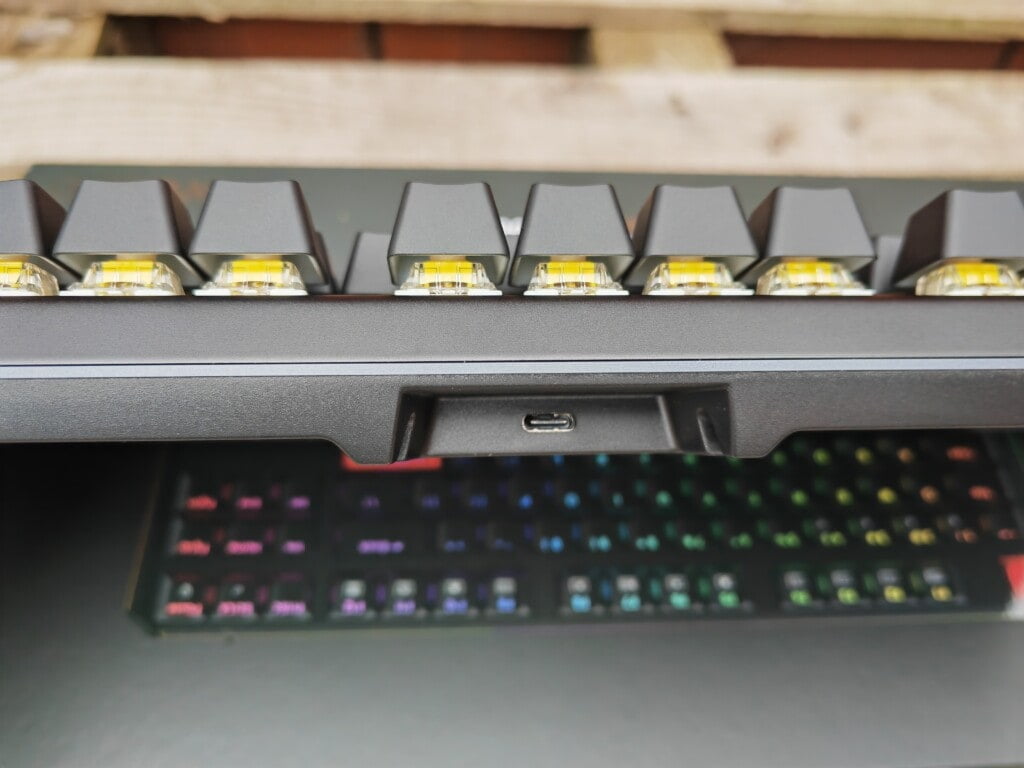
Connectivity is one of the strong points of this keyboard. You can use a USB-C cable and use it as a wired keyboard or switch between Bluetooth and 2.4Ghz.
When using it on my desktop, I stick with cables and laptops, I mostly use 2.4Ghz. Bluetooth works great too, but I try to avoid that as much as possible.
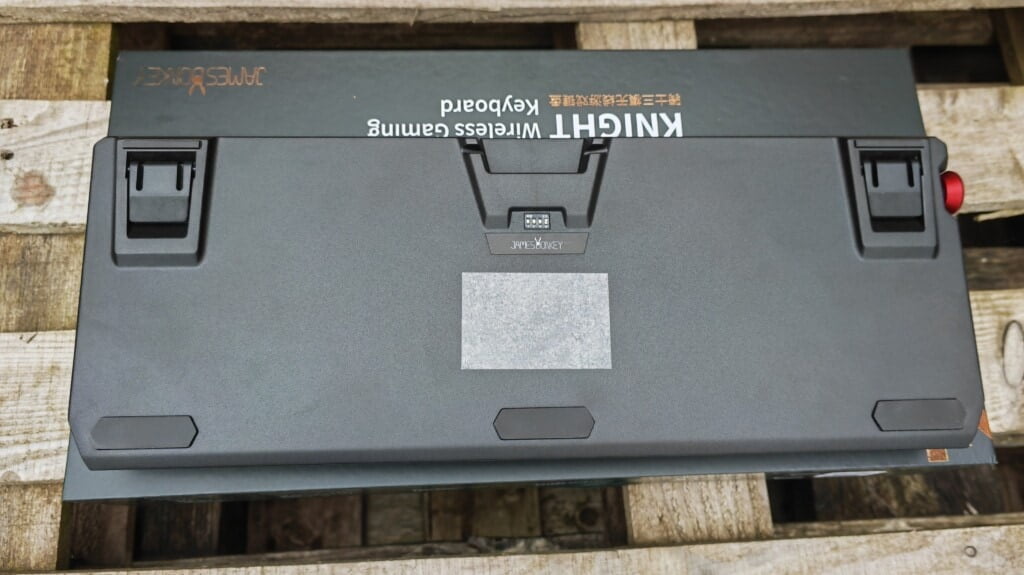
At the bottom of the keyboard are small switches that toggle between different functions and control RGB.
Battery
I haven’t tested the battery extensively as I switch between 2.4Ghz and wired a lot. However, so far I haven’t had any issues. The battery capacity is 4000mAh, which is generous and matches the capacity of the Keychron K8.
RGB obviously drains the battery faster, and I tend to turn off the horizontal LED if I’m using it for extended periods of time on battery. The K8 reports that the battery lasts 240 hours with all backlights turned off.
Price and Alternatives
The James Donkey RS4 sells for $99, and if you import it into the UK, you’ll have to pay an extra $21, including any taxes and VAT.
The final price of $120 is less than £100.
The Keychron K8 is a very similar keyboard. If you choose the RGB and aluminum frame options to match this, the price is $80 before shipping. This lacks a media wheel, and I don’t think there’s any companion software to control RGB (not that I got it working on this keyboard).
The Royal Kludge RK987 is an affordable option with a variety of options.No RGB, 1850mAh battery is smaller, but more affordable Mechanical key $79.
The Logitech G915 TKL Lightspeed RGB is £109 and has a variety of media keys.
Corsair K63 only blue backlit keys, no RGB, £104
comprehensive
This was my first time using a James Donkey keyboard and I was pleasantly surprised. This is an excellent keyboard, especially if you like lots of RGB.
I’ve grown fond of the Gateron Pro 2.0 Yellow, and I can see myself switching to this keyboard as my work/travel option.
James Donkey RS4 vs Keychron K8
It looks very similar to the Keychron K8, but lacks the media knob, and it has a lip on the edge of the frame that doesn’t expose the RGB LEDs too much.
James Donkey has a Gateron Pro 2.0 yellow switch, while Keychron has a choice of Gateron Pro switches in red, blue or brown. To me, the media knob is worth the marginal price difference between the James Donkey and the Keychron.

