


On July 8, 2021, the Faridabad Municipal Corporation conducted a demolition operation on its land in the Khori village of the Aravali belt in Faridabad, India (Photo: Parveen Kumar/Hindustan Times via Getty Images)
- An Indian court ordered the removal of the intruder from the village of Khori.
- Evictions may leave 100,000 people homeless.
- These houses were built illegally on protected forest land.
Indian authorities began to demolish hundreds of houses in a village on the outskirts of New Delhi on Wednesday, a move that housing activists said could make 100,000 people homeless.
The Supreme Court of India last month ordered the removal of “intruders including forced evictions” from the village of Khori, which has approximately 10,000 families of informal workers, including street food vendors, cleaners and tuk-tuk drivers.
Their houses were illegally built on protected forest land, which is part of the Aravali Mountains that span nearly 700 kilometers across northern and western India.
According to on-site activists, about 300 houses were razed to the ground during the monsoon rains in Faridabad district of Haryana on Wednesday, and there were thousands more before the Supreme Court’s July 19 deadline. All houses will be destroyed.
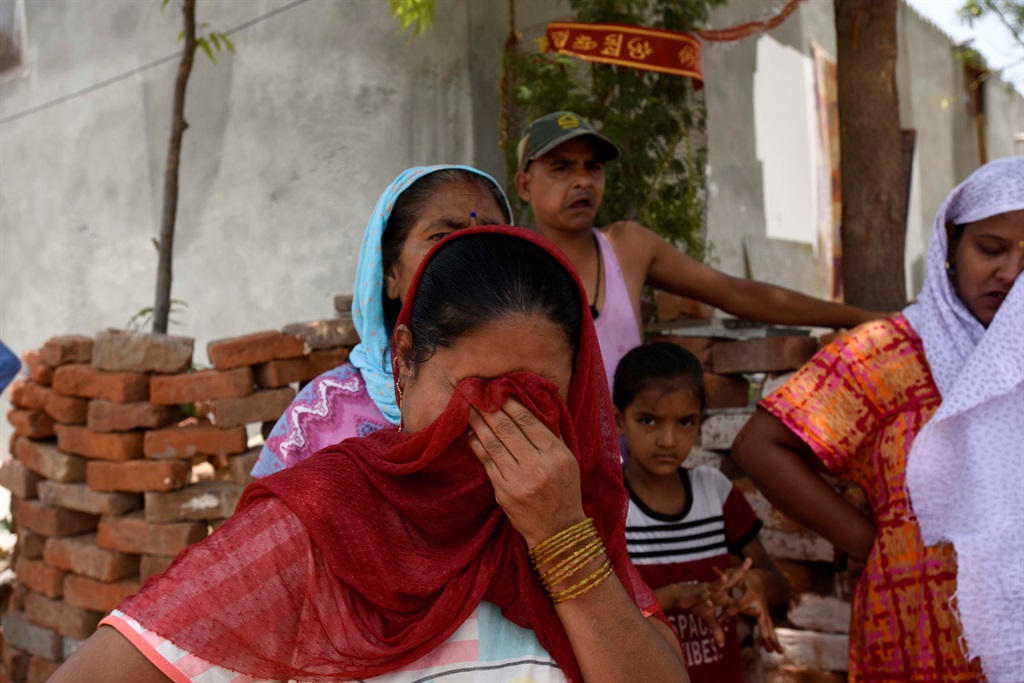
On July 8, 2021, Faridabad Municipal Corporation conducted a demolition operation on its land in Khori Village, Aravali, Faridabad, India. Residents broke down during the demolition process. (Photo by Pavin Kumar/Hindustan Times via Getty Images)
“We have nowhere to go. We will get wet here. I have children,” an unnamed woman told the local news channel NDTV after her 15-year home was demolished.
Neither district authorities nor local police responded to requests for comment.
Read also | India’s lightning death toll rises to 76
The demolition started on the second day of the state’s announcement of a restoration plan that would make residents who meet certain criteria eligible to live in low-cost apartments, such as a family with an annual income of less than 300,000 rupees.
According to the plan, 2,000 rupees will be provided to residents for renting alternative housing for a period of six months.
Housing activists criticized the plan’s release the day before the demolition and urged the government to investigate to determine the beneficiaries, give them ample time to prove their claims, and connect people to the work benefit plan.
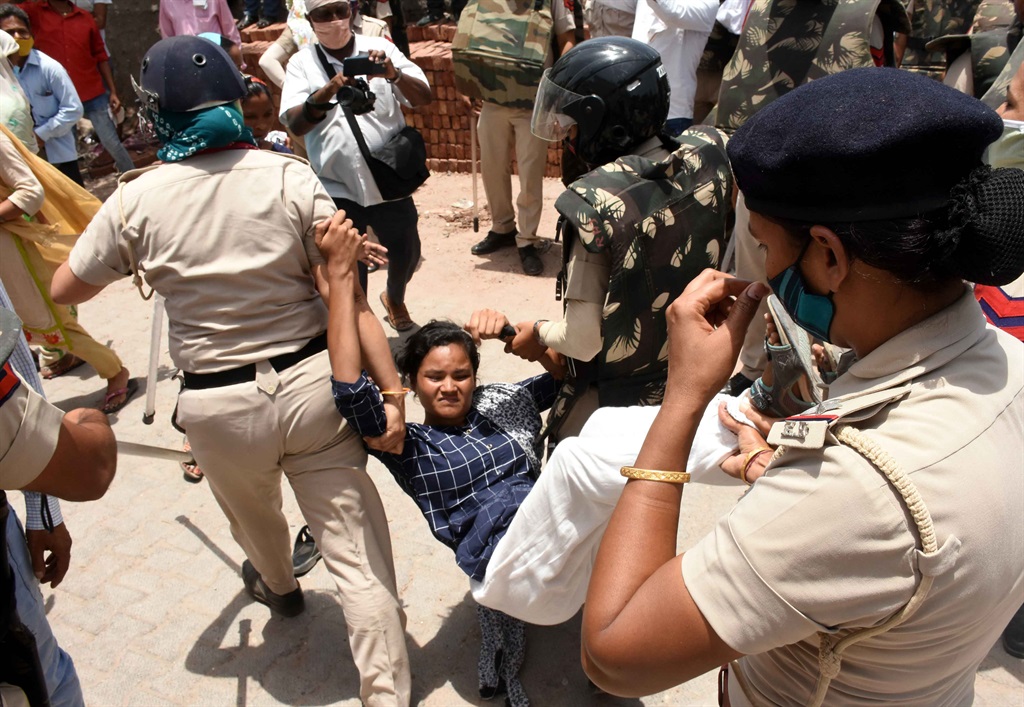
On June 30, 2021, in Faridabad, India, police detained a woman among residents protesting the demolition of a house built on Aravalli land in Khori village. (Photo by Subashi Sharma/Hindustan Times via Getty Images)
Nirmal Gorana, a member of Khori Mazdoor Awas Sangharsh Samiti, an organization that represents the interests of residents, said: “You destroyed the house within 24 hours after you announced the plan? What kind of welfare state is this?”
“You can’t uproot them and let them die in the pandemic,” he told the Thomson Reuters Foundation in Khori.
India has nearly 31 million cases of coronavirus infection, second only to the United States and second in the world. The United Nations stated last year that obtaining adequate housing is “the front line against the Covid-19 outbreak”.
Read also | India achieved economic growth 30 years ago. Covid-19 lifted its veil in a few months
A video clip posted by regional authorities on Twitter showed that a bulldozer was bulldozing and demolishing houses. Bricks and corrugated tin roofs collapsed under the gaze of police and residents in riot gear.
In a similar case, the Supreme Court ordered the demolition of tens of thousands of shacks along the Delhi Railway in September last year.
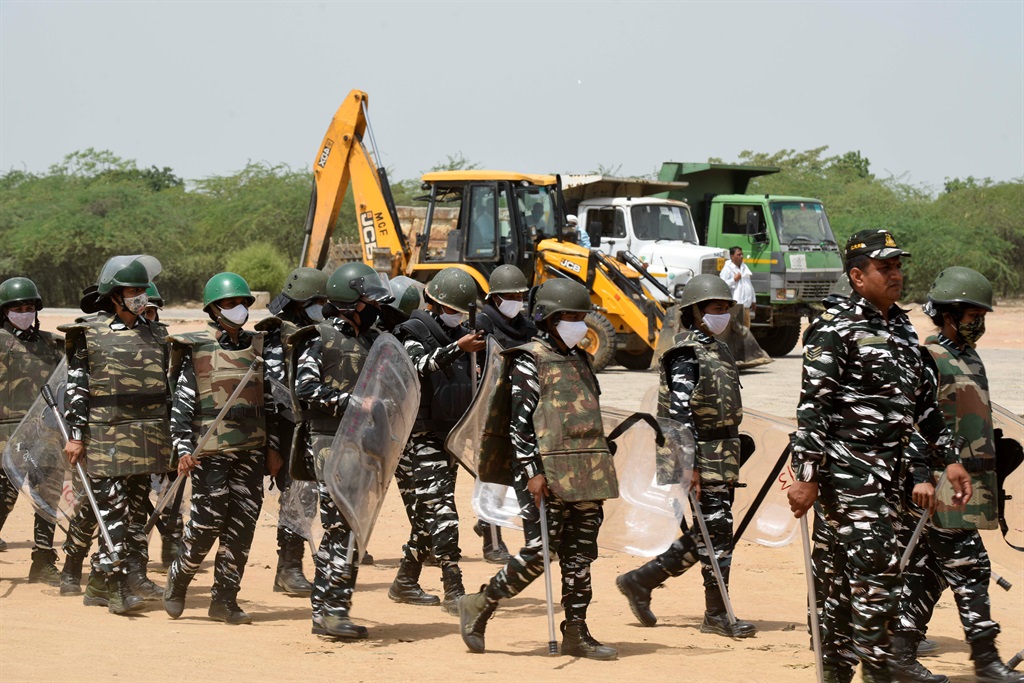
On July 8, 2021, Faridabad Municipal Corporation conducted a demolition operation on its land in Khori Village, Aravali, Faridabad, India, and deployed security personnel. (Photo by Pavin Kumar/Hindustan Times via Getty Images)
According to the Housing and Land Rights Network (HLRN), which compiles annual eviction records, nearly 15 million people in India live under the threat of displacement.
According to HLRN data, between March 16 and July 31 last year, at least 20,000 people were deported, despite a court order prohibiting such actions during the lockdown to curb Covid-19.
“(Forced evictions) cause people to fall into extreme poverty and thus pose a threat to the right to life,” said Chowdhury Az Kabir of the Human Rights Legal Network.
“The residents of Khori village are falling into poverty.”


