


Broncio is an evocative noun in Italian that means pout or sulky expression.
The exact origin of broncio remains somewhat contested. Treccani suggests that it may come from the late Latin brunchus meaning ‘snout’ or ‘face’, whereas Devoto-Oli states that it derives from the ancient French Bronchier (meaning ‘vacillate’) which in turn comes from bronche (meaning ‘bush’).
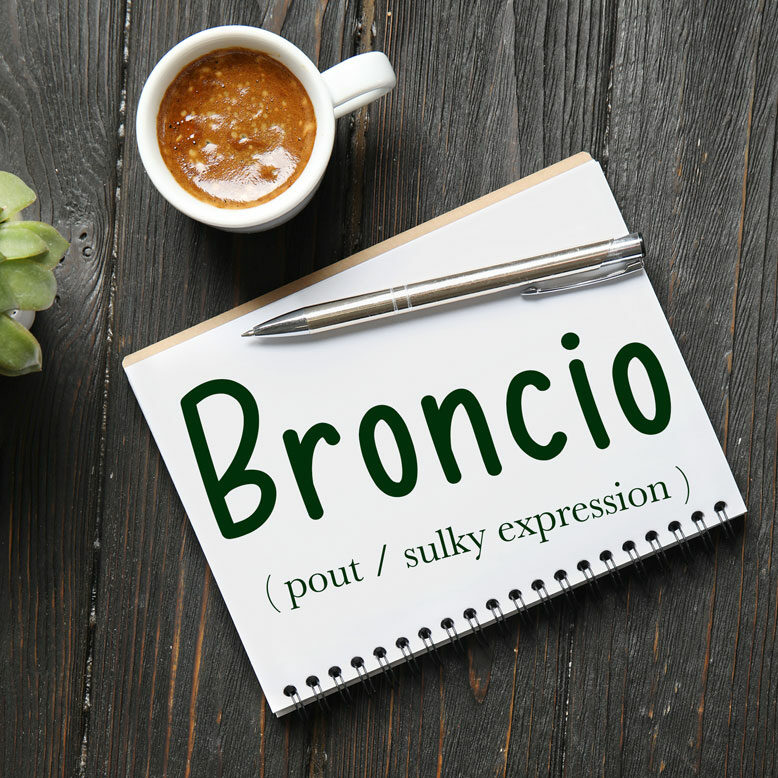
Broncio is both an adjective and a noun, and the latter is masculine. The plural becomes bronci.
You will usually see broncio in the company of one of the following verbs, all of which translate as to pout or to sulk.
- avere il broncio = lit. to have a sulky expression
- fare il broncio = lit. to make a sulky expression
- mettere il broncio = lit. to put on a sulky expression
- tenere il broncio = lit. to hold a sulky expression
Tenere il broncio per giorni non farà altro che ingigantire il problema.
Sulking for days will only exacerbate the problem.

Tenere il broncio a qualcuno (literally ‘to hold the pout to someone’) means to be angry with someone or to hold a grudge against someone. The verb tenere can be replaced by portare (to carry).
A common synonym for broncio is muso (snout, muzzle, face) or muso lungo (long face). As you can guess, tenere il muso mean to sulk / to hold a sulky expression.
Marco tiene il muso da due giorni perché non l’ho portato a vedere la partita.
Marco has been sulking for two days because I didn’t take him to see the game.
Broncio also exists as an adjective, but it is rare and usually found in a literary context. It translates as sullen, sulky or peevish.
Finally, from broncio you get the verb imbronciarsi which is a pronominal verb and has the same meaning as fare il broncio. From the verb comes the adjective imbronciato, which is the past participle of the verb.


