


A Taliban fighter patrolled a street in Kabul after the organization occupied the city.
- Some residents of Kabul are trying to lead a normal life.
- This was after the city was occupied by the Taliban.
- The organization has now set up checkpoints throughout the city.
On Tuesday, some Kabul residents carefully ventured back to work on quiet streets, feared after being broken by gunfire one night, and faced doubts from the new Taliban rulers who set up checkpoints in the Afghan capital.
The Islamist Taliban prevented women from working and imposed punishments including public stoning during their rule from 1996 to 2001. With the collapse of the US-backed government forces, the organization swept the country in a few days. By Sunday night, the Taliban had occupied Kabul.
Although the Taliban promised not to retaliate against opponents and promised to respect the rights of women, minorities and foreigners, many Afghans are skeptical.
But they also know that life must continue.
Interpreter | How the Taliban planned the “political collapse” in Afghanistan
“I’m scared, but the reason why I opened the store was to support my family,” Mohammadullah, a 48-year-old grocery store owner, told Reuters by phone.
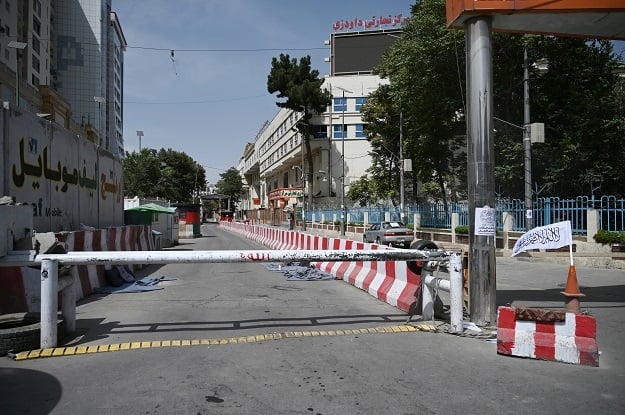
After the Taliban took over, a closed road in Kabul.
“I don’t have any other source of income. If I don’t open a store, how can I feed my family of 12,” he said, adding that there are far fewer customers than usual.
Residents said that most shops and supermarkets in Kabul were closed, and schools were also closed. But they said that some small grocery stores and butcher shops and hospitals are open.
Traffic was unimpeded, but there were several pickup trucks with white flags carrying Taliban gunmen.
Read | Afghan central bank governor flees, currency plummets during Taliban takeover
Taliban commander Mawlavi Haq Dost said: “The Americans have failed here. The Islamic system was established because the state supports us.”
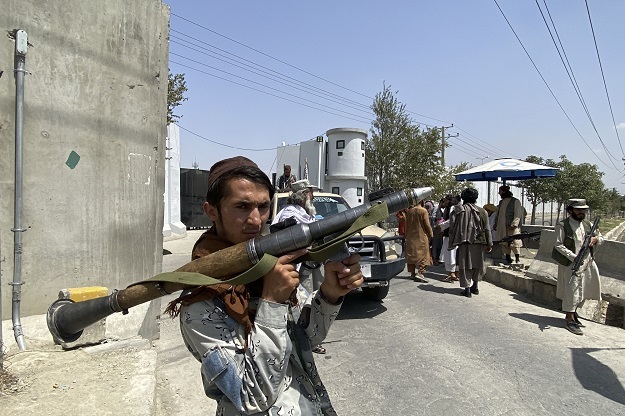
A Taliban fighter holding an RPG rocket, stands guard with others at the gate outside the Ministry of Interior in Kabul.
“This is a legal system, and we assure our people that whether they are Hazaras, Tajiks or Turks (minorities), jihadists will not harass them in any way.”
jobs
Asadullah Wardak, who has been a doctor in Afghanistan for 12 years, said he decided to return to work after sitting at home for two days. His children living in Canada urged him to leave, but he chose to stay in Kabul, where he was a gynecologist.
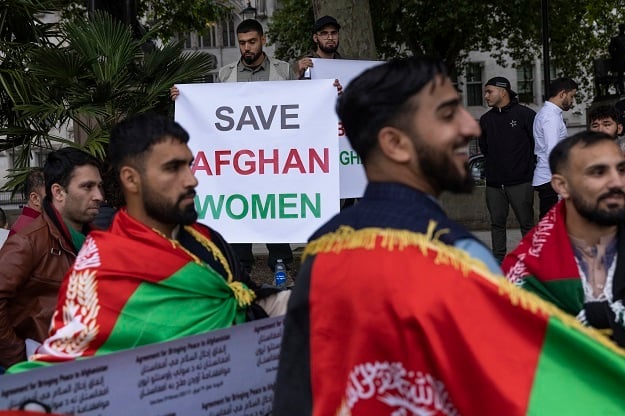
A small group of protesters opposed to the Taliban’s takeover of Afghanistan gathered in Parliament Square in London.
On the way to work at Sana’a Hospital, two Taliban men checked his car and ID. He said they told him he was free to work and gave him a phone number in case his hospital encounters blood supply problems or shortages of medicines.
Quoting | World leaders react to Taliban takeover of Afghanistan
He said they also asked him to ensure that female patients and female doctors work separately, while male doctors can only see female patients in the presence of another female doctor.
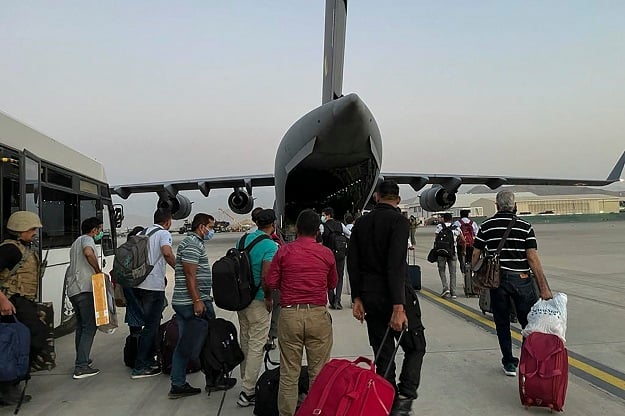
Indian nationals are preparing to board an Indian military aircraft at Kabul Airport.
Alberto Zanin, the medical coordinator of an Italian medical charity in Kabul, said his hospital had treated several gunshot patients in the past 24 hours, some of whom were injured in the chaos at Kabul Airport because Hundreds of citizens tried to escape the flight in a diplomatic evacuation pod.
He said that there were a lot of gunfire at night and the situation in the city was still tense. Taliban armed soldiers stopped people at a checkpoint near his home.
“In cities, there is much less traffic and there are far fewer people going out for a walk,” he said. “People are worried.”


