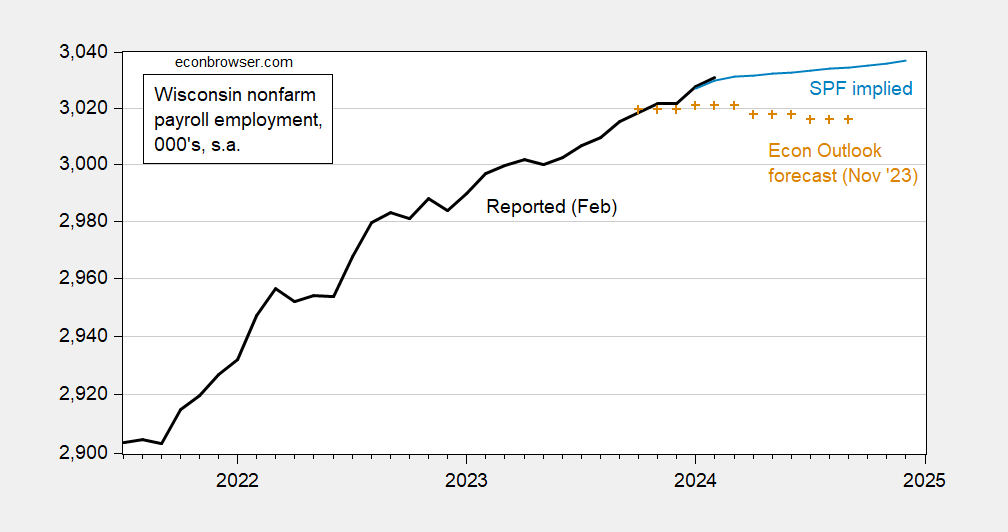
Employment remains above the Wisconsin Department of Labor's November forecast, according to the SPGMI National Outlook.
figure 1: Wisconsin Nonfarm Employment (Black), DoR Forecast (Tan+), Implied by SPF Forecast, 000's, sa Source: DWD, Wisconsin Department of Revenue (November), SPF, and author's calculations.
Wisconsin economic outlook The November forecast is based on a national economic slowdown that S&P Global Market Insights included in its forecasts starting that month. If a slowdown hasn't materialized yet, it wouldn't be surprising to see performance beat expectations.
The SPF implied forecast is based on a first-difference regression from July 2021 to January 2024, which suggests that a one-percentage-point increase in U.S. nonfarm employment is associated with a 0.76 percentage point increase in Wisconsin employment (R2 of 0.41). (SPF forecasts are interpolated to each month via quadratic matching.)
One could reasonably ask whether the BLS/DWD series mismeasures employment due to issues such as the firm birth/death model. The Philadelphia Fed provided an alternative estimate based on QCEW data through the third quarter. This series is even higher than the official series.
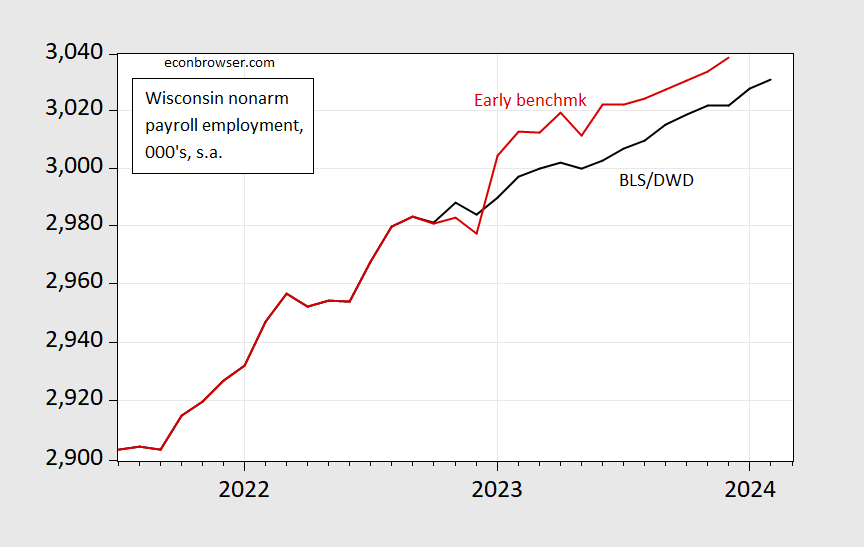
figure 2: Wisconsin Nonfarm Employment (black), Philadelphia Fed Early Benchmark Series (red), 000's, sa Source: DWD, Philadelphia Fed.
By the end of 2023, Philadelphia Federal Reserve data showed an annual increase of 2%, while the official figure was 1.3%.
Finally, construction job growth slowed in February.
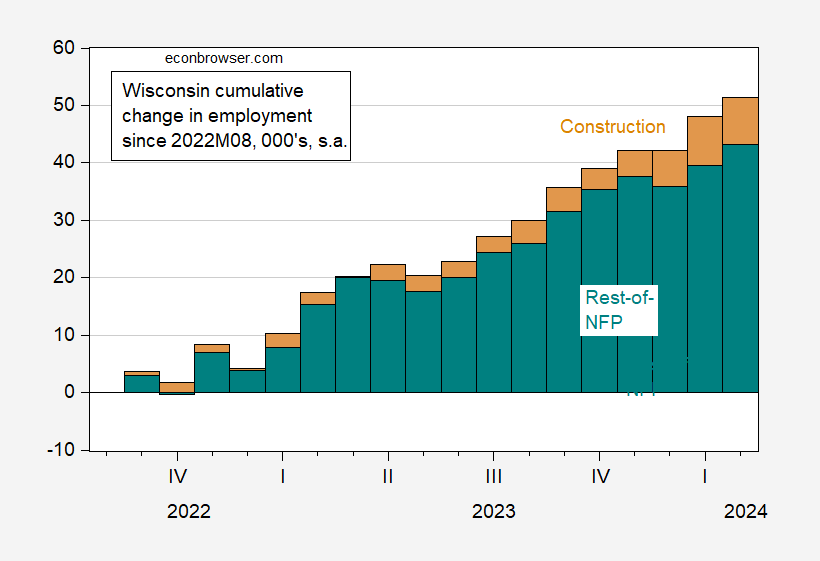
image 3: Cumulative change in Wisconsin construction employment (tan) and other nonfarm employment data (cyan) since August 2022, in 000, sa Source: DWD and author's calculations.