Sponsor news – You may not notice everything else, but in the past year, portable power stations have become a hot topic of discussion. Recently, well-known brands such as Jackery, EcoFlow and Bluetti have launched a large number of new products. Some were started through crowdfunding, such as Blueetti EP500 (5.1 kWh/3 kW), which generated $3.1 million on Kickstarter in May, and EcoFlow DELTA Pro (3.6 kWh/3.6 kW), which currently aims to Released on Kickstarter in July. There are also some new players entering the market, such as the new Mango Power Union (6.9 kWh/4 kW), which is expected to land on Indiegogo in August, according to its website. Today, we will delve into two of them-Mango Power Union and EcoFlow DELTA Pro-to see how they stack up.
Neither plant has officially started yet, so all specifications in this article are from their respective websites. (EcoFlow Delta Pro https://ecoflow.com/pages/delta-pro; Mango Power Alliance https://www.mangopower.com )
Before starting, it should be noted that Mango Power Union integrates portable power stations and larger household modules into one device, so compared with EcoFlow DELTA Pro, it is not a complete apple-to-apple comparison. Nevertheless, for anyone in the power station market in 2021, this side-by-side appearance should help.
battery capacity
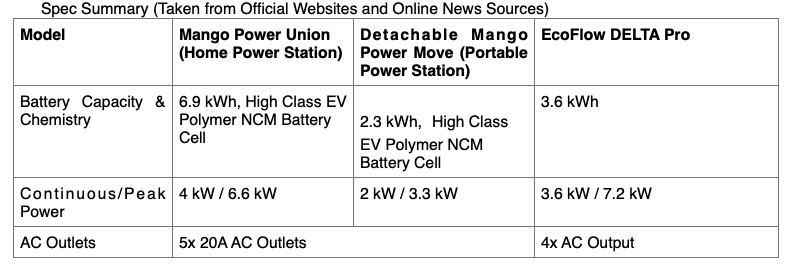
The entire Mango Power Union has an impressive 6.9 kWh capacity, while its detachable module (the so-called “Power Move”) is 2.3 kWh. Both use advanced electric vehicle polymer NCM batteries with 38% higher energy density, and can operate in a wider temperature range than traditional LFP batteries.
The 3.6 kWh capacity of EcoFlow DELTA Pro is better than Power Move, but it cannot be compared with the complete Mango Power Union package. EcoFlow has not announced the exact details of its battery, but we think it will provide a larger capacity than its predecessor.
Scalability
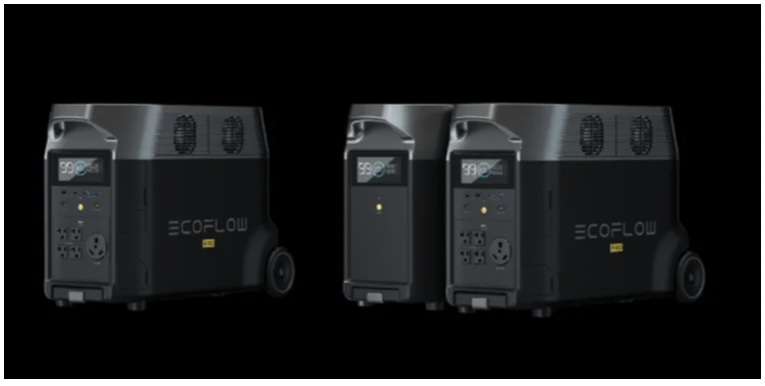
Mango Power Union can be expanded to up to 10 devices operating in parallel, with output powers up to 69 kWh and 40 kW. On the other hand, EcoFlow supports considerable scalability for up to 6 devices. If the user includes an expandable battery pack, the complete configuration should provide a total of 25 kWh of power. There is no information about output capabilities.
Potential backup time
When expanded to its full size (6 devices in parallel), EcoFlow claims to provide 13 days of emergency home power or 20 hours of daily use. Mango Power has not mentioned the specific details of its potential backup time, but said that their equipment can power the home for several weeks in the event of a power outage. For users who purchase up to 10 devices with a capacity of 69 kWh, this seems to be a realistic proposition.
However, if the user can only use one unit of any device, then Mango Power Union (6.9 kWh) will beat EcoFlow DELTA Pro (3.6 kWh).
in conclusion
Mango Power Union has a larger unit battery capacity and greater scalability potential.
Output and charging
Output
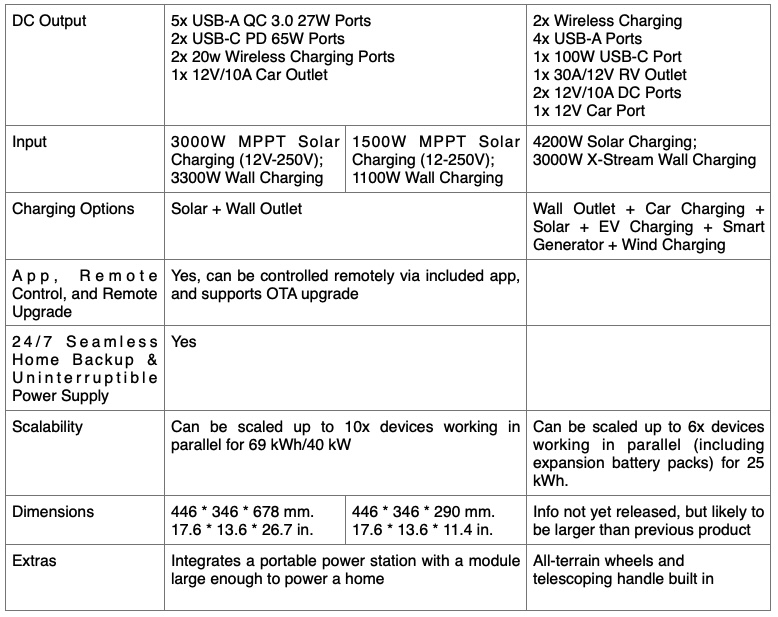
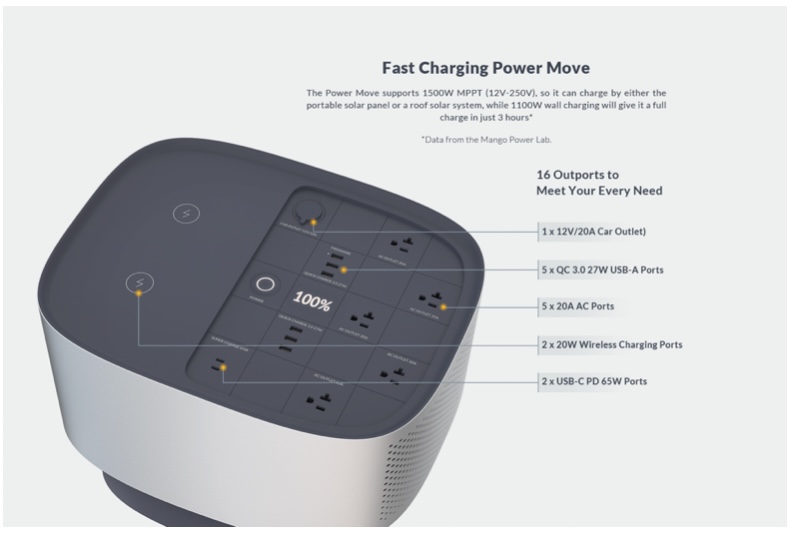
Mango Power Union supports 16x output sockets, while EcoFlow may support 15x ports (based on available images).
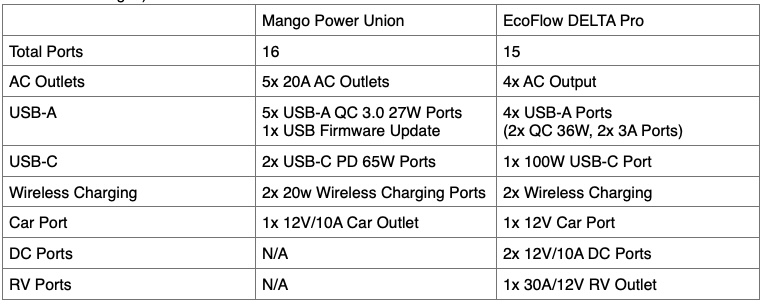
As you can see in the above table, the total number of ports of Mango Power Union is only slightly higher than that of EcoFlow, but EcoFlow supports DC and RV ports. The main sockets such as AC/USB-A/USB-C/wireless charging are very similar.
toll
Mango Power Union supports 3 kW MPPT solar charging (12V-250V) and 3.3 kW wall socket charging. This wide range of solar charging capabilities means you can connect your device to rooftop solar panels or portable solar panels.
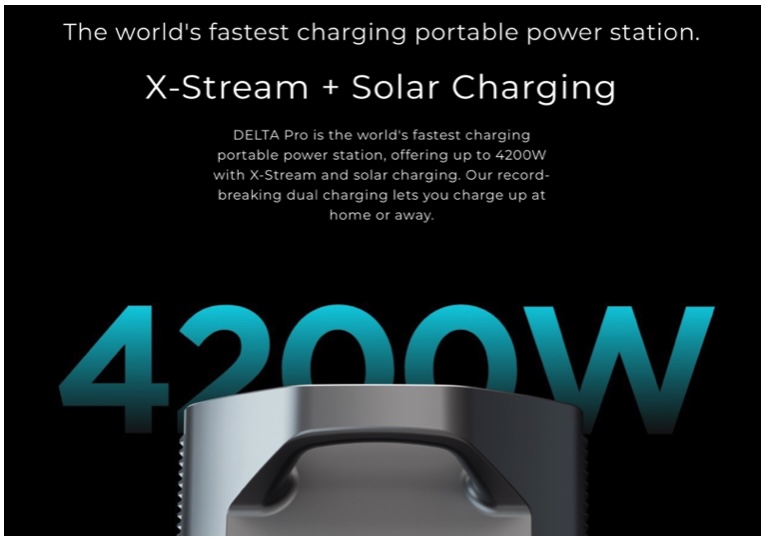
EcoFlow uses X-Stream charging technology to achieve 3 kW wall charging. If you have enough panels, it also supports an amazing 4.2 kW solar charging. It is not clear whether EcoFlow can be charged via rooftop solar panels, but we doubt that it must be. Otherwise, in reality, you need to drag about 42 100W solar panels to reach these numbers.
in conclusion
Both devices have the main sockets you need, and Mango Power Union has a slight advantage in the number of ports, but EcoFlow DELTA Pro provides greater DC and RV port diversity.
Regarding charging capabilities, both brands provide considerable speeds. EcoFlow DELTA Pro seems to provide more powerful solar charging capabilities, but it is only useful when connected to a rooftop solar system.
Design and dimensions
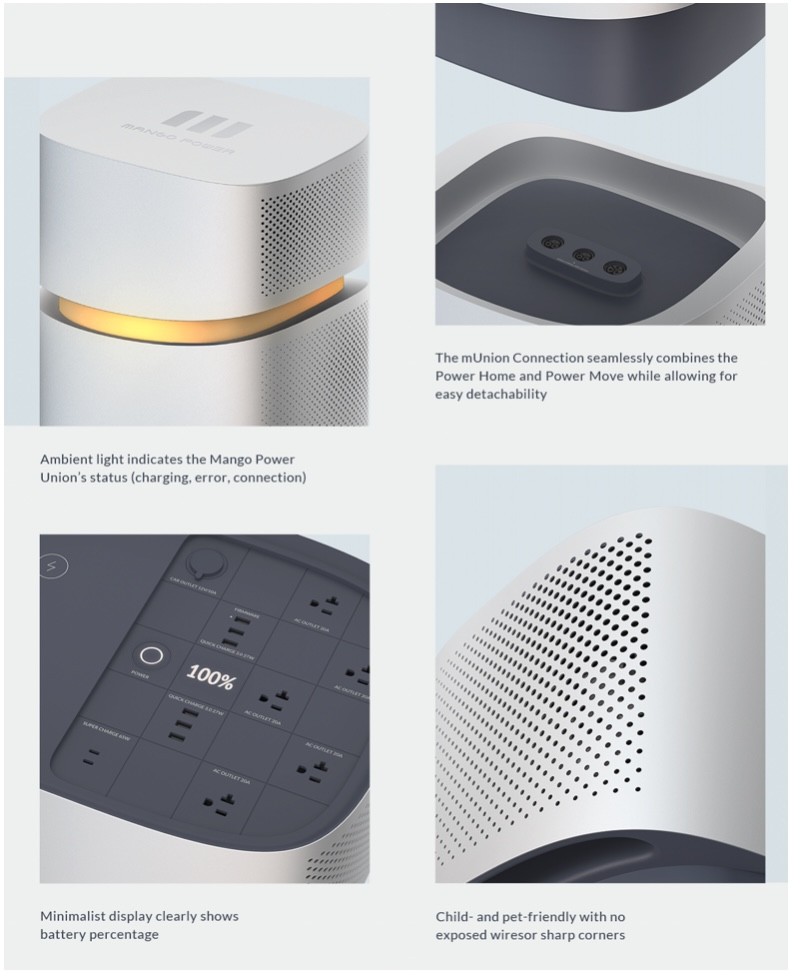
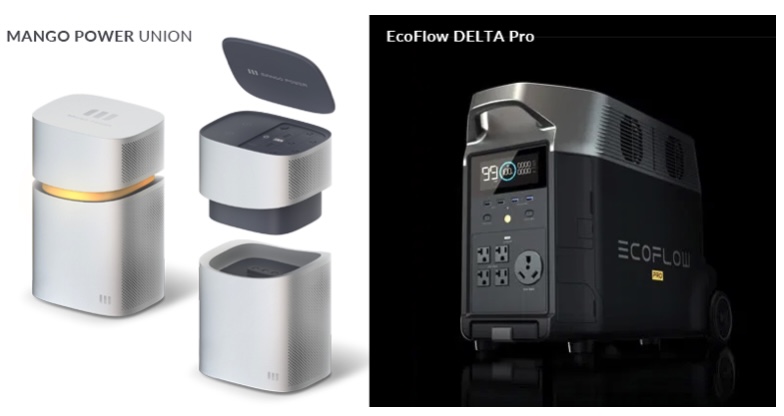
In terms of design, Mango Power Union is unique. It uses a brushed metal casing and a practical and clever ambient lighting status indicator to make it look more like a modern artwork than a battery. Although it may match many interior design styles, to be honest, it doesn’t look out of place in the gallery. The complete Mango Power Union package, including the detachable portable Power Move, has an overall size of 17.6 * 13.6 * 26.7 inches. This may sound great, but if we consider its total capacity (kWh/m3), it is quite impressive and may be the most compact on the market. This may be due to the polymer NCM battery it uses instead of the ordinary 18650 battery.
The removable part of the Power Move (2.3 kWh/2 kW) is 17.6 * 13.6 * 11.4 inches, which is a relatively good size for the portable power station market.
EcoFlow retains a very industrial design, similar to its previous DELTA model.
The company has not announced the exact size of the battery, but as capacity and features increase, it can be reasonably assumed that it will be much larger than the previous DELTA, namely 15.7 * 8.3 * 10.6 inches.
in conclusion
In terms of design, Mango Power Union is among the best. It has a cool, modern appearance, which is absolutely suitable for fashionable living rooms, but apart from the appearance, the fact that it contains both portable and household power stations makes it a unique and innovative product. However, EcoFlow should be more popular with those who like an industrial appearance, and it is very suitable for being placed in the garage of the home.
Features
Mango Power Alliance includes two parts: Power Home for family use and Power Move for outdoor off-grid life. It can be used as a home backup power source to store green energy such as solar energy from the roof, and can seamlessly supply power to sensitive electronic devices, so there will be no power failure in the event of a power failure. Power Move can be used for travel or outdoor professional outdoor work. The entire device has a variety of settings, including backup power mode (prioritize energy storage to prevent shortage), time-based control mode (store and consume power according to peak/off-peak hours to save electricity bills), and economy mode (prioritize use when connected to a solar system) Green energy).
EcoFlow is equipped with all-terrain wheels, a stronger shell and a telescopic handle, which can definitely provide power for outdoor life, but when it is used at home, especially in an emergency, you may not want to rely on it unless you buy 6 and let them Run in parallel, otherwise it is too heavy.
in conclusion
These two products can definitely provide good services for outdoor life, but when we talk about home backup power, Mango Power Union seems to be a better choice. In this regard, it is more meaningful to compare Mango Power Union and Tesla Powerwall, and we hope to confront the two head-to-head in future articles.
Control
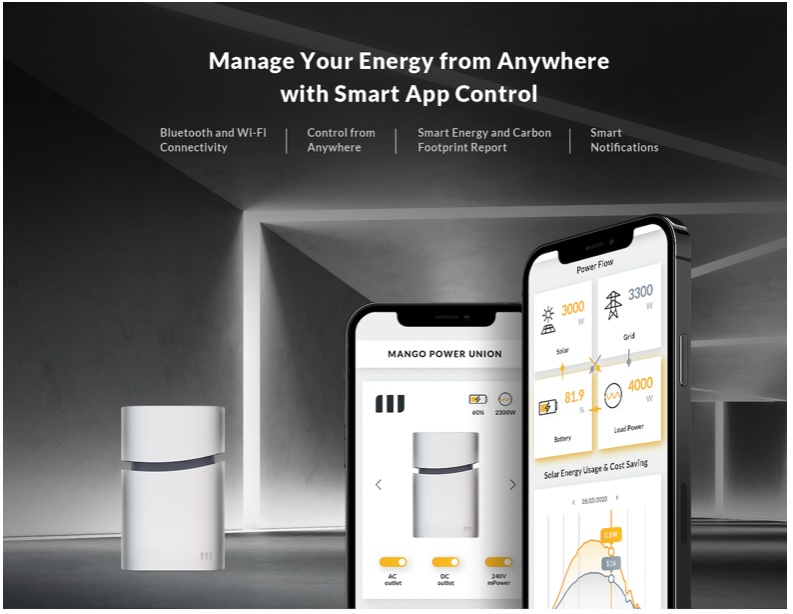
Mango Power Union can connect to the built-in application via Bluetooth or Wi-Fi, which supports remote control and OTA upgrades. The app also records your energy usage statistics and sends you notifications and alerts when necessary. It also generates a report showing your green energy use and carbon footprint.
EcoFlow DELTA Pro can only be controlled through its built-in panel, which is enough when you use it as a portable battery.
Price and availability
Both products were launched through crowdfunding platforms. Mango Power Union was released on Indiegogo, and EcoFlow DELTA Pro recently switched to Kickstarter. The retail price of Mango Power Union is 5699 US dollars, and the early bird price of 3999 US dollars is currently offered. EcoFlow DELTA Pro has not yet announced the price. Here we also added Tesla Powerwall for comparison.
We have priced two of them based on battery capacity, as shown in the table below. I have to say that Mango Power Union’s pricing is quite aggressive, especially for a new brand. Either way, these two batteries are quite reasonable.


A little extra
There are some small things we didn’t have a chance to mention.
First of all, we really need to emphasize the practicality of EcoFlow DELTA Pro’s all-terrain wheels and telescopic handles. This may not sound like much, but when you are hiking towards the campsite with a backpack on your back, you will definitely appreciate how easy this portable power station is to move.
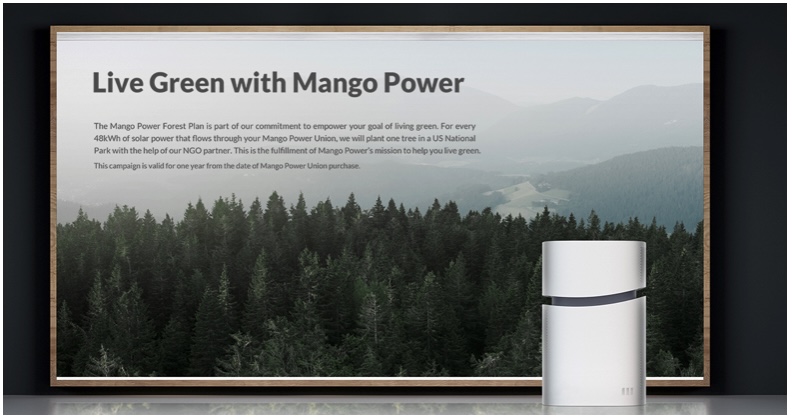
On the other hand, the Mango Power Alliance really speaks to my ecological warrior. For every 48 kWh of solar energy flowing through this device, the company will plant another tree in a national park in our country through what they call a “forest plan.” Given that Mango Power Union has a capacity of 69 kWh and claims to be rechargeable for 60,000 cycles, this means that you may “earn” 86,250 trees. I like this idea.
However, no matter which way, if you choose one of these or any other power stations, and use some form of green energy to power it, whether it is wind, nuclear, solar or any other method, you are helping the world. busy. Thank you.