


information – At its “Peek Performance” event on Tuesday, Apple announced a slew of updates and new products. From new colors for existing products to brand new Macs and monitors, Apple showed off some modest updates along with their first new Mac models in a long time.
new color
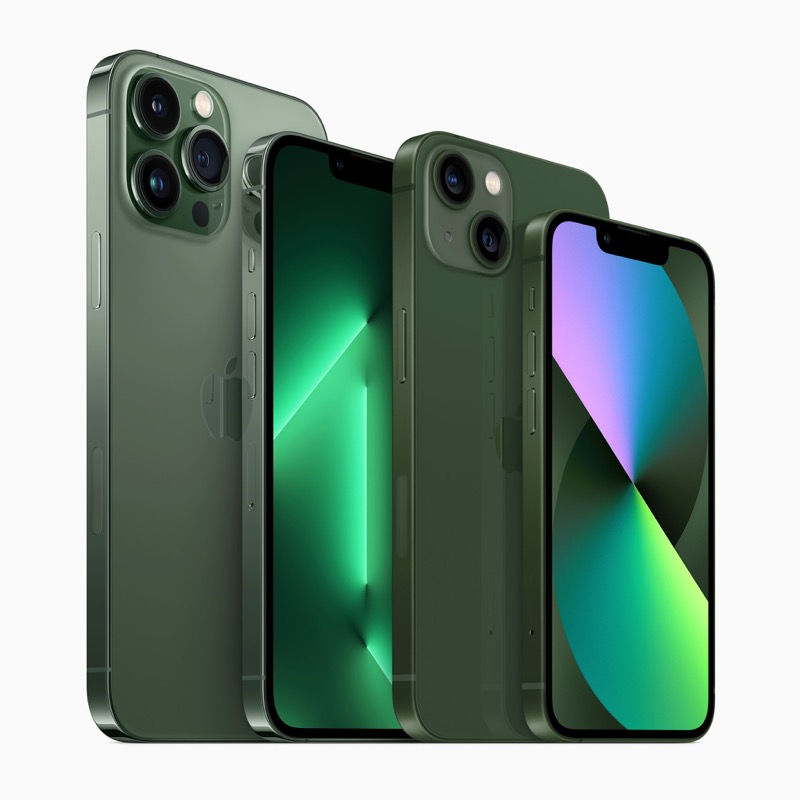
New on the iPhone 13 and iPhone 13 Mini models are the green options. For the Pro model, Apple has introduced what they call an Alpine Green finish. There are no feature updates to these phone models, but for those who haven’t upgraded yet and missed the green option in the iPhone 11 Pro lineup from a few years ago, now is a good time to do so.
iPhone SE
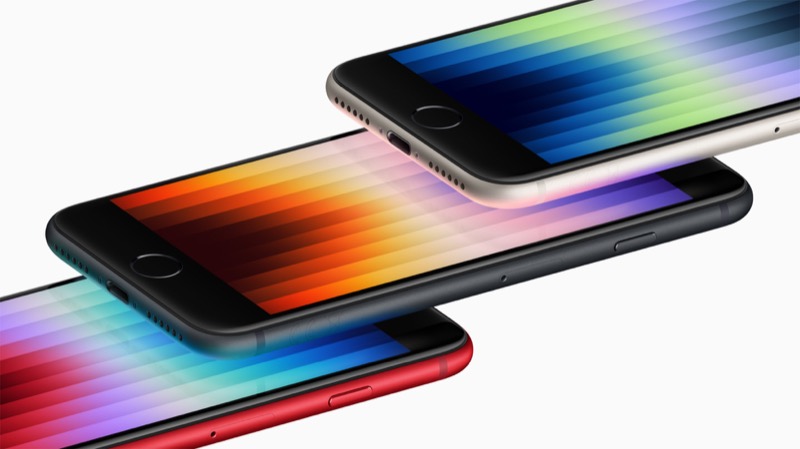
Apple also released the third-generation iPhone SE. New to this model is the A15 Bionic chip from the iPhone 13 series, which offers faster CPU and GPU performance, advanced photography capabilities, 5G, and longer battery life with up to 2 hours longer video playback. The price has risen from $399 to $429, but it’s still the cheapest iPhone model on the market.
Pre-orders begin on Friday, March 11, and will be available in stores on March 18.
iPad Air
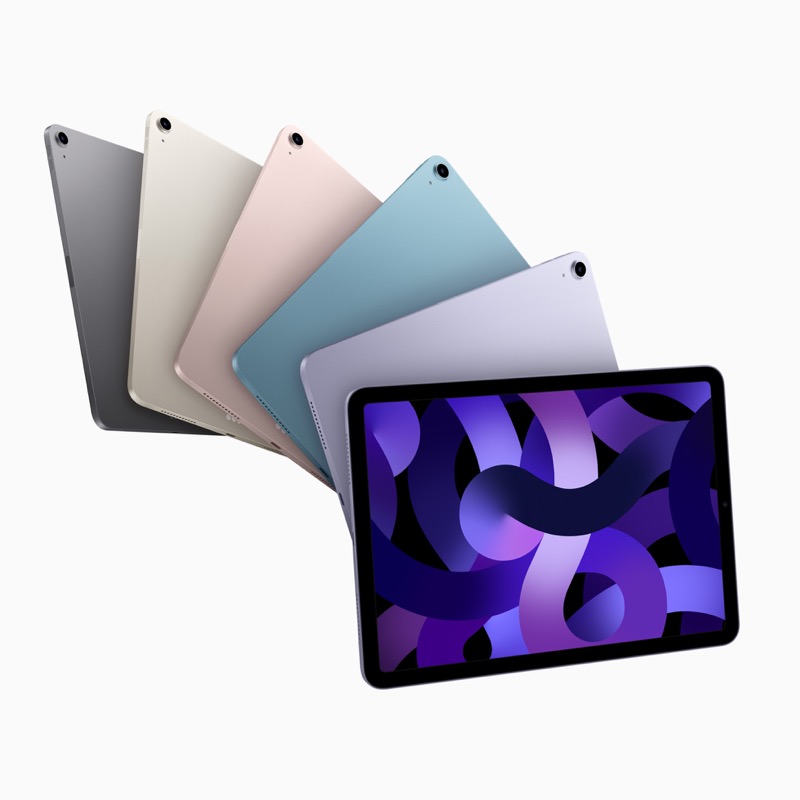
The fifth-generation iPad Air features Apple’s M1 chip, 5G, WiFi 6, a 12 MP ultra-wide front-facing camera with center stage, and 2x the transfer speed of the fourth-generation via the USB-C connector. While it has an M1 chip, it’s USB-C only; there’s no Thunderbolt capability in this model. The fifth-generation iPad Pro is available in space gray, pink, purple, blue, and starlight color options. The base model costs $599 for the 64 GB version and $749 for the 256 GB version. Add an extra $150 for the cellular option. Pre-orders begin on Friday, March 11, and will be available in stores on March 18.
M1 Ultra
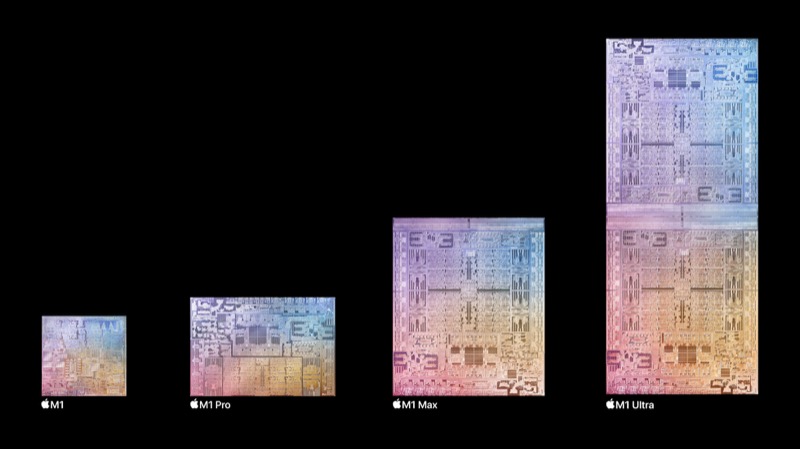
Apple took the time to show off their latest Apple Silicon chips. The M1 Ultra is basically two M1 Max chips fused together using a process Apple calls UltraFusion. This makes the chip appear to the computer like a CPU, which means it can support multiple processors without having to rewrite the software. If it works on Apple Silicon now, it will continue to run on the M1 Ultra, albeit probably much faster. Apple calls it the “world’s most powerful PC chip,” and if comments on Apple’s early M1 chips are any indication, fusing two of these chips together for twice the performance means they’re probably right.
With 114 billion transistors, the M1 Ultra supports up to 64 GB or 128 GB of unified memory, a 20-core CPU, a 64-core GPU, and a 32-core Neural Engine. Apple says it “transcodes video to ProRes 5.6 times faster than a 28-core Mac Pro with Afterburner” and “has 90 percent better multi-threaded performance than the fastest 16-core PC desktop chips in the same power envelope. ,” and offers “faster performance than the highest-end PC GPUs available, while consuming 200 watts less power. For video professionals, this can play up to 18 streams of 8K ProRes 422 video, which means editing video with Final Cut Pro will be faster than ever.
Mike’s studio
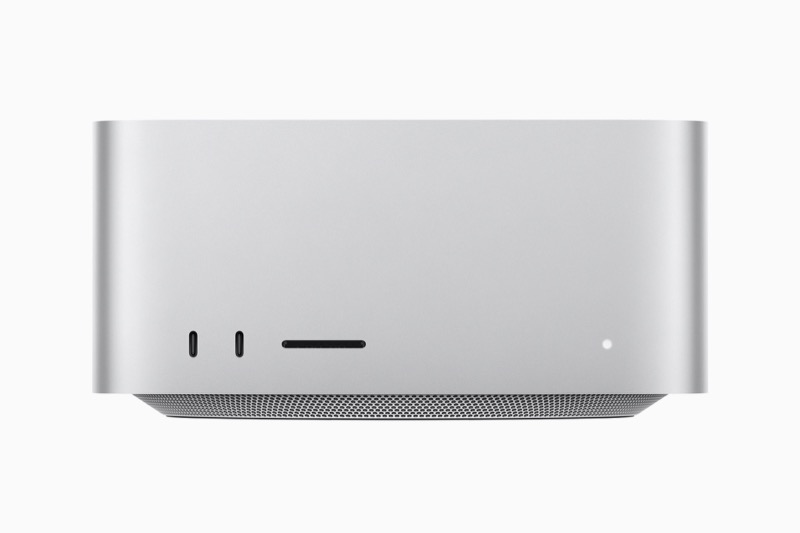
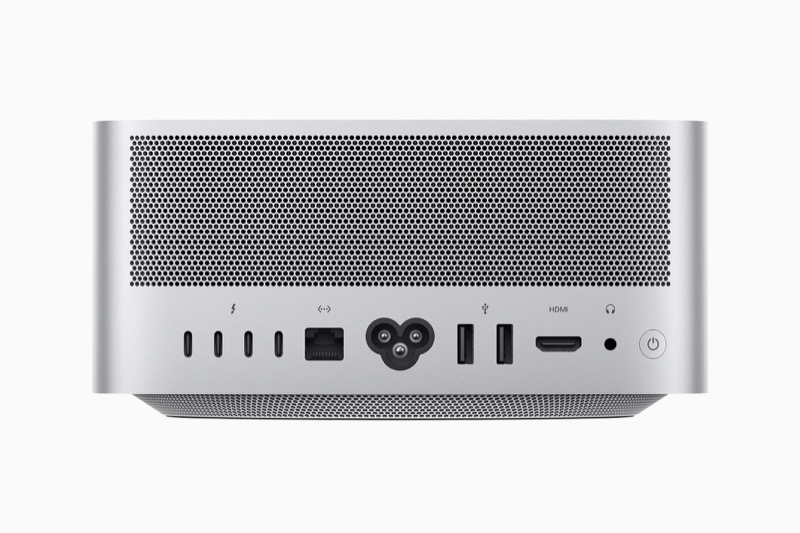
Apple’s newest Mac, the Mac Studio, features an M1 Max or M1 Ultra CPU with up to 128 GB of RAM and an 8 TB SSD. With its four Thunderbolt 4 ports and one HDMI port, Mac Studio can support up to five monitors, including four 6K Pro Display XDRs and one 4K over HDMI monitor. To round out connectivity, Mac Studio includes two USB-A ports (5 Gb/s), HDMI, 10 Gb Ethernet, 3.5mm headphone jack, all on the back, as well as an SDXC (UHS-II) slot and two The connector on the front of the USB-C. On the M1 Ultra model, the two front USB-C connectors also support Thunderbolt 4. WiFi 6 and Bluetooth 5.0 complete communications. The Mac Studio has the same footprint as the Mac mini and is about 2.5 times the height, so it’s still a very compact computer. The M1 Max model starts at $1,999 and the M1 Ultra starts at $3,999. Orders for Mac Studio are now open, with shipping starting March 18.
studio show
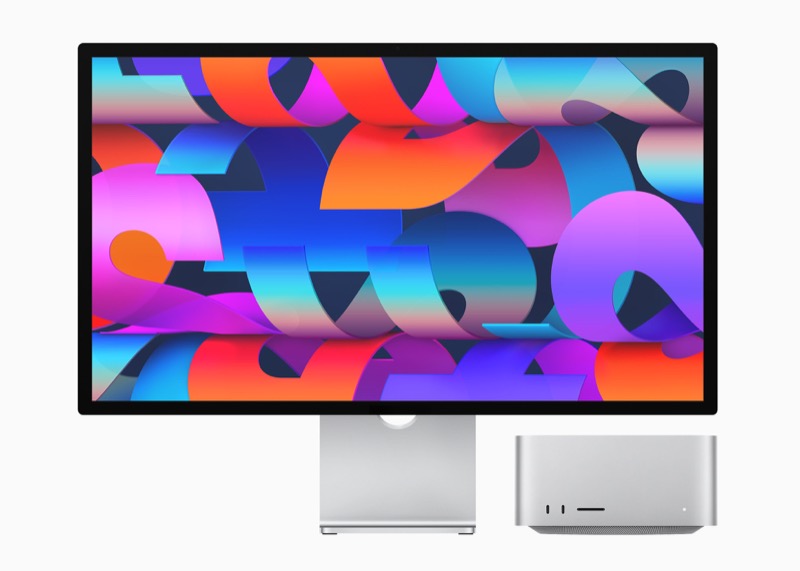
Apple also showed off a 27-inch 5K monitor to go with the new Mac Studio. The Studio Display features a 12 MP ultra-wide camera with center stage, a “studio-quality” three-mic array and Spatial Audio with 6 speakers, all powered by the A13 chip, and it also supports “Hey Siri” processing for Apple’s Request a smart assistant. The display panel is largely the same as the now-discontinued 27-inch iMac, with P3 wide color gamut, True Tone, and nano-textured glass options to help reduce room lights or reflections of sunlight through windows. The back features 3 USB-C connectors and a Thunderbolt 3 that can deliver up to 96W of power to a connected laptop. The Studio Display comes with a stand that tilts 30º, but has an optional stand with tilt and height adjustment options for an additional $400, or a free VESA mount option. Booth selection must be made at the time of purchase as booth cannot be changed afterwards. Available for pre-order now, with shipping starting March 18.
Accessories
Finally, Apple announced new black and silver keyboard, mouse, Magic Trackpad options. This color scheme was previously only available on Apple’s Mac Pro, so it’s an option with any Mac purchase. These new accessories come at a slight premium over the standard white accessories Apple sells.
go to Apple Network More on these products, as well as some of the new iPhone cases and Apple Watch band colors that Apple unveiled Tuesday.


