


Post views:
1
headless e-commerce Allows businesses to use different channels and systems to power their online store. If you’re looking for an ecommerce platform that gives you more control and flexibility, then you should consider an ecommerce solution. Here, we’ll discuss what e-commerce is, the benefits of using it, and how to get started. We’ll also have some helpful resources for those who want to learn more.
headless e-commerce
headless e-commerce is an architectural approach that separates the front-end and back-end of an e-commerce platform.It makes the backend headless while allowing two layers to pass through API. The front end (or client side) is responsible for displaying products and managing customer interactions, while the back end (or server side) handles tasks such as inventory management and order processing. For headless commerce, the two components are separate, allowing businesses to build custom frontends using any programming language or framework and pair them with any backend solution. This approach offers greater flexibility and scalability than traditional e-commerce setups, and opens up new possibilities for how businesses interact with customers. For example, businesses can use this kind of e-commerce to build innovative applications that go beyond just displaying products and processing orders. Businesses can focus on creating unique customer experiences that drive long-term loyalty and growth.
Headless Ecommerce Features:
API-first approach:
Using an API-first strategy, application programming interfaces (APIs) are created and implemented first. This is different from the standard code-based approach. In a code-first strategy, any change requires extensive retesting and redeployment, which is not the case with APIs. headless e-commerce Provides a decoupled approach that can help you create a better customer experience.
Better user experience and personalization:
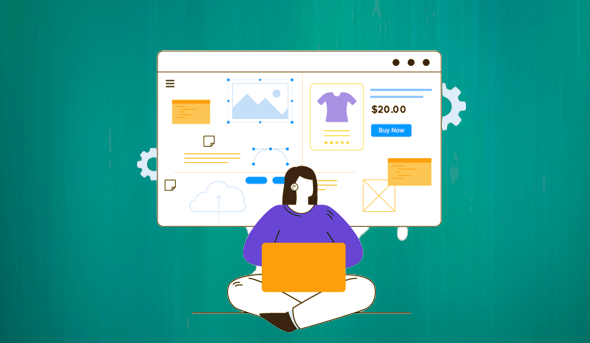
headless e-commerce Provides the ability to create better user experience and personalization. The decoupled approach allows businesses to use any programming language or framework to build their front end. This gives businesses the flexibility to create experiences tailored to their specific customers and business needs. It also provides the ability to easily integrate with third-party applications and services that can further enhance the customer experience.
Improved performance and scalability:
headless e-commerce Performance and scalability can be improved by allowing enterprises to use different backend solutions for different purposes. For example, a business could use a separate backend solution to process orders and another to manage inventory.This method can help enterprise Its e-commerce platform is optimized for specific tasks, resulting in improved performance and scalability.
New technologies and integrations:
headless e-commerce Provides the ability to easily integrate with new technologies and services. With a headless approach, businesses can use any programming language or framework to build their front end. This gives businesses the flexibility to quickly adopt new technologies and integrations as they become available.
Create a quick website:
It provides the ability to create fast websites. This is because there is no need to render the entire page on the server side before sending it to the client. Instead, only the necessary data is sent to the client, making the website faster.
How headless e-commerce works:
This is a term that refers to the decoupling of the front-end and back-end of an e-commerce website. The front end is what customers see and interact with (the “header”), while the back end manages all the behind-the-scenes functions such as inventory management, order processing, and customer data.
A headless e-commerce system, such as a headless CMS, forwards requests between the presentation tier and the application tier through Web services or API operations. The program layer sends another API request to the application layer to notify customers of their purchase status.
read more:
The difference between hands-free e-commerce and traditional e-commerce
The following diagram explains the difference between traditional e-commerce and no-processing e-commerce:
| headless e-commerce | Trextra trade |
| Design Unlimited | Facing many constraints in the design |
| Customized experience for administrators and users | Experiences that have been customized for administrators and users |
| no maximum time consumption | Any small edit will consume a lot of time |
| API methods | No API upgrade |
| Adopt a variety of user experience methods | least user friendly |
Advantages of headless e-commerce
- The advantage of the headless e-commerce approach is that it allows businesses to be more flexible when designing and developing their website. For example, they can use different technologies for the front-end and back-end, and even change the front-end without affecting the back-end. This is especially useful for businesses that want to try out different user experiences or need to make changes quickly.
- It also creates a better customer experience by separating the shopping experience from the rest of the website. This allows businesses to design and develop shopping experiences customized for their customers without the constraints of the backend.
- Finally, it can be used to create hybrid mobile applications. By using a headless approach, businesses can develop applications that use the device’s native capabilities, such as the camera or GPS, while still being able to utilize the backend capabilities of their website.
Best Headless Ecommerce Platforms:
There are various headless e-commerce platforms on the market. Some of them are listed below:
Big business:
BigCommerce is an e-commerce platform that gives businesses the flexibility and control they need to build scalable, high-performance online stores. It’s a fully managed solution, which means businesses don’t need to worry about managing server infrastructure or security.
Shopping:
Shopify is an e-commerce platform that enables businesses to create online stores. Shopify provides small and midsize businesses with the tools and resources they need to develop and maintain an online store. Shopify is a hosted solution, so companies don’t have to worry about server infrastructure or security.
WooCommerce:
WooCommerce is a headless e-commerce platform that enables businesses to create online stores. It provides businesses with the tools and resources they need to create and manage an online store. It’s a self-hosted solution, which means businesses need to worry about managing server infrastructure and security.
Conclusion:
Headless e-commerce is the future of online shopping. It provides a better user experience and helps businesses stay ahead of the competition. These platforms are easy to use and offer a wide range of functionality. If you are looking for an e-commerce platform that can help you grow your business, this is the one for you.

